The video titled "Is Islam a Western Religion?" by Let's Talk Religion, a YouTube channel, explores the historical and cultural intersections between Islam and Western civilisation. The host, Filip Holm, who holds a master’s degree in Comparative Religion, delves into the origins of Islam in the Middle East and examines how Islamic thought, science, and philosophy have influenced the development of Western societies. The video challenges the conventional dichotomy between "Islamic" and "Western" identities, highlighting the shared heritage and mutual influences that have shaped both civilisations over centuries.
Holm traces the origins of Islam in the Middle East and explores how Islamic thought, science, and philosophy have significantly influenced the development of Western societies. He emphasises that Islam, like Christianity and Judaism, is an Abrahamic religion, and thus shares foundational elements with Western religious traditions. The video delves into the contributions of Islamic scholars during the Islamic Golden Age, noting how their preservation and expansion of ancient Greek, Roman, Persian, and Indian knowledge played a crucial role in the European Renaissance. Holm also discusses the transmission of this knowledge through translation centres like Toledo, Spain, which facilitated cultural exchanges between the Muslim world and Christian Europe. Furthermore, Holm addresses the presence of Muslim communities in Western regions, illustrating that Islam has been an integral part of the Western cultural and historical landscape. He argues that recognising these connections is essential for a nuanced understanding of both Islamic and Western civilisations in his video, and also in his channel on various topics.
Holm begins his argument by addressing the perception of Islam as a Western religion:
“Referring to Islam as a Western religion, both from non Muslims in Europe who seem to very clearly see Islam as something other, something different from the west, right, in a very sort of colonialist and Orientalist way, but also from Muslims themselves who are, who seem to also have this dichotomy where the west represents something also other than Islam…”
Throughout the video, he continues this argument with further evidence and examples, gradually presenting a clearer perspective: Islam was not merely an external influence on the West, but also an internal one and the two are not so easily separated.
“So why do I call Islam a Western religion sometimes? Well, partly to provoke people honestly, but not to provoke in a malicious sense, but rather in order to challenge people’s assumptions about these categories and how we talk about them, hopefully to lead to more nuanced and informed discussions. But mostly it is because I firmly and legitimately believe that Islam is a very important part of the story of the so-called “West”…”
And in that regard, in that light of that cultural and historical interconnectedness, the main question becomes:
“If we want to define the “West” or “Western” in a way that makes any kind of logical sense, I see many public intellectuals today who shall remain unnamed, who talk about this thing called “Western culture” or “Western civilisation”,
And this very rarely includes Islam or the Islamic world,
And this makes me wonder what, like, what do they actually mean by this thing, this “West”, this “Western culture”?”
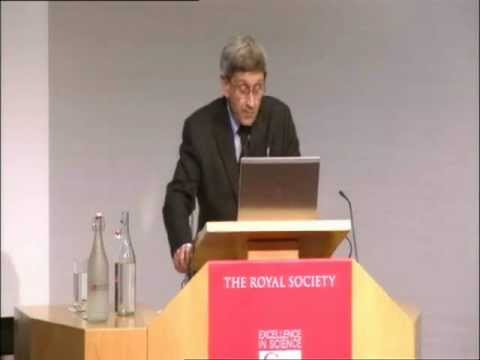
Lecture by Prof. Charles Burnett, Professor of History of Islamic Influences in Europe at the Warburg Institute, University of London, given at The Royal Society in London on the 24th of October 2011.
by Sairah Yassir-Deane Published on: 15th May 2014
During Ottoman rule, Sarajevo was heralded as the “European Jerusalem”, as its invaluable contributions to civil engineering, industry, trade and architecture attracted people from various ethnic and religious backgrounds. Aesthetic beauty alongside scientific ingenuity made,…
by Salim Al-Hassani Published on: 18th December 2010
In a keynote lecture pronounced by Professor Salim T S Al-Hassani in September 2003 at the European Parliament in Brussels, he used slides and 3-D animations to outline the impressive heritage which Europe received from…
Cordoba used to be the jewel of Europe dazzling visitors from the North. With over 70 public libraries during the time of Caliph Hakam II, and 900 public baths, Scholars and booksellers flocked there and…
Wel knew he the olde Esculapius And Deyscorides and eek Rufus, Olde Ypocras, Haly and Galeyn, Serapion, Razi and Avycen, Averrois, Damascien and Constantyn, Bernard and Gatesden and Gilbertyn.
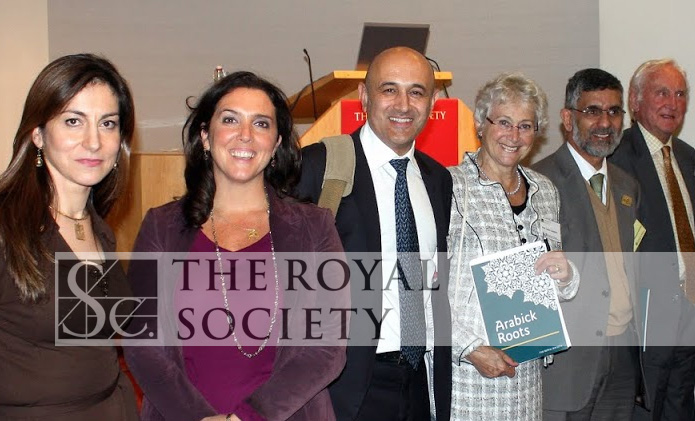
This public lecture was organised jointly by the Royal Society and FSTC. It traced the stages in the discovery of Arabic culture by European scholars from the early middle ages until the early-modern period.
An Islamic History of Europe, produced and broadcasted by BBC 4 in 2005 is a documentary about the Islamic influence on Europe and the effect of the Islamic civilization, learning and sciences on the Western…
This article mainly covers the cultural encounters between Europe and the Ottomans who had become immediate neighbours on the Balkans and the Mediterranean after the Ottoman state expanded into Central Europe.
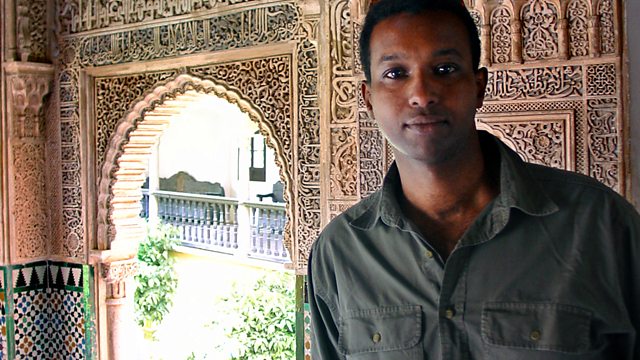
As part of the Channel 4, Hidden Civilisation season exploring Islam's rich and significant contribution to western art and culture, historian Bettany Hughes traces the story of the mysterious and misunderstood Moors, the Islamic society…
Al-Battani used the widest variety of instruments: astrolabes, tubes, a gnomon divided into twelve parts, a celestial globe with five armillaries, parallax rules, a mural quadrant, sundials, vertical as well as horizontal.
One of the earliest detailed descriptions of Northern Europe is reported in the account written by the Arab Muslim writer and traveler Ahmad Ibn Fadhlan, who was sent in 921 CE as the secretary to…
by Salah Zaimeche Published on: 26th December 2001
It was in Muslim Toledo, Spain, where flocked in the 12th century, in particular, scholars from all Christian lands to translate Muslim science, and start the scientific awakening of Europe.
by Maria Do Sameiro Barroso Published on: 9th February 2017
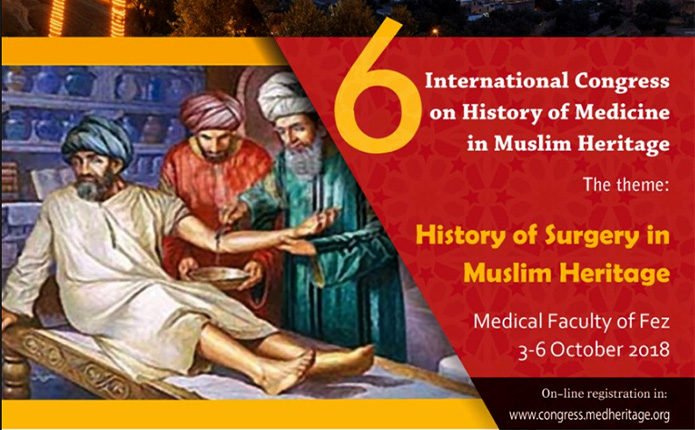
This article presents Abu'l-Qasim Khalaf ibn 'Abbas al-Zaharawi, Arabic أبو القاسم خلف بن عباس الزهراوي, Latin Albucasis (936-1013 A.D.), one on the most outstanding Arabic physicians and the most remarkable Arabic surgeon. His work had…
[Proceedings of the conference 1001 Inventions: Muslim Heritage in Our World organised by FSTC, London, 25-26 May 2010]. The Islamic realms served as a crucible for scientific learning from the ancient Greek world in the…
In this video, Diana Darke, author of the award-winning book, Stealing from the Saracens: How Islamic Architecture Shaped Europe, takes you on a quick architectural journey to see how architectural styles and ideas passed from…
The purpose of this paper is to outline the conditions in which Eastern Islamic science reached al-Andalus and was later transmitted to medieval Europe, mainly through translation. Until the end of the 10th century al-Andalus…
The video documentary produced by the BBC in 2005 An Islamic History of Europe, by the famous TV presenter Rageh Omaar (who also covered the American invasion of Iraq), reveals the surprising hidden story of…
This paper describes the results of a novel research on the Muslim influence on the European culinary art during the Renaissance. Presenting evidence of how this influence entered the aristocratic circles in Europe, it draws…
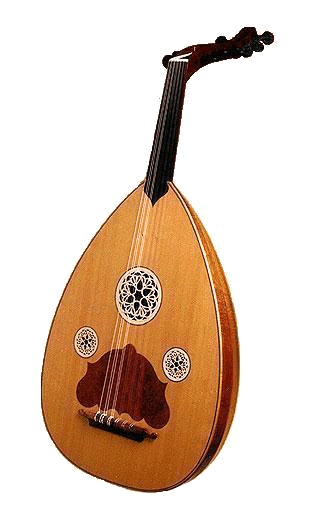
Many musical instruments came into European civilisation from Islamic Civilsation. Much of this is hardly known and rarely acknowledged. This article starts to set the record straight
This website uses cookies to improve your experience. We'll assume you're ok with this, but you can opt-out if you wish. Cookie settingsACCEPT
Privacy & Cookies Policy
Privacy Overview
This website uses cookies to improve your experience while you navigate through the website. Out of these cookies, the cookies that are categorized as necessary are stored on your browser as they are as essential for the working of basic functionalities of the website. We also use third-party cookies that help us analyze and understand how you use this website. These cookies will be stored in your browser only with your consent. You also have the option to opt-out of these cookies. But opting out of some of these cookies may have an effect on your browsing experience.
Necessary cookies are absolutely essential for the website to function properly. This category only includes cookies that ensures basic functionalities and security features of the website. These cookies do not store any personal information.