







Book Review: From Crosses to Crescents: Artifacts That Brought Medieval Islam and Christianity Together
by Leon Barkho

Mathematical Science – Contributions of Islamic Scholars to the Scientific Enterprise
by Yasmeen Mahnaz Faruqi
This study explores the substantial influence of Muslim scholars on the intellectual progress of Western society during the Medieval Era. By examining the dynamic relationship between Arab-Islam and European-Christianity, this research emphasizes the significant impact of Muslim scholars in various fields such as philosophy, science, astronomy, art, and literature. Utilizing historical methods, the study uncovers how Islam played a crucial role in shaping the development of scientific discourses in the West since the 11th century. Toledo and Sicily functioned as pathways for the Latinization of Arabic texts, extending initiatives from the Abbasid Caliphate period in the 8th century AD, particularly the translation of Greek texts into Arabic. Emphasizing the collaborative role between Islamic and Western civilizations, this research underscores that amid the historical realities of Islamic-Christian tension and conflict that marked the Middle Ages, interfaith interaction and cooperation could foster scientific progress. In this context, Islamic influence emerges as a key factor in comprehending the reciprocal exchange of ideas and knowledge that simultaneously moulded these two cultures.
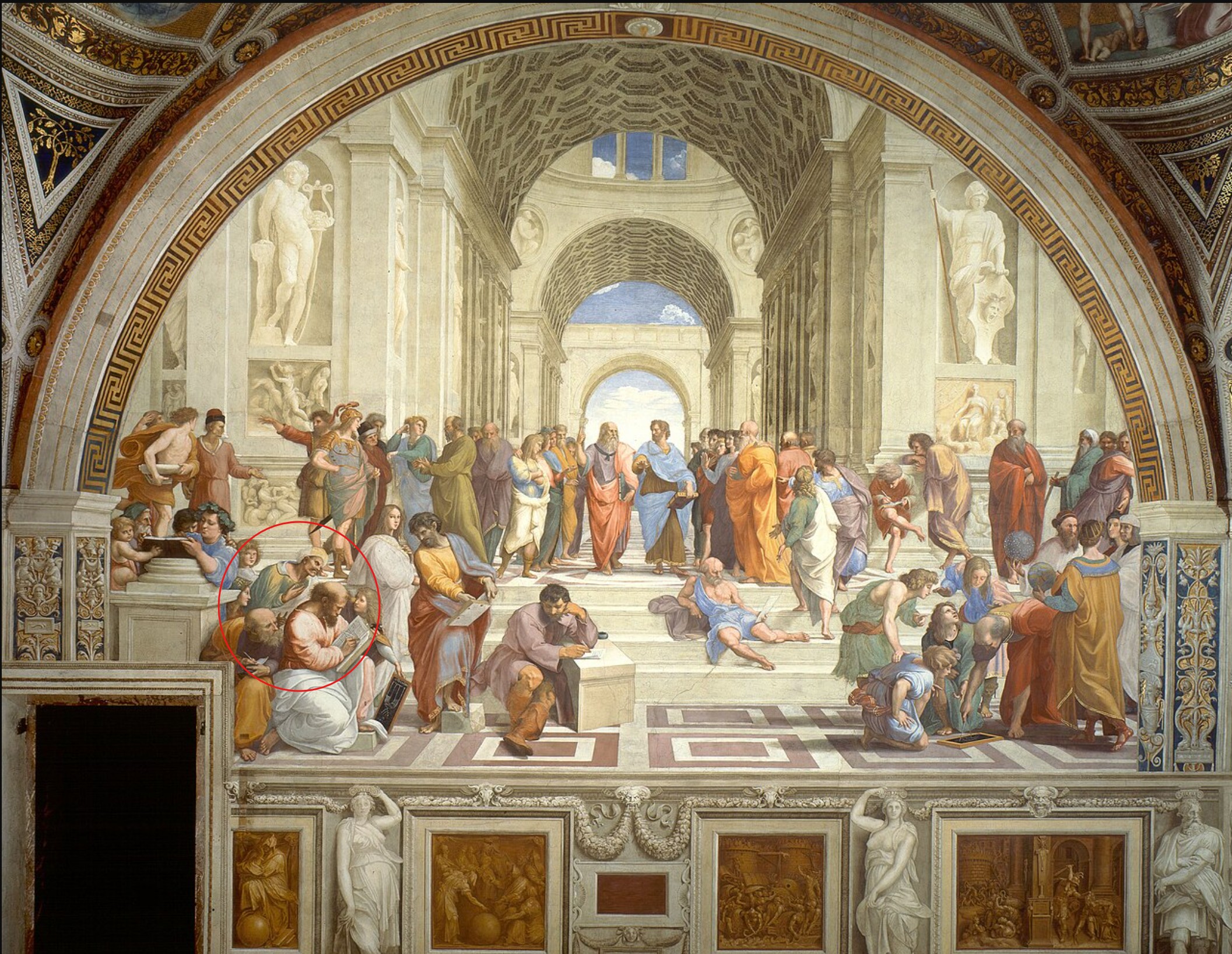
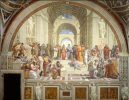
Figure 1. “The School of Athens” by Raffaello Sanzio da. It was painted between 1509 and 1511 as part of a commission by Pope Julius II to decorate the rooms now called the Stanze di Raffaello in the Apostolic Palace in Vatican City.
***
Editor’s Note: This paper was originally published in Riwayat: Educational Journal of History and Humanities, to whom we are grateful for allowing its republication on the Muslim Heritage website.
***

Figure 2. Ibn Rushd (Latinized name Averroes), looking over the shoulder of Pythagoras, represents a powerful visual narrative as it highlights how scholars from Muslim civilisation served as intellectual bridges, preserving and expanding upon ancient Greek knowledge, which was then transmitted to the West.
The research delves into the significant contributions made by Muslim scholars to Western knowledge during the Middle Ages, spanning from the 9th to the 14th centuries AD. Through a historical examination, the study reveals how the interaction between the Islamic world and Europe facilitated scientific advancement, including the transfer of knowledge, translation of classical texts, and the global development of science and philosophy. These contributions, which have sometimes been overlooked, underscore the understanding that Medieval Western intellectualism emerged from a cultural exchange and collaboration with the Islamic world.
The Middle Ages played a crucial role in shaping global intelligence and knowledge, despite being referred to as the intellectual dark age in Europe. Instead, it is marked the golden age of the Islamic world, witnessing significant contributions that rejuvenated scientific inquiry in Europe. During this era, the Islamic world reached the pinnacle of culture, serving as a wellspring of information and ideas for Europe through various routes like Spain, Italy, and Syria (Ahmed et al., 2005). This involved the translation of classical Arabic and Greek texts into Latin, covering astronomy, mathematics, science, and medicine. The translation process, particularly of Arabic philosophical texts, left a profound impact on the development of philosophy in Europe, where the influence of Muslim philosophers was notable in natural philosophy, psychology, and metaphysics.
The influence of Islam permeating various facets of Western culture embodies a bundle of innovations from the golden age of Islam, spanning science, arts, and diverse fields. Numerous Arabic loanwords found their way into Western European languages, including English, primarily through Old French, originating from this period. These encompass star names like Aldebaran, scientific terms such as alchemy (alkimia), algebra (aljabar), algorithms (Al-Khwarizmi), and various words related to commodities like sugar (sukkar), camphor (qafur), cotton (qutn), coffee (qahwa), and more (Cresswell, 2021).
In the midst of tension and conflict during the Medieval period, there existed a notable exchange of knowledge between Islam and the West, highlighting a nuanced narrative that transcended the prevailing challenges. Despite the geopolitical and religious complexities, intellectual encounters between these civilizations were not confined by hostilities. Instead, it revealed a landscape where collaborative scholarly efforts were fostered, suggesting that cooperation between civilizations and religions could be initiated through the exchange of intellectual ideas. This underscores the idea that, even in times of strife, the pursuit of knowledge served as a common ground for dialogue and shared understanding, fostering a realm where the boundaries between cultures and faiths were permeable, allowing the flow of ideas to navigate and contribute to the intellectual heritage of both Islamic and Western civilizations.
A considerable amount of research has been conducted on Islam’s contributions to scientific developments in the West. Freely (2010) describes how Islamic science, originating in the 8th century during the Abbasid Dynasty in Baghdad, amalgamated knowledge from Greece, Mesopotamia, India, and China. This knowledge profoundly influenced Western thinkers, including Aquinas and Copernicus, playing a pivotal role in inspiring the Renaissance and giving rise to modern science.

Figure 3. 1001 inventions “House of Wisdom” Canvas inspired from Raphael’s “The School of Athens” painting: Scholars from all over the Muslim world worked at the Abbasid dynasty’s House of Wisdom in Baghdad. The illustration depicts scholars, both male and female and of many faiths, who came to study and research at Baghdad’s and the Abbasids’ centres of higher education
Similarly, Bobrick (2021) explores how Islam impacted Western medicine, science, and philosophy during the Dark Ages, focusing on Harun al-Rashid, a prominent leader of the Abbasid dynasty who guided Arab influence expanded throughout the Mediterranean. The study unveils interactions among Islamic regions, stretching from Spain to Central Asia, the Frankish Kingdom, and the Byzantine Empire in the 8th and 9th centuries.
Livingston (2018) investigates the extensive lineage of Islamic scholarship and its contributions to civilization from the 8th century to the efforts of Muslim thinkers and reformers in the 19th century. This research underlines the dynamic evolution of Islamic science, marked by both proponents and opponents of science within Islam.
Al-Daffa’ (2020) research delves into Muslims’ contributions to mathematics during Islam’s golden age from the 7th to the 13th centuries. Hill (2016) also explores the impacts of Muslim scientists to the technological development of medieval Europe, preserving traditions and introducing their own discoveries and innovations.
Comparable to preceding studies, this research aims to investigate Islam’s impact on Western knowledge from the 8th to the 14th centuries by exploring cultural relations between the Muslim and Christian worlds. However, it uniquely examines Islam’s role in shaping Western intellectualism and science during this period, highlighting the crucial role of interreligious relations. Beyond merely showcasing Islam’s contributions, it emphasizes the significance of dialogue and knowledge exchange between these faiths. The cultivation of mutual respect and interchange of knowledge creates an environment conducive to progress in diverse scientific domains.

Figure 4. The School of Athens: a key to the figures in the centre of the composition. Engraving by G. Volpato, after Raphael (Wellcome Collection) – Embedding this scene within a School of Athens style background reinforces the continuity between Greek, Islamic, and European intellectual traditions and underscores the theme of cross-cultural scholarly dialogue.
The historical research method employed in this study establishes a framework for examining the contribution of Islam to the development of Western knowledge during the Medieval Era. This approach enables researchers to construct accurate and informative narratives that clarify the events and intercultural dynamics that shaped civilization in that period. By deepening our historical understanding of the relationship between Islam and Christian, this research provides valuable insights into their collective contributions to human civilization.

Figure 5. Scholars at the Abbasid library (Maqamat al-Hariri), Illustration by Yahya ibn Mahmud al-Wasiti, 1237 / The House of Wisdom (Arabic: بَيْت الْحِكْمَة Bayt al-Ḥikmah), also known as the Grand Library of Baghdad
In the knowledge exchange during the Middle Ages, a compelling narrative unfolds a mutualistic collaboration between Islamic and Christian scholars. The journey commences in the 8th century when Christian scholars actively engaged in translating Greek texts into Arabic, laying the foundation for a cross-cultural transfer of wisdom. Subsequently, Muslim scholars not only embraced and developed these translated texts but also propelled them to new heights of intellectual exploration. A pivotal phase of this intellectual symbiosis unfolded in Europe. In Toledo and Sicily, Christian translators undertook the task of translating Arabic texts into Latin. This cyclical process exemplifies a profound interdependence, where the torch of knowledge was passed back and forth between Islamic and Christian scholars. The collaborative efforts in translation became a hallmark of intellectual flourishing, echoing through the history and contributing to the Medieval Western thought.
How does the transmission history of knowledge unfold? The Middle Ages witnessed numerous points of contact between Europe and the Islamic world, facilitating the exchange of knowledge. Throughout 7th centuries, before Islam reached its golden age, Nestorian, Melkite, or Jacobite Christians monks living in Palestine, or Greeks visiting Islamic centers in Palestine, translated classical Greek texts into Syriac (Wilfred, 2014).
Subsequently, in the 9th century and later, Muslims then stored and developed these texts, especially in centers of learning such as Baghdad, where the library belonging to the Abbasid Caliphate and managed by Christians, Bayt al-Ḥikmah, was built, containing thousands of manuscripts since 832 AD (Bennison, 2010). There was a systematic effort to translate Greek literature, particularly scientific and philosophical works, into Arabic. This translation movement was initiated and sponsored by the Abbasid rulers, who recognized the value of Greek knowledge and sought to assimilate it into the thriving intellectual environment of the Islamic world.
The Abbasid caliphs, such as Al-Ma’mun (reigned 813–833 AD), actively promoted the translation of Greek texts by establishing the Bayt al-Hikmah (House of Wisdom). This institution served as a center for scholarly activities, bringing together scholars from different cultural and religious backgrounds, including Christians. The caliphs recognized the expertise of Christian translators in Greek, and thus, they were often commissioned to translate important works into Arabic (Cuneo, 1966).

Figure 6. The Byzantine embassy of John the Grammarian in 829 to al-Ma’mun (depicted left) from Theophilos (depicted right)
Christian scholars, led by Hunayn ibn Ishaq and his school, who were proficient in both Greek and Arabic, played a significant role in translating the works of ancient Greek philosophers, scientists, and scholars. Throughout his role as the administrator of Bayt al-Hikmah under various Caliphs from 861 to 892 AD, Hunayn and his school engaged in the Arabicization of works by a multitude of Greek scholars. They translated the texts of individuals like Galen, Oribasius, Paul of Aegina, Hippocrates, Hufus of Edessa, Dioscorides, and Theomnestos. Additionally, they converted writings by philosophers such as Plato and Aristotle, mathematicians like Euclid, Autolycus, and Ptolemy, and other intellectuals including Artemidor, Nicolaus of Damascus, Archimedes, Menelaus, Apollonius of Tyana, Alexander of Aphrodisias, Porphry, and Themistius into Arabic (Cuneo, 1966).

Figure 7. Galen, Ibn Sina (Avicenna), and Hippocrates, the three authorities on medical theory and practice, in a woodcut from a title page of a Latin edition of Avicenna’s The Canon, Pavia, around 1512. (Source).
This comprehensive translation initiative played a crucial role in the diffusion of Greek knowledge throughout the Islamic world during that era. The Christians were valued for their linguistic skills and their familiarity with the Greek intellectual tradition. This collaborative effort between Muslim and Christian scholars in translating Greek literature into Arabic was a hallmark of the Abbasid era, demonstrating a period of cultural and intellectual flourishing known as the Islamic Golden Age.
Later, these texts were translated into Latin by scholars such as Michael Scotus, who translated Averroes’s Historia Animalium and, On the Soul, while working in Toledo with Gerard of Cremona, who made a Latin translation of Arabic Ptolemy’s Almagest (Marenbon, 1988). Latin translations have also been discovered from Sicily, Italy. These two places were the most important routes for the transmission of knowledge from the Islamic world to the West. Spain and Italy emerged as pivotal centers for transmitting Islamic knowledge to Europe.

Figure 8. Imaginary debate between Ibn Rushd (Averroes) and third-century philosopher Porphyry. Monfredo de Monte Imperiali Liber de herbis, 14th century
Toledo, situated in central of Spain, became a major hub for cross-cultural interactions between the Islamic, Christian, and Jewish worlds, resulting in transformative shifts in classical knowledge comprehension. It evolved into a place where extensive translations of Greek, Roman, Persian, and Indian classical works occurred. Renowned translators like Gerard of Cremona (Spencer, 2013) and Adelard of Bath (Ahmed & Iskandar, 2021) collaborated with scholars from various backgrounds, translating these works into Arabic or Latin (Rahman & Muhammad, 1984). This process created a crucial cultural bridge, providing Europeans access to the rich scientific and philosophical legacy of the Islamic world. Toledo boasted a library housing classical manuscript, offering Western scholars’ entry to Arabic knowledge spanning natural sciences, medicine, mathematics, astronomy, and philosophy (Grant, 2001).
These bulks of translations were not merely preserved for local use but were copied and disseminated throughout Europe, laying the foundation for Western scientific development and influencing the establishment of the Medieval contemporary universities. Toledo and similar scientific centers facilitated profound knowledge exchange, positively impacting intellectual development in Europe. Toledo became a nexus where cultural and scientific heritage converged, paving the way for further advancements in the realm of knowledge (Grant, 2001).
In Sicily, after being conquered by Islam in 965 AD and recaptured by the Normans in 1091 AD, the Norman–Arab–Byzantine syncretistic culture flourished. King Roger II supported Islamic culture by having Muslims soldiers, poets, and scientists in his court, fostering a unique cultural blend. One notable contributor during this period was the Moroccan Muhammad al-Idrisi, author of The Book of Pleasant Journeys into Faraway Lands or Tabula Rogeriana, a renowned geographical treatise from the Middle Ages (Meri, 2006).
The Crusades deepened the knowledge exchange between the West and the Levant, with the Byzantine Empire playing a central role (Meri, 2006). Levantine cities like Antioch witnessed intense cultural influence between Arab and Latin cultures. From the 11th to the 12th centuries, European Christian scholars like Leonardo Fibonacci, Adelard of Bath, and Constantine Africanus travelled to Muslim lands to study Arabic science. During the 11th to the 14th centuries, many European students attended the Abbasids’ centers of higher education, delving into disciplines like medicine, philosophy, mathematics, and cosmography (Young et al., 2006).
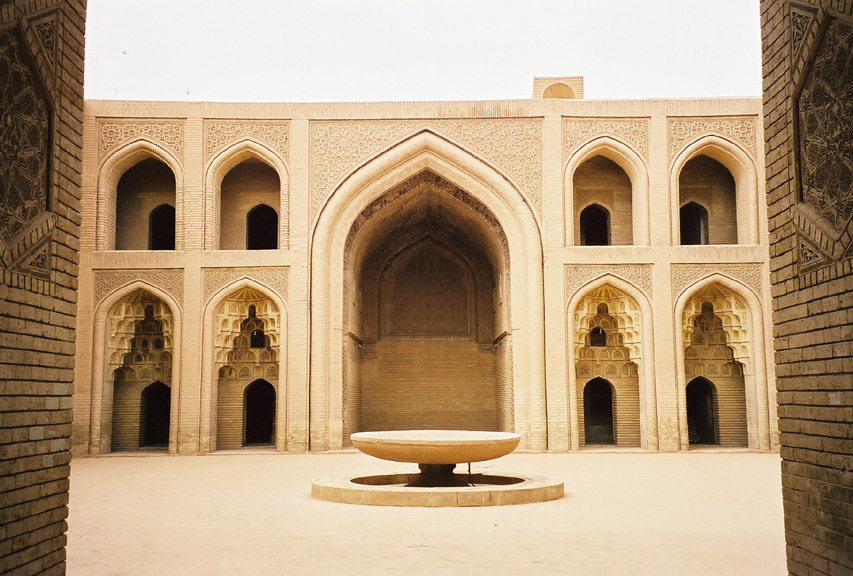
Figure 9. A view of one of the two “Iwans” overlooking the courtyard of the “Abbasid Palace” (“al-Qasral-‘Abbasi”) in Baghdad (Source)

Figure 9. Detail from a philosophical manuscript showing Avicenna engaged in study, often included alongside works and commentaries by Averroes, underscoring their joint influence on medieval scholarship. Averroës, Colliget, and Avenzoar, Taisir, texts on medicine, a late 13th-century illuminated and rubricated manuscript from Italy, comprises translations of two rare and important medical texts originally written in Arabic in twelfth-century Spain.
Avicennism and Averroism are terms for the rise of Aristotelianism in medieval Europe due to the influence of Avicenna (Ibn Sina) and Averroes (Ibn Rushd). Avicenna (980-1087) was an important commentator on Aristotle’s work, modifying it with original thoughts in several areas, especially logic. The main significance of Latin Avicennism lies in the interpretation of doctrines such as the nature of the soul and the existence-essence distinction. Avicenna was a crucial figure in the development of science and philosophy during the Middle Ages, and his intellectual legacy continues to influence modern thought. He combined the thoughts of Plato, Aristotle, and Plotinus to produce distinctive philosophical ideas (Collinson, Plant, Wilkinson, 2000).
His philosophical works, particularly in the realm of metaphysics and epistemology, had a profound impact on Christian philosophers in the medieval period. One of the key aspects of Avicenna’s philosophy that influenced Christian thinkers was his synthesis of Aristotelian and Neoplatonic ideas within an Islamic framework. Avicenna’s interpretation of Aristotle’s metaphysics, especially his distinction between essence and existence, had a transformative effect on Christian scholastic philosophers such as Thomas Aquinas.
Aquinas (1225–1274) was a highly influential Christian philosopher and theologian of the Middle Ages. Born in Roccasecca, Italy, he is recognized as one of the preeminent thinkers in the Scholastic philosophical tradition, an approach that seeks to reconcile Church teachings with classical Greek philosophical thought, especially that of Aristotle. Aquinas is renowned for his monumental work, the Summa Theologica, wherein he endeavoured to synthesize Christian faith with Aristotelian philosophy. His aim was to demonstrate that reason and faith can coexist, with reason serving to deepen the understanding of faith teachings (Elders, 2020).
Aquinas engaged with Avicenna’s ideas and incorporated them into his own theological framework. Aquinas was particularly drawn to Avicenna’s concept of the necessary existence of God (Schumacher, 2019) and his exploration of the relationship between reason and faith (Shah, 2024). Aquinas adopted and then adapted these ideas, seeking to reconcile them with Christian theology through his own influential synthesis of Aristotelian philosophy and Christian doctrine.

Figure 11. “Avicenna, Aquinas, and Leibniz all present versions of what would today be called the argument from contingency for the existence of a divine necessary being. Their versions are interestingly different, despite Aquinas’s having been deeply influenced by Avicenna and Leibniz’s having been familiar with Aquinas…” (Source)
Avicenna’s influence on Christian philosophers extended beyond Aquinas. The Scottish Duns Scotus (1265-1308) also engaged with Avicenna’s works, incorporating elements of his philosophical thought into their own theological inquiries. Avicenna’s distinction between essence and existence, a key component of his metaphysical thought, left a lasting impression on him. Avicenna argued that existence is not an inherent part of essence but a distinct aspect. Scotus engaged with this distinction in his own metaphysical reflections, contributing to his discussions on being, individuation, and the nature of reality (Kiliç, 2017).
While Scotus was not directly influenced by Avicenna, the dissemination of Avicennism through Latin translations and commentaries created a backdrop in which Scotus and other medieval Christian philosophers developed their own intellectual inquiries. However, the exchange of ideas between Islamic and Christian scholars during this period played a crucial role in shaping the intellectual landscape of medieval West. In summary, Avicenna’s philosophy, with its synthesis of Aristotelian and Neoplatonic concepts, significantly influenced Christian philosophers of the medieval period. His ideas, particularly those related to metaphysics and the relationship between reason and faith, were embraced and adapted by Christian scholars, contributing to the development of Christian scholasticism.
Averroism later replaced Avicennism. The works of Averroes, also known as Ibn Rushd, appear to have had much more influence on European Christians. Averroes (1126- 1198), a Spanish Muslim philosopher, scholar, and medical expert, made enormous contributions to the world of philosophy, especially in interpreting Aristotle’s works. He made great efforts in interpreting and explaining Aristotle’s which at that time became the foundation for philosophical thought in the Islamic world (Akasoy & Giglioni, 2013). However, Averroes developed a philosophical view and rational understanding that could be united with religious teachings, especially Islam.

Figure 12. An illustration from an Arabic medieval manuscript with two philosophers (thought to show Avicenna and Averroes together) debating, from “The best rulings and the most precious sayings of Al-Moubachir”, 13th Century / © NPL – DeA Picture Library / G. Dagli Orti / Bridgeman Images
One of Averroes’ famous works is his commentary on Aristotle’s Nicomachean Ethics and Eudemian Ethics. In his commentary, he discusses the concepts of happiness, ethics, and wisdom, combining insights from Greek philosophy with Islamic values. Averroes was instrumental in popularizing the idea that there are two types of truth: religious truth found in revelation and rational truth found through philosophy and reason (Akasoy & Giglioni, 2013).
Averroes’ influence in the world of Western philosophy is very significant. His works were translated into Latin and became primary reading material for European philosophers and scientists, especially during the Renaissance period. Once again, the Toledo School played a major role in the Latinization process of Averroes (Burnett, 2001). His works would later influence the thinking of famous Western philosophers such as Aquinas, Albert the Great, and Dante Alighieri.

Figure 13. Triumph of St. Thomas Aquinas, Doctor Communis, between Plato and Aristotle, Benozzo Gozzoli, 1471. Louvre, Paris. Depicting Aquinas (top centre), a major Averroes critic, “triumphing” over Averroes (middle), depicted at the feet of Aquinas
Aquinas’ views—later called Thomism, also influenced by Averroes, demonstrate the adoption and adaptation of Aristotle’s ideas within the framework of Christian theology. In formulating his theology, Aquinas incorporated Averroes’ philosophical concepts while critiquing and adjusting them to align with Christian doctrines (Elders, 2020). One concept significantly influenced by Averroes was the notion of intellectual dualism. Averroes argued that the human intellect is universal, uniting with the intellect of the cosmos to form a unity known as the “passive intellect.” Aquinas, integrating Averroes’ views, harmonized this idea with Christian beliefs regarding the individual soul and its continued existence after death (Elders, 2020). Aquinas also embraced Averroes’ concept of the importance of reason in grasping truth, as seen in Averroes’ concept of “active reason.” Aquinas emphasized that human reason is not only passive but also active, allowing individuals to think and comprehend truth through their reason (Cory, 2015)
Despite Aquinas earning inspiration from Averroes, there are notable differences in their approaches to religion and philosophy. Aquinas places greater emphasis on the role of revelation and religious belief in attaining knowledge of truth, a key characteristic of Scholasticism. In contrast, Averroes tends to prioritize reason as the primary instrument for understanding the universe. However, Averroes’ influence on Aquinas reveals the intricate dynamics and dialogue among classical philosophy, Christian theology, and Islamic thought traditions, forming a diverse and intellectually rich framework during the Medieval Ages (Cory, 2018).
The philosophical views of the German Albert the Great or Albertus Magnus (1200-1280), a highly esteemed medieval scholar and theologian, reflect a significant influence from Averroes, particularly in the amalgamation of Aristotelian thought with Christian theology. Magnus is renowned for his endeavors to reconcile Aristotelian philosophy with Christian theological principles, exerting a substantial impact on the evolution of Scholastic philosophy. Notably, one of his prominent students was Aquinas. Magnus drew inspiration from Averroes’ works, which had been translated into Latin. A pivotal aspect of Averroes’ influence on Magnus lies in the realms of philosophy and epistemology. Averroes underlined the role of reason in comprehending the universe, a perspective adopted by Magnus as he incorporated philosophical elements into his thinking (Hasse, 2008).
Averroes’ notions of soul and reason as forces for rationalizing and understanding the universe found resonance in Magnus, who integrated these concepts into the framework of Christian thought. Magnus also embraced Averroes’ idea regarding the relationship between religion and philosophy. Comparable to the Averroes, he recognized that religion and reason could merge, and philosophy, particularly that of Aristotle, could offer profound insights into the universe and truth. The unity of human reason and religious revelation, according to Magnus, leads to a comprehensive understanding of the universe and divine truth. Therefore, Averroes’ influence on Magnus extends beyond epistemological aspects, representing an effort to deepen the dialogue between classical philosophy and the Christian theological tradition during the Middle Ages (Hasse, 2008)

Figure 14. Concept art “Inferno, wave 2: Averroes” by Stefano Moroni or Aradia Miniatures “The Divine Comedy, Inferno (wave 2)”, based on Dante Alighieri’s poetry. The concept art visually reinforces the connection between Dante and Ibn Rushd (Averroes), particularly through The Divine Comedy, a work deeply influenced by Ibn Rushd’s philosophical legacy. Moreover, the image highlights how this historical interplay continues to inspire contemporary artists, underlining the enduring relevance of cross-cultural intellectual exchange.
Apart from the two figures in Christian Scholasticism, Averroes also exerted influence on Dante Alighieri (1265–1321), the Italian poet, philosopher, and politician renowned for his monumental work, The Divine Comedy. In this masterpiece, Dante incorporates fundamental knowledge of Islamic traditions and stories, showcasing the evident impact of Islam on the Italian intellectual landscape (McCambridge, 2016). Dante’s another notable work, The Monarchy, reflects Averroes’ influence, particularly in the formulation of the theory of the state and the relationship between religious and worldly power.
Dante composed The Monarchy as a defence of imperial authority and to advocate for the separation between the empire and papacy. Averroes’ impact on Dante becomes apparent in his ideas regarding the necessity of a secular state distinct from religious authority. He constructs an argument combining the philosophies of Aristotle, continued by Averroes, with the notion of distinct religious powers. Dante contends that the secular entity of the empire has a distinct role and purpose from the papacy, emphasizing the need for their independent actions (Brenet, 2018).
Dante’s perspective aligns with Averroes’ thoughts on the relationship between philosophy and religion. Dante posits that a universal monarchy separate from religious authority is essential for achieving universal peace and prosperity (Ahmed, 2016). Recognizing the crucial role of religious authorities in spiritual matters, Dante contends that the empire is responsible for worldly affairs. Drawing inspiration from Averroes, Dante maintains that wisdom, embodied by imperial authority, and religion can coexist without unnecessary conflict. Dante’s conceptualization, influenced by Averroes’ thought, lays the groundwork for the idea of a secular state in subsequent European political thought, especially during the Renaissance (Ahmed, 2016).
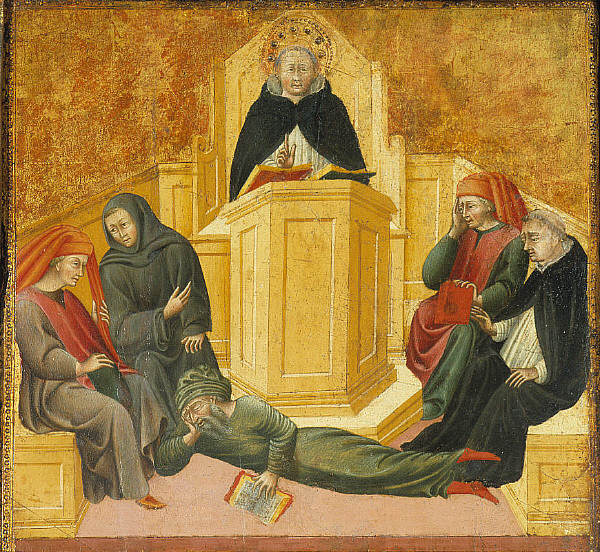
Figure 15. Thomas Aquinas Confounding Averroes by Giovanni di Paolo. Saint Louis Art Museum (Wikipecia)

Figure 16. Statue in Ciudad Universitaria, Madrid, Spain, erected in 2020, Monument to Muhammad al-Juarismi (Al-Khwarizmi)
Islam’s most renowned contribution to the advancement of science is the introduction of the Arabic Numeral System, a foundation for number systems worldwide. Muslim mathematicians of the Middle Ages first introduced this system, employing numbers 0 to 9, allowing for more efficient calculations than previous systems like the Roman numeral system. The number 0 was borrowed from Indian numerals, with AlKhwarizmi and Al-Kindi contributing to number theory, introducing concepts like factorization and division. In the 10th century, Muslim mathematicians, including AlFarabi and Al-Khazini, further developed number theory and complex mathematics. These contributions have become crucial in modern mathematics, impacting fields such as cryptography, graph theory, and computing. Italian thinkers like Leonardo da Vinci and Leonardo Fibonacci later introduced the Arabic numeral system to the mathematical world (Ahmed et al., 2005).
Algebra, a mathematical branch studying relationships between entities using symbols and equations, traces its roots to Al-Khwarizmi (Lim & Brezina, 2016). His book, ʿIlm al-jabr wa l-muqābala, laid the foundation for algebraic theory, introducing variables, coefficients, and solving techniques for equations. Al-Khwarizmi’s contributions extended to algorithm development, with the term “algorithm” itself being a Latinization of his name. Algorithms, structured steps solving problems or performing tasks, underpin computer programming and various technological applications (Ahmed et al., 2005).
Al-Khwarizmi’s work in geometry, along with contributions from other Muslim scientists like Al-Kindi and Al-Haytham, enriched the understanding of geometric shapes and relationships. They pioneered the concept of perspective in drawings, fundamental to painting and scientific illustration. Muslim scientists played a vital role in trigonometry, compiling sine tables crucial for astronomy and navigation. Their contributions in geometry and trigonometry significantly influenced contemporary global scientific and technological development (Ahmed et al., 2005).
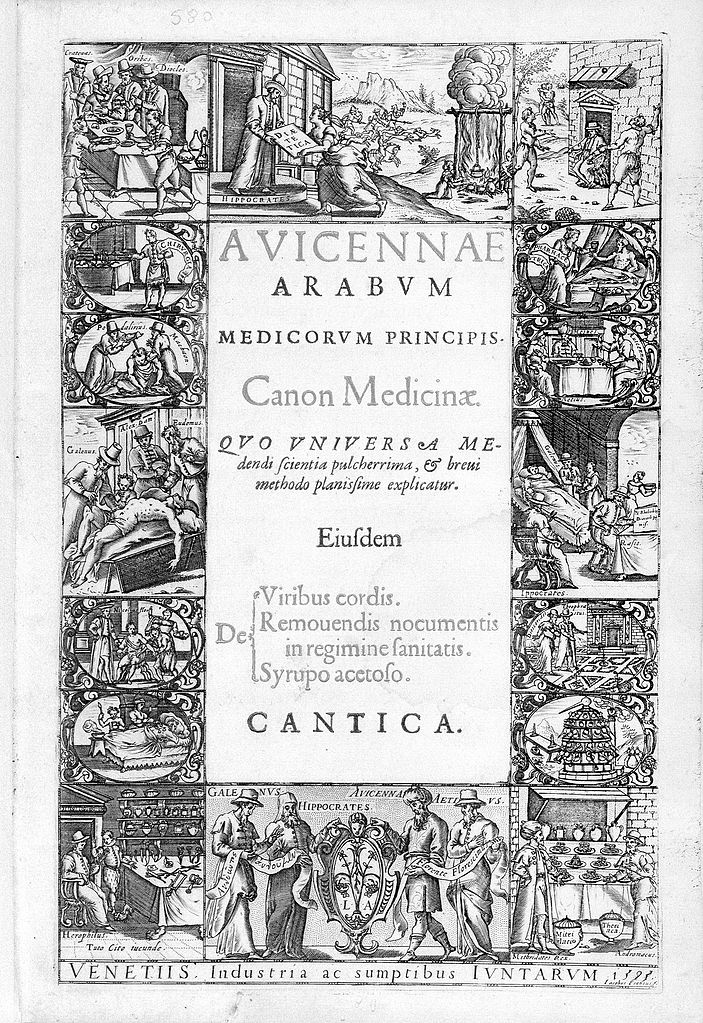
Figure 17. Frontispiece of the Latin Version of the Canon of Medicine, printed in Venice in 1595 (from Avicenna’s Canon Medicinae in the Jewish Tradition: The Miniatures of Manuscript 2197 of the University Library of Bologna. Edited by Giuliano Tamani. Padova; Editoriale Programma, 1988; p 21.) (Source)
Avicenna’s Al-Qanun fi al-Tibb or The Canon of Medicine (1025) was translated into Latin and widely disseminated in manuscript and printed form across Europe. The book served as the standard medical textbook in the West until the early modern period, being published more than thirty-five times during the 15th and 16th centuries. It stands as one of the most influential works in the history of medical science, acting as a principal medical guide in both the Islamic and Western world for centuries (Adamson, 2013).
The Canon of Medicine begins with an introduction emphasizing the significance of medical science, scientific methodology, and basic principles in medical practice. Avicenna then delves into the anatomy of the human body, organ systems, and their functions, providing in-depth knowledge about the parts of the body and their interactions. The work covers symptoms of diseases, diagnostic methods, clinical signs, and symptoms for identifying diseases. Avicenna also discusses the infectious nature of some diseases, testing new medicines effectively, and treatments involving prescription drugs, diet, medical procedures, and herbal remedies. Additionally, he references earlier works in Greek and Persian medicine, offering comments on them (Adamson, 2013).
Avicenna’s other notable work, Qitab al-Shifa (The Book of Healing), is a comprehensive encyclopedia of science and philosophy that became a popular textbook in Europe. It covers a wide range of scientific disciplines, including philosophy, science, logic, mathematics, ethics, and metaphysics. Avicenna discusses basic concepts in reasoning, classification of propositions, types of arguments, proofs, natural sciences, mathematical topics, and a philosophical section covering substance, existence, God, and the creation of the universe (Adamson, 2013).
Moving to the 9th and 10th centuries, Muhammad ibn Zakarīya al-Razi, also known as Rhazes, made significant contributions to medicine and pharmacology, writing 200 medical treatises. His most famous work, Qitab al-Hawi (The Comprehensive Book of Medicine), covers various aspects of medical science, diseases, diagnosis, treatment, pharmacology, medical ethics, and practical aspects of medicine. Rhazes detailed descriptions of diseases, emphasis on patient history in the diagnosis process, and guidance on treatment, including medical therapy and drug prescriptions, had a profound impact (Ahmed et al., 2005). For centuries, European medical students have referenced his theories on measles and smallpox (Magner, 2002).

Figure 18. Among Europeans, al-Razi’s most sought-after work was his Kitab al-Hawi fi al-tibb (The Comprehensive Book on Medicine), which was translated into Latin in 1279 under the title Continens Rasis by Faraj ben Salim, a physician of Sicilian-Jewish origin employed by Charles of Anjou to translate medical works. This book is also known in Latin as Continens Liber and in English as The Virtuous Life. Shown here is the rare 1529 edition of Continens Rasis, which was printed in Venice by Johannes Hamman” (Source)
Another figure from the 10th century, Abu al-Qasim al-Zahrawi, known as Abulcasis, was an Andalusian physician and surgeon. His most important work, Qitab al-Tasrif (The Method of Medicine), also known as Al-Tasrif li man ajiza an al-ta’lif (The Complete Book of the Medical Art) is an early detailed account of surgical techniques and medical practices (Ramen, 2006). Abulcasis provides descriptions of various surgical and medical procedures, including amputation, tumor removal, burn wound treatment, wound stitching techniques, and surgical tools. Highly detailed illustrations in Al-Tasrif depict various surgical techniques and medical tools, serving as a visual guide for surgeons. This book became one of the foundations for the development of modern medical science and had a significant influence on medical and surgical sciences. Translated into Latin by Gerard of Cremona in the 12th century, it was used in European medical schools for centuries and continued to be reprinted until 1770.

Figure 19. Theoretical and Practical Book by Al-Zahrawi (Latin: Liber theoricae nec non practicae Alsaharavii), Library of Congress, USA
In the medieval Islamic world, alchemy encompassed traditional alchemical practices and early practical chemistry conducted by Muslim scholars. The term “alchemy” finds its origin in the Arabic word “al-kīmiyā.” Following the decline of the Byzantine Empire, alchemical endeavors shifted focus to the Islamic civilization, where Muslim played a pivotal role in shaping the development of chemistry. The Islamic Golden Age saw Muslim scholars studying translations of classical Greek (such as Aristotle) and Roman (like Pliny) works, preserving and utilizing ancient chemical knowledge.

Figure 20. 15th-century artistic impression of Jabir ibn Hayyan (Geber) from Codici Ashburnhamiani 1166, Biblioteca Medicea Laurenziana, Florence fol 12r
Jabir ibn Hayyan, known as Geber, lived during the 8th and 9th centuries AD and is hailed as the father of chemistry. His seminal work, Al-Kimiya (Alchemy), produced in the city of Kufa (modern-day Iraq), provides the oldest systematic classification of chemical substances (Haq, 1995). Ibn Hayyan’s contributions include instructions for obtaining inorganic compounds from organic substances through chemical processes. He not only conducted pioneering experiments but also developed early chemical laboratory equipment, laying the groundwork for modern equivalents and transforming alchemy into a more systematic science.
Abu Bakr al-Razi (Rhazes) contributed to chemical science with his notable work, Sirr al-Asrar (Secret of Secrets). This comprehensive piece delves into various aspects of chemistry, covering experiments, the creation and application of chemical compounds, and an exploration of substance properties. Al-Razi’s work significantly influenced the understanding of distillation and sublimation, contributing to the development of chemistry in the Western world (Vančik, 2021).
The influence of Islamic chemistry persisted into the Renaissance, as exemplified by the translation of works like Al-Kimiya and Sirr al-Asrar into Latin by scholars such as Gerard of Cremona in the 12th century. This translation played a crucial role in disseminating chemical knowledge from the Islamic world to Europe. European scientists of the Renaissance, including Boyle and Lavoisier, drew inspiration from these works, incorporating the acquired knowledge into their theories. Ibn Hayyan’s experiments, particularly in distillation and sublimation, significantly impacted European scientists, shaping the trajectory of modern chemistry. Thus, the translation of Muslim scientists’ works during the Renaissance laid the foundation for the evolution of chemical science in Europe (Nagendrappa, 2012).

Figure 21. Mahometis Albatenii (Muhammad Al-Battani) – De scientia stellarum frontispiece
Islam has played a pivotal role in advancing astronomy, with Muslim scientists making significant contributions since the early 8th century. This influence extends beyond astronomy, shaping the broader field of science. Al-Battani or Albategnius (858-929), a prominent Syrian Muslim scientist, left an enduring mark in astronomy with his work Al-Zij al-Sabi. This compilation featured precise calculations of the Sun and Moon’s movements, along with accurate astronomical tables. Al-Battani’s observations of solar and lunar eclipses and his meticulous measurement of the tropical year contributed to advancements in mathematical models within astronomy. His revelations about the eccentricity of the Sun and Moon orbits were instrumental in shaping astronomical understanding (Saliba, 1995).
The other astronomer was from Baghdad, Al-Farghani (800-870) known as Alfraganus in Europe. His notable work, Qitab fi Jawani (Elements of Astronomy), delved into planetary motion, Earth’s size and distance, and the use of ellipses to describe planetary orbits. This Persian scientist’s contributions became a reference for European astronomy, offering insights into planetary and celestial body motions, and aiding in the measurement of solar and lunar distances (Saliba, 1995).
Ibn al-Shatir (1304–1375 AD), a medieval Syrian astronomer, presented groundbreaking theories, developing an alternative model for planetary motion. His innovative concept included planets orbiting the Sun along elliptical paths with epicyclic. This contributed significantly to the scientific revolution, preceding the heliocentric ideas of Nicholas Copernicus. Al-Shatir’s geocentric theory and highly accurate lunar motion model further advanced astronomical understanding (Saliba, 1995).
The Cordoban Al-Zarqali (1029–1087 AD), known as Azarchel in the West, made particular observations of solar and lunar eclipses. He proposed a theory on the ellipticity of the sun’s orbit and designed astronomical instruments such as the astrolabe and quadrant, crucial for measuring time and celestial body movements. Al-Zarqali’s contributions extended to disciplines related to time and navigation (Blake, 2016).
These Muslim scientists enriched astronomy with their observations of stars, planets, and eclipses, advancements in time measurement, and the creation of sophisticated astronomical tools and mathematical calculations. Their impact resounded through the development of astronomy in the Islamic world, influencing the global understanding of celestial phenomena. These scientists played a vital role in preserving and transmitting astronomical knowledge from ancient civilizations to the modern era.

Figure 22. A Sample of The Art of Calligraphy in the Islamic Heritage, Istanbul: IRCICA
The contribution of art and literature to Islamic civilization encompasses diverse aspects that resonate with beauty and spirituality. One crucial facet of Islamic art emerged in the 10th century, introducing calligraphy, a form of written art revered for its sacredness and religious significance. Islamic calligraphy, ranging from simple to intricate styles, elaborates Al-Qur’an manuscripts and historic edifices, expressing the elegance of the Arabic language artistically (Blair, 2020).
During the Rashidun Caliphate, particularly under Caliph Uthman bin Affan’s reign, the Koran transitioned to manuscript form, marking the genesis of Islamic calligraphy. Over time, various calligraphy styles evolved, decorating Al-Qur’an manuscripts, religious texts, mosques, buildings, furniture, and other art objects. The art of calligraphy, known as Khat, played a pivotal role in Islamic art, holding high spiritual and aesthetic value. Its influence extended to Western art, notably in France and Spain (Darke, 2020).
Islamic art encompasses not only calligraphy but also fine arts and architecture. Characterized by complex, abstract, and symmetrical geometric patterns, Islamic art achieves stunning visual balance, often aimed at reflecting spiritual values and the magnificence of Allah. From the 8th century onward, mosques, palaces, and madrasas exhibited beautiful architectural details, featuring distinctive elements like domes and minarets. Examples include the Dome of the Rock at the Al Aqsa Mosque in Jerusalem, built by the Umayyad Caliphate in 691. Islamic architecture transcends mere functional structures, becoming symbols of openness and harmony between function and beauty. The intricate link between Islamic art and architecture has produced a diverse artistic heritage, celebrating and honouring the greatness of Allah while enriching spiritual and aesthetic experiences in daily life (Darke, 2020).
Beyond Medieval era, one iconic example of Islamic-influenced architecture is the Taj Mahal in India, a masterpiece of Mughal architecture constructed between 1632 and 1648. Commissioned by the Mughal Emperor Shah Jahan as a testament to his love for his deceased wife, Mumtaz Mahal, the Taj Mahal showcases exquisite beauty and perfection. Adorned with gemstones and Arabic calligraphy carvings, the monument’s large dome stands as a distinctive feature. Recognized as a UNESCO World Heritage Site in 1983, the Taj Mahal symbolizes eternal love, captivating people worldwide (Tillotson, 2012).
Islamic art left an enduring imprint on European art, particularly during the Renaissance. From geometric motifs to calligraphy, various elements influenced and transformed European artists’ perspectives on aesthetics and techniques. The use of geometric patterns, inspired by Islamic art’s mathematical precision, found application in European fine arts, architecture, and crafts. Gothic architecture in Spain and influences on French and English Gothic styles reveal the impact of Islamic elements introduced by the Umayyad Caliphate and returning Christian Crusaders (Darke, 2020).
The art of Islamic calligraphy, though not directly adopted, inspired the development of letters and typographic designs in Europe. Aesthetic values, colour usage, and material selection, especially in mosaics and stained glass, influenced Renaissance personalities like Michelangelo and Titian (Nasr & Jahanbegloo, 2010). Islamic craft arts, including textiles, ceramics, and weaving, left a visible mark on European crafts during the Renaissance, fostering the growth of decorative arts. Architectural elements like minarets, domes, and ornamental designs influenced European architects, exemplified by the incorporation of domes in Renaissance architecture (Darke, 2020).
The transfer of knowledge and artistic ideas from Islamic art not only enriched Western art but also fostered innovation and diversity in artistic expression. The development of arabesque design art, characterized by complicated geometric patterns and ornate plants, demonstrates this influence across various forms of Islamic art. Arabesque, a prevalent form of Islamic art, involves the repetition of geometric or vegetal elements, such as leaves and flowers, to create symmetrical designs characterized by circular lines and smooth curves. These intricate patterns often exhibit spiritual values in Islam, with endless, uninterrupted designs symbolizing concepts of infinity and eternity. Arabesque art has significantly contributed to the beauty of Islamic art, adorning various contexts, from mosque interiors to fine art and classical architecture (Darke, 2020).

Figure 23. Sindbad the Sailor and Ali Baba and the Forty Thieves by William Strang, 1896 – The tales of Sinbad are a relatively late addition to the One Thousand and One Nights.
In the realm of literature, Alf Laylah wa-Laylah (A Thousand and One Nights), also known as Arabian Nights, stands as a remarkable collection of folk tales and adventure stories originating from diverse Middle Eastern sources and cultures. These stories, drawn from traditions across Arabia, Persia, Egypt, India, and beyond, were compiled by poets and storytellers in different Middle Eastern regions. The compilation process involved weaving various traditional stories into a larger, interconnected narrative.
The central tale within One Thousand and One Nights revolves around Shahrazad (Scheherazade), an empress who skilfully tells a story to King Shahryar each night to evade her execution. By leaving the story unfinished each night, she captivates the king’s curiosity, compelling him to spare her life. Initially compiled and structured by various writers and editors, this collection was first translated into a European language in the 18th century, gaining immense popularity.
Antoine Galland, a French orientalist and archaeologist, played a pivotal role in introducing Arabian Nights to the European world (Makdisi & Nussbaum, 2008). His translation, titled “Les Mille et Une Nuits” (The Thousand and One Nights), not only presented translated stories but also included additions, such as the famous tale of Aladdin and his magic lamp. Galland’s work enriched the collection and added a personal touch. It played a crucial role in opening European minds to the exoticism of the East, fostering a fascination with Eastern culture and oriental stories (Mack, 2008).
In the mid-19th century, English orientalist and anthropologist Richard Burton made significant contributions by providing a new edition of One Thousand and One Nights. His translation, completed in 1888, was considered more comprehensive and embraced the nuanced authenticity of the original stories. Burton’s version was praised for linguistic accuracy and inclusion of previously omitted stories, yet it stirred controversy due to its open approach to explicit themes. Burton’s translation became one of the most famous and acclaimed versions in European literature. It offered European readers deeper insights into Eastern life and culture, although sometimes influenced by the subjective views of 19th-century Orientalists (Sallis, 1996).
The legacy of One Thousand and One Nights continued to unfold in Europe, with new translations and adaptations gaining popularity in various countries. These stories had a lasting impact on Western literature, fine arts, and culture, earning a significant place in the global cultural heritage. Through this enduring process, the tales not only became an integral part of Islamic literature but also secured a vital position in the broader tapestry of global cultural heritage.
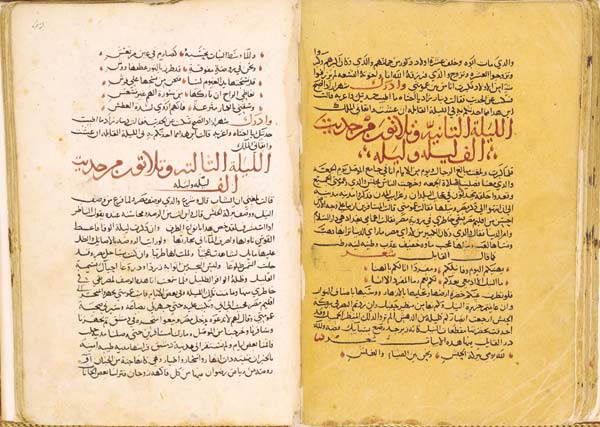
Figure 24. An Arabic manuscript of The Thousand and One Nights dating back to the 14th century

Figure 25. The Thousand Years of Light demonstrates the astounding innovative section of the history of the golden age of Islam. This mural is a great representation of the works and ideas of scholars from the 8th century to the 13th century in mathematics, science, politics, chemistry, philosophy, astronomy, medicine, literature, and many more – 17 October 2024
This study underlines the significant impact of Islam on the evolution of knowledge in Medieval Europe, shaping the trajectory of Western science. It delves into the complex relationship between the Islamic world and the West, emphasizing Islam’s pivotal role in disseminating philosophy, science, art, and literature. Notably, scientific hubs in the Islamic world, mainly Andalusia and Sicily, emerge as crucial channels for the transmission of knowledge to Europe.
This research shows the nuanced dynamics of interreligious relations during this period. Historical evidence points to a backdrop of substantial knowledge transfer, coexisting with tensions and conflicts between the two religions. Yet, a thorough comprehension of the interplay between the Islamic and Europe in the Medieval Ages not only enhances historical understanding but also offers a fresh perspective on the intellectual and cultural diversity that laid the groundwork for modern Europe.
Furthermore, this study serves as a preliminary exploration, inviting further inquiry into the intellectual roots and cultural richness that underpin Western civilization, thereby contributing to contemporary discussions on interreligious dialogue and cultural differences. History has illuminated examples where the interaction between the Islamic and Western worlds fostered a profound exchange of ideas and knowledge. This highlights the enormous potential inherent in cross-cultural and religious collaboration, signifying a crucial path for advancing human knowledge.

Figure 26. Hevelius’s Selenographia, showing Alhasen (Ibn al-Haytham) representing reason, and Galileo Galilei representing the senses. Title page from Selenographia, sive, Lunae descriptio, 1647, by Johannes Hevelius (1611-1687). (Public image CC0 1.0)
This study suggests that the importance of interreligious dialogue and cooperation in the context of scientific development extends beyond historical analysis. Given the examples illuminated by history, where the interaction between the Islamic and Western worlds facilitated a profound exchange of ideas and knowledge, there is a compelling case for fostering ongoing dialogues and collaborations among diverse religious and cultural communities.
Recognizing the potential inherent in cross-cultural partnerships signifies a crucial path for advancing human knowledge and building a more inclusive and interconnected civilization. In an era where scientific and cultural exchange is increasingly vital, embracing diversity and engaging in open dialogues can serve as catalysts for innovation, tolerance, and a mutual enrichment of societies. This underlines the relevance of religious dialogue not only as a historical phenomenon but as a contemporary imperative for nurturing a harmonious world.
***
***
References
Adamson, P. (2013). Interpreting Avicenna: Critical Essays. Cambridge University Press.
Ahmed, M. B., Ahsani, S. A., & Siddiqui, D. A. (Eds). (2005). Muslim Contributions to World Civilization. IIIT.
Ahmed, M., & Iskandar, A. Z. (2021). Science and Technology in Islam: The Exact and Natural Sciences. UNESCO.
Ahmed, S. (2016). The Genesis of Secular Politics in Medieval Philosophy: The King of Averroes and the Emperor of Dante. Labyrinth: An International Journal for Philosophy, Value Theory and Sociocultural Hermeneutics, 18(2), 209–231. https://doi.org/10.25180/lj.v18i2.54
Akasoy, A., & Giglioni, G. (Eds.). (2013). Renaissance Averroism and its Aftermath: Arabic Philosophy in Early Modern Europe. Springer.
Al-Daffa’, A. A. (2020). The Muslim Contribution to Mathematics. Routledge.
Brenet, J.-B. (2018). Dante and Averroes: New Readings of Monarchia I, 3. In M.-L Ardizzone (Ed.). Dante as Political Theorist: Reading Monarchia. Pp. 60-81. Cambridge Scholars Publishing.
Bennison, A. K. (2010). The Great Caliphs: The Golden Age of the ’Abbasid Empire. Yale University Press.
Blair, S. S. (2020). Islamic Calligraphy. Edinburgh University Press.
Blake, S. P. (2016). Astronomy and Astrology in the Islamic World. Edinburgh University Press.
Bobrick, B. (2021). The Caliph’s Splendor: Islam and the West in the Golden Age of Baghdad (Illustrated Edition). Simon & Schuster.
Burnett, C. (2001). The Coherence of the Arabic-Latin Translation Program in Toledo in the Twelfth Century. Science in Context, 14(1–2), 249–288. https://doi.org/10.1017/S0269889701000096
Collinson, D., Plant, K., Wilkinson, R. (2000). Fifty Eastern Thinkers. Routledge.
Cory, T. S. (2015). Averroes and Aquinas on the Agent Intellect’s Causation of Intelligibles. Recherches de Théologie et Philosophie Médiévales, 82(1), 1–60.
Cresswell, J. (2021). Oxford Dictionary of Word Origins (Third). Oxford University Press.
Cuneo, M. R. (1966). A study into the transmission of Greek thought to early Arab civilization through Syriac and Arabic in the light of modern research (p. 211). https://scholarlycommons.pacific.edu/uop_etds/1619
Darke, D. (2020). Stealing from the Saracens: How Islamic Architecture Shaped Europe. Hurst.
Elders, L. J. (2020). Thomas Aquinas and His Predecessors. Catholic University of America Press.
Freely, J. (2010). Light From the East: How the Science of Medieval Islam Helped to Shape the Western World. I.B. Tauris & Co Ltd.
Grant, E. (2001). God and Reason in the Middle Ages. Cambridge University Press. https://doi.org/10.1017/CBO9780511512155
Haq, S. N. (1995). Names, Natures and Things: The Alchemist Jābir ibn Hayyān and his Kitāb al-Ahjār (Book of Stones). Springer Science & Business Media.
Hasse, D. N. (2008). The Early Albertus Magnus and his Arabic Sources on the Theory of the Soul. Vivarium, 46(3), 232–252. https://doi.org/10.1163/156853408X360902Donald
Hill, Donald R. (2016). Studies in Medieval Islamic Technology. London: Routledge.
Kiliç, S. (2017). The Difference as the Individual Beings in Duns Scotus’ Metaphysics. Kaygı, Issue 29, 83–98. https://doi.org/10.20981/kaygi.342188
Lim, B., & Brezina, C. (2016). Al-Khwarizmi: Father of Algebra and Trigonometry. The Rosen Publishing Group, Inc.
Livingston, J. W. (2018). The Rise of Science in Islam and the West: From Shared Heritage to Parting of The Ways, 8th to 19th Centuries. Routledge.
Mack, R. L. (2008). Cultivating the Gardens: Antoine Galland’s Arabian Nights in the Traditions of English Literatures. In F. Nussbaum & S. Makdisi (Eds.), The Arabian Nights in Historical Context: Between East and West. Oxford University Press.
Magner, L. N. (2002). A History of the Life Sciences, Revised and Expanded. CRC Press.
Makdisi, S., & Nussbaum, F. (2008). The Arabian Nights in Historical Context: Between East and West (S. Makdisi & F. Nussbaum, Eds.). Oxford University Press. https://doi.org/10.1093/acprof:oso/9780199554157.001.0001
Marenbon, J. (1988). Later Medieval Philosophy (1st ed.). Routledge.
McCambridge, J. B. (2016). Dante And Islam: A Study Of The Eastern Influences In The Divine Comedy. Indiana University.
Meri, J. (2006). Routledge Revivals: Medieval Islamic Civilization (2006) – An Encyclopedia – Volume I. Routledge.
Nagendrappa, G. (2012). Antoine-Laurent Lavoisier. Resonance, 17, 11–22. https://doi.org/10.1007/s12045-012-0002-2
Nasr, S. H., & Jahanbegloo, R. (2010). In Search of the Sacred: A Conversation with Seyyed Hossein Nasr on His Life and Thought. Praeger.
Rahman, F., & Muhammad, A. (1984). Islam (Cet. 1). Pustaka.
Ramen, F. (2006). Albucasis (Abu al-Qasim al-Zahrawi): Renowned Muslim Surgeon of the Tenth Century. The Rosen Publishing Group, Inc.
Saliba, G. (1995). A History of Arabic Astronomy: Planetary Theories During the Golden Age of Islam. NYU Press.
Sallis, E. (1996). One Thousand and One Nights. University of Adelaide.
Schumacher, L. (2019). Early Franciscan Theology: Between Authority and Innovation. Cambridge University Press, 2019.
Shah, Z. A. (2024). St. Thomas Aquinas and Muslim Thought. Claritas Books.
Spencer, S. (2013). SCM Studyguide: Church History. SCM Press.
Tillotson, G. (2012). Taj Mahal. Harvard University Press.
Vančik, H. (2021). Philosophy of Chemistry. Springer International Publishing.
Wilfred, F. (2014). The Oxford Handbook of Christianity in Asia. Oxford University Press. https://doi.org/10.1093/oxfordhb/9780199329069.001.0001
Young, M. J. L., Latham, J. D., & Serjeant, R. B. (2006). Religion, Learning and Science in the ’Abbasid Period. Cambridge University Press.

Discover the golden
age of Muslim civilisation.

© Copyright FSTC Ltd 2002-2020. All Rights Reserved.