


Book Review: From Crosses to Crescents: Artifacts That Brought Medieval Islam and Christianity Together
by Leon Barkho
The rediscovery of a 13th-century fresco in Ferrara, Italy, has generated significant interest online. This article not only provides further context for the discovery but also explores why such findings evoke surprise and fascination. The news of this fresco has revealed the use of tents from Muslim civilisation in medieval Christian practices, highlighting the cultural exchange between Islam and Christianity. Identified by Dr. Federica Gigante, the fresco sheds light on the use of these tents to conceal high altars in churches, offering valuable evidence of a little-known Christian tradition. This fresco not only illuminates the artistic and cultural exchanges of the time but also highlights the nuanced relationships between different civilisations. These kinds of items that survive serve as valuable reminders of the interconnected nature of medieval societies, and these kinds of discoveries challenge the conventional narrative of a purely oppositional relationship between these civilisations, instead illustrating a complex tapestry of cultural exchange and adaptation. However, there is more than meets the eye when it comes to Muslim Civilisation in Europe, especially in Italy.
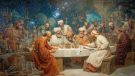
Image 1
Figure 1. Frescoes at Sant’ Antonio in Polesine, Ferrara photo by Rupert Snaps Ⓒ Flickr
***
Editor’s Note: The main news presented in this article is based on Tom Almeroth-Williams’ article Islamic ‘Altar Tent’ Discovery. It has been updated with more information by Cem Nizamoglu.
***
In the articles “A Tale of Two Civilisations” (2015) and “Buried Evidence” (2017), both published on the Muslim Heritage website, it was suggested that:
“…additional studies and research will reveal more artefacts signifying European and Islamic Civilisation interconnectivity. Additional discoveries indicate the vast multicultural wealth which lies in overlooked places as it does in overlooked languages.”
As predicted, a fresco from the 13th century has been rediscovered in the Church of S. Antonio in Polesine, Ferrara, Italy, revealing a fascinating aspect of medieval Christian practices. This fresco, identified by Dr. Federica Gigante, a historian from Cambridge, sheds light on the use of tents from Muslim civilisation to conceal high altars in churches. It is believed to be the only surviving image of its kind, offering valuable evidence of a little-known Christian tradition.
This fresco not only illuminates the artistic and cultural exchanges of the time but also highlights the nuanced relationships between different civilisations. The presence of such artefacts in Christian settings underscores the interconnectedness of medieval societies, where art and material culture transcended religious and ethnic boundaries.
The original tent depicted in the fresco was brightly coloured and adorned with jewels. It could have been a diplomatic gift from a ruler of the Muslim civilisation or a trophy seized in battle.

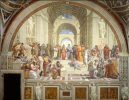
Figure 2. This tent is the only gift from the shah to Selim II mentioned by the Safavid chronicler Qāżī Ahmad. He writes that the interior of this tent (sāyabān) was masterfully embroidered with images. See Qummī, Khulāsat al-tavārīkh, 1:478. (Public image CC0 1.0) – Figure 3. Ottoman manuscripts of the battle/siege of Vienna 1683 AD (Public image CC0 1.0) – Figure 4. Sultan Selim I receiving a Western ambassador, 1500AD (Public image CC0 1.0)
What the news about this discovery doesn’t mention much is the obvious presence of Muslim rule in Italy, where this fresco has been found:
“In the Middle Ages, Italy played host to an Islamic presence that left a lasting impact. For nearly five centuries, from 827 to 1300, Islam’s presence in Sicily and other parts of the Mezzogiorno enabled Italy to play a central role in a Mediterranean society endowed with considerable ethnic and religious diversity.” The History of Islam in Italy by Gianpiero Vincenzo
Dr. Gigante’s research suggests that a prominent figure, such as Pope Innocent IV, may have given such a tent. The fresco provides crucial evidence of a medieval church using tents from Muslim Civilisation in key Christian practices, including mass. Dr Gigante said:
“Islamic textiles were associated with the Holy Land from where pilgrims and crusaders brought back the most precious such Islamic textiles. They thought there existed artistic continuity from the time of Christ so their use in a Christian context was more than justified. Christians in medieval Europe admired Islamic art without fully realising it.”
This can also be seen in Muslim astronomer figures found on the Astronomical Clock in the Lund Cathedral in Sweden, Turkish rugs/carpets featured in Renaissance portraits and paintings, and other examples stated in the Viking article, such as the Arabic ring, silk from the Middle East, Islamic artefacts, and Arabic silver coins (dirhams) amongst other things. Most importantly:
Figure 5. Duccio’sRucellai Madonna (Public image CC0 1.0)
“Additional examples of Muslim and European inter-connectivity include Arabic inscriptions and eastern patterns found on altar cloths, church vestments and even funeral shrouds in Christian possession. This could have been due to the quality of the loom from the Muslim civilisation at the time. It may be perceived as shocking now, however, on some occasions these fabrics were trimmed with decorative Arabic text from the Holy Quran, which said ‘There is no god but God and Muhammad is his prophet’ in Arabic. This even extended to some Italian Renaissance paintings, which depicted the Virgin Mary. In the book entitled “Bazaar to Piazza” by Rosamond E. Mack, these claims have been researched into extensive detail and include multiple image sources; one example being the Pseudo-Arabic, which appears on the armbands of Duccio’s angels and Giotto’s Christ Child.” A Tale of Two Civilisations

Figure 6. Ibrahim ibn Saîd’s Astrolabe Toledo / Valencia (Spain), 11th cent. (Source)
Another great example is old European astrolabes. Prof. David A. King, a renowned specialist in the history of science in Muslim civilisation, has meticulously examined various Islamic and European astrolabes. His research has revealed the presence of Arabic calligraphy on old European astrolabes, suggesting strong Islamic influences. The makers of those astrolabes were not learned in Arabic, so they mistakenly thought the Arabic calligraphy was part of the mechanical design when they copied the Islamic astrolabes. (Also, see The Verona astrolabe)
“While the origin of the astrolabe may have been Greek, it is generally agreed that the design was then perfected in Muslim Civilisation – indeed the name Astrolabe comes from the Arabic (asturlab) which is a version of the Greek term astrolabos (star-holder/taker), but it is in the Golden Age of Muslim Civilisation that the astrolabe was highly developed and its uses widely multiplied. Introduced to Europe from Muslim Spain [also covers parts of Italy and Portugal] in the early 12th century, it was one of the major astronomical instruments until the modern times.” Star-finders Astrolabes
The revelation of the fresco from Ferrara offers critical insight into the relationship between the Christian and Muslim worlds during the medieval period. It stands as a testament to the mutual respect and shared artistic heritage between the two cultures, highlighting how Christian communities often integrated Islamic elements into their religious practices.
Such findings challenge the conventional narrative of a purely oppositional relationship between these civilisations, instead illustrating a complex tapestry of cultural exchange and adaptation. The artefacts that survive, including this remarkable fresco, serve as valuable reminders of the interconnected nature of medieval societies.
Above video from Church of Sant’Antonio in Polesine (Chiesa di Sant’Antonio in Polesine)
While Islamic textiles were present in late medieval European churches, surviving fragments are usually found wrapped around relics or in the burial shrouds of important people. Depictions of Islamic textiles survive in traces on some church walls in Italy and in Italian paintings of the late medieval period. However, images of tents from the Western Islamic world are extremely rare, and the news mentions “the fresco from Ferrara might be the only detailed, full-size depiction that has been identified until now””, but there is another fresco with a tent just at the side of wall where this fresco is shown. Due to this might fall into copyright issues, please click the links to see the two frescos: fresco one and fresco two. (might be this one also)
The fresco was painted to represent a canopy placed over the high altar, transforming the apse into a tent comprising a blue and golden drapery wrapped around the three walls and topped by a double-tier bejewelled conical canopy. The background was a blue sky covered in stars and birds, giving the impression of a tent erected out in the open. In the early 15th century, the fresco was partly painted over with scenes from the lives of the Virgin Mary and Jesus Christ, capturing the attention of art historians who have overlooked the sections of the older fresco.
Dr. Gigante identified the depiction of Islamic textiles when she visited the church ten years ago, but it took further research to prove that the fresco represents an Islamic tent. Gigante said:
“The artist put a lot of effort into making the textile appear life-like,”

Figure 7. Hevelius’s Selenographia, showing Alhasen (Ibn al-Haytham) representing reason, and Galileo Galilei representing the senses. Title page from Selenographia, sive, Lunae descriptio, 1647, by Johannes Hevelius (1611-1687). (Public image CC0 1.0)
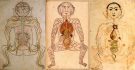
From coffee culture to gothic architecture, arithmetic, laws, hospitals, universities, and even fashion, many aspects of Western civilisation bear the imprint of Islamic influence. During the Islamic Golden Age (8th–14th century), regions such as Al-Andalus (Muslim Spain), parts of Portugal, and Italy served as cultural bridges between the Muslim world and Christian Europe. With the Ottoman Empire’s presence in parts of Europe, the Ottomans also exerted influence and established a temporary presence in certain areas of Italy at its height, while Istanbul physically bridged East and West. These had a significant impact on developments in fields such as science, astronomy, philosophy, medicine, mathematics, and the arts in the West. Scholars from Muslim civilisation preserved and expanded upon the knowledge of ancient Greek, Roman, Persian, Babylonian and Indian civilisations, which later made its way to Europe through translation efforts and cultural exchange. For instance, Ibn Sina’s (latinised as Avicenna’s) Canon of Medicine became a foundational text in European medical schools, while Al-Khwarizmi’s work on algebra influenced European mathematicians, including Fibonacci. Philosophers like Ibn Rushd (latinised as Averroes) and Musa ibn Maymun (latinised as Maimonides) shaped medieval Christian thought and Scholasticism, notably influencing thinkers such as Thomas Aquinas. Artistic and architectural styles from the Islamic world—such as geometric patterns and the horseshoe arch, exemplified in the Alhambra—also inspired European aesthetics. Literary works like One Thousand and One Nights and Hayy Ibn Yaqzan influenced European authors, including Chaucer, Boccaccio, Voltaire, Shakespeare, Bram Stoker, and many more. Translation centres such as Toledo facilitated the transmission of Arabic texts into Latin, spreading this rich body of knowledge across medieval Europe and laying the intellectual foundation for the Renaissance, particularly in Italy, where the Renaissance began.

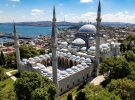
Figure 8. San Giovanni degli Eremiti: Arabian-Roman-Norman symbiosis – Figure 9. Arabic inscription on the Coronation Mantle of King Roger II of Sicily (Wikipedia)
Thus, the enduring influence of Muslim civilisation in Italy should not be dismissed, and it is evident in many areas, such as architecture, language, culture, and location names, to name a few:
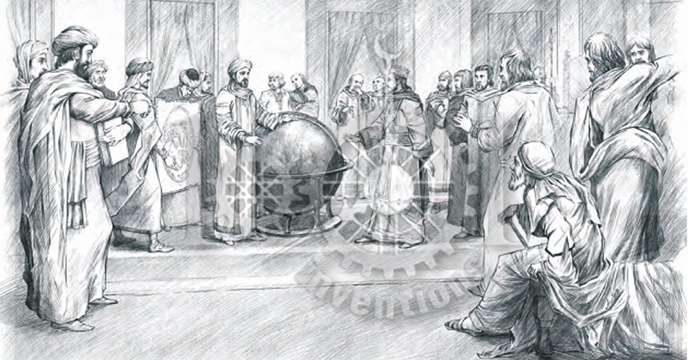
Figure 10. An artist’s rendering shows Al-Idrisi in the court of Roger II of Sicily, with his circular map that showed he knew that the world was spherical. (1001 Inventions)
This wasn’t a one-way interaction, of course, as described in East Meets West in Venice by Richard Covington; a great example is that Europe, particularly Venice, sourced their glass raw materials and glass-making inspirations from the Levant, mainly from Syria under the Ottomans. Later, Venetians became so skilled in glass and ceramic making that they inspired the Ottomans to create the famous Iznik Ottoman tiles and ceramics. This, in turn, further inspired Europeans.

Figure 11. Historic map of Venice by Piri Reis in the Kitab al-Bahriye (Book of Navigation). (Source).

Figure 12. Giotto – Legend of St Francis, Dream of St Gregory (Public image CC0 1.0)
Naturally, the transmission of knowledge is mutual all around the world. This article focuses more on the Muslim civilisation’s influence in medieval Europe, given that its centuries-long presence in southern and eastern Europe has often been overlooked. But when one considers the frequent exchanges between the Muslim civilisation and medieval Europe, through extensive trade, wars, crusades, diplomatic relations, travels, the transmission of knowledge and translation movements, the discovery of this fresco and others should not be surprising at all.
While news of such discoveries is always welcome, the shock and awe they have caused raises some questions about why they have been received in this way. There could be many reasons, such as a lack of interest and archaeological research on the topic, cultural, political, and religious views, as well as the long passage of time, among other factors.
However, the main reason could be Eurocentric educational systems, which ignore non-Western contributions. The way history is taught in schools often overlooks the contributions of Muslim civilisation to European culture and knowledge. This lack of awareness can lead to surprise and disbelief when discoveries such as the fresco in Ferrara are made. As someone who has made it their life’s mission to deal with this phenomenon, Prof. Salim Al-Hassani, Chief Editor of the best-selling book 1001 Inventions, said:
“Unfortunately, there is a period of a 1000 years missing from Western educational systems. Almost in every subject taught in schools, there exists a jump from the Greeks to the Renaissance, usually referred to as the “Dark Ages”. What is predominantly in the minds of people about the Arabs of the time are the tales of the 1001 nights; with Sinbad, Ali Baba, Aladdin and the magic lamp and flying carpet,..etc.
This amnesia affects the minds of present and future generations and distorts their attitudes and perceptions of the role of other cultures, particularly Muslim, in building the present civilisation.”

Discover the golden
age of Muslim civilisation.

© Copyright FSTC Ltd 2002-2020. All Rights Reserved.