

The Turkish hammam is not merely for physical cleansing; it is an activity deeply rooted in Muslims’ public and religious lifestyle
by Leon Barkho
The Old Bridge (Stari Most) of Mostar, erected in the sixteenth century under Ottoman patronage, stands as one of the most profound architectural achievements of Islamic civilization in the Balkans. Conceived as both a functional crossing and a symbolic threshold, the bridge embodied unity, resilience, and the aesthetic vision of its builders. Its destruction in 1993, after enduring more than sixty tank and artillery shells, revealed not only the cold calculation of aggression but also the enduring strength of its design. The collapse into the Neretva River marked a tragic moment in cultural history, yet the bridge’s legacy transcended ruin. As long as the Neretva flows beneath its arch, the bridge remains inseparable from Mostar and its people, simultaneously bearing witness to the trials and triumphs of civilization. This article explores the architectural vision behind the bridge, the circumstances of its annihilation, and its symbolic rebirth as a testament to the resilience of cultural identity against violence.

Figure 1. Mostar – Old Town panorama. The picture was taken from the minaret of Koski Mehmed Pasha Mosque , which is just opposite Stari Most (“The Old Bridge”) looking on the same part of the Neretva river, 2007 (Wikipedia)
Widely regarded as the defining emblem of Mostar, the Old Bridge is not only a masterpiece of Ottoman engineering but also a symbol of the city’s resilience and identity. It is no exaggeration to affirm that it is so central, so renowned, that without it Mostar would have remained a culturally diminished township, deprived of its civilizational vitality and urban coherence. To claim that the bridge is “greater than the city” may be an overstatement, yet it is certainly true that the bridge is as vast in meaning and as celebrated in reputation as the city itself. It dominates every dimension of Mostar’s existence—engineering and architecture, landscape and economy, culture and literature, and, in more recent times, tourism, functioning as the city’s lifeblood and vital artery.
In essence, the city is inseparable from the bridge, and the bridge is inseparable from the city. Between these two poles stand the people of Mostar, with their distinctive warmth, confidence, and convivial temperament, mediating the symbiosis of monument and settlement. They continually draw upon the best that both offer, nurturing the deeper, often unseen dimensions of life’s struggles and aspirations, and ensuring that the bridge remains not merely a structure of stone but a living emblem of buoyancy and renewal.
It is as though, in loving the bridge beyond measure, the Mostarians have allowed it to seep into their very souls. The Old Bridge, in turn, gives back, entering their essence, shaping their destiny, mirroring their fate. Its role and consequence have become theirs, its endurance their endurance, its elegance their elegance. The people and the bridge are reflections of one another, bound in a single image. They are not two, but one—stone and spirit intertwined.

Figure 2. The Old Bridge (Stari Most) after sunset, 2008 (Wikipedia)
Like a sign (ayah) upon the earth, the bridge stands as a teacher, whispering vigor, clothing its surroundings in beauty, and binding its people in unity. Within its arch of stone lies a covenant: fortitude and grace are not merely constructed, but lived. More than a monument, the bridge is revelation in form, a reminder that what is steadfast in creation can awaken steadfastness in the soul.
The critical importance of the Old Bridge to Mostar is reflected in a frequent saying: what the clear river Neretva—brought into sharp focus and crowned, so to speak, by the bridge—is to Mostar, the silver Seine is to Paris, the cold Neva to Leningrad (today Saint Petersburg), and the murmurous Vltava to Prague. Simply put, without the Neretva there would be no Mostar;[1] and without the Old Bridge, the stature of both river and city would be gravely diminished – indeed, in some respects, reduced to obscurity. The bridge, the city of Mostar, and its people were born together. They grew together, endured together, and weathered countless trials side by side.
For this reason, when the bridge was destroyed on November 9, 1993, President Alija Izetbegović described it as one of the most painful days of the war, a moment bordering on utter hopelessness. He declared that the deliberate shelling of the bridge by the aggressor, Croatian Defense Council (HVO), while the so‑called civilized world stood by in silence, was akin to annihilating “a small architectural wonder of unseen beauty.” He admitted that, for a moment, he felt hatred towards the human race itself.[2]
This article unfolds in four movements: the genesis of the bridge’s construction; the articulation of its structural features and components; its tragic fate during the 1992–1995 aggression and the subsequent resurrection; and, finally, its architectural, functional, and symbolic significance. The narrative, accordingly, advances through three providences: the bridge as creation and vivacity, the bridge as victim, and the bridge as eternal symbol.

Figure 3. Bosnia and Herzegovina, Mostar, Neretva river with Stari most bridge, by Berthold Werner 2024 (Wikipedia)

Figure 4. Mostar Köprüsü, Mostar, Bosna Hersek, Stari Most, Mostar, Bosnia and Herzegovina, SALT Research, Ali Saim Ülgen Archive, date unknown (Wikipedia)
The Old Bridge embodies an evolution inseparable from that of the city of Mostar itself. It is an evolution it both symbolizes and actively propelled. Before the Ottomans arrived, Mostar was but a modest settlement along the Neretva, its significance confined to guarding a rudimentary crossing and serving as a minor trading outpost born of that function. It was little more than a “trg,” a marketplace.
The true center of the region was Blagaj, capital of Hum (Zahumlje), a medieval principality encompassing much of present‑day Herzegovina. Blagaj Fortress (Stjepangrad), perched above the Buna River, stood as the seat of rulers and the administrative heart of Hum. Politically and culturally, Blagaj was the hub, while early Mostar lingered in its shadow, playing a secondary role in both governance and economy.
Yet human presence along the Neretva, especially between Mount Hum and Velež, reaches back into prehistory. Archaeological discoveries of fortified enceintes and cemeteries attest to ancient habitation, while remnants of Roman settlements still line both banks of the river.[3] The first recorded mention of a fortified settlement with a span over the Neretva—a simple bridge marking the embryonic distinctiveness of Mostar—appears in Dubrovnik sources around 1440.
Prior to 1452, sources describe the two fortifications flanking the Neretva and its first bridge—together with whatever built environments clustered around them—as distinct settlements: Nebojša on the left bank and Cimski on the right. Only after 1452 do they appear as a single entity, referred to as “the city on the bridge” (“Mostni grad” or Bridge City), the precursor to the name Mostar. These references mark the earliest stages of Mostar’s urban genesis, though the city itself is explicitly mentioned by name only in 1474.[4]
From its inception, Mostar’s fortune was tied to the bridge. The crossing over the Neretva made it a natural hub for merchants, caravans, and goods flowing between Bosnia’s interior and the Adriatic port of Dubrovnik. Bosnia supplied raw materials—silver, copper, wool, leather, and agricultural produce—while Dubrovnik (Ragusa), a flourishing maritime republic, acted as the principal outlet to the Mediterranean. The Neretva valley provided the most direct corridor linking the mines and markets of central Bosnia with the Adriatic coast.
Other gateways existed across the Neretva, but none rivaled Mostar. In villages downstream and upstream, temporary wooden bridges or shallow fords permitted passage, though they were insecure and unsuitable for heavy caravan traffic. Mostar, by contrast, occupied the narrowest and most practical point of linkage in the central valley. Its bridge was guarded by the mostari (bridge keepers), who ensured safety, collected tolls, and offered protection against banditry. In this fashion, Mostar became not merely a passage but a checkpoint, a regulated gateway through which the lifeblood of Bosnian trade flowed towards the Adriatic.

Figure 5. Akvarel od Zlatka Devića by Zlatko Dević Wikipedia
Hence the name “Mostar”—derived from the mostari, the bridge keepers—was bestowed to emphasize the expected significance of the bridge’s primary function. Consistent with this reasoning, the bridge itself and its lateral fortification towers became indivisible, forming a single architectural and symbolic complex. Without the bridge, the towers would stand meaningless; without the towers, the bridge would remain vulnerable and ordinary. Together, however, they created something extraordinary: a structure at once alluring, welcoming, protective, and assuring. This unique synthesis set Mostar apart from all other crossings, elevating it—inevitably—above the rest.
As part of the fath—the opening of Herzegovina to Islam—and the steady Ottoman consolidation there in 1468, five years after the fall of the Bosnian Kingdom, Sultan Mehmed II al‑Fatih ordered the construction of a new wooden bridge. The original crossing had sufficed for caravans and local trade, but it was fragile, often damaged by floods and heavy use, and inadequate for the expected influx of commerce in a Bosnia and Herzegovina now integrated into the world’s most powerful empire. Al‑Fatih’s bridge, though also wooden, was suspended on chains and far sturdier than its predecessor. Built between 1468 and 1481, it allowed caravans to pass more reliably, simultaneously inviting and strengthening the trade route between Bosnia’s interior and Dubrovnik.[5]
It should also be mentioned that during the Ottoman military advancements, the existing bridge may have suffered damage, necessitating its swift reconstruction in a sturdier and more durable form. Likewise, its two flanking fortification towers were also damaged. As integral parts of the bridge complex, they too were immediately rebuilt, enhancing both their structural and functional integrity. Their reconstruction was completed in 1473. The tower on the left was called Herceguša (“Herzeg’s tower”), reflecting its medieval origins tied to the Duchy of Stjepan Vukčić Kosača (Herceg of Hum/Herzegovina), while the tower on the right was known as Halebinka or Halebija.[6] The Herceguša was later renamed the Tara Tower. By 1477, the two protective towers had permanent garrisons numbering thirty‑six men, commanded by a dizdar (fortress commander) named Ungurus Hamza, originally a freed captive from Hungary.[7] In passing, his appointment reflected the Ottoman system of meritocracy in high state positions, which was a system that served the empire well, contributing to its longevity and institutional vitality. The two fortification towers, as a matter of fact, were not isolated structures but compact defensive outpost complexes, dominated by their donjons, whose parameters seamlessly merged with those of the bridge itself.
Such a generous investment was a clear signal: the Ottomans intended Mostar to become the new commercial, artisan, and administrative center of Herzegovina. The earlier seeds of settlement were now multiplied and augmented, leading to rapid and extensive urban growth. The city core clustered organically around the bridge, extending outward from it. Nonetheless, growth was more rapid and dense on the left, eastern bank. Natural terrain made it easier to fortify against raids, and Ottoman authorities preferred to concentrate settlement there to better control access to the bridge and monitor caravans. Moreover, the main caravan road from Bosnia’s mines descended into Mostar from the east, so merchants naturally settled on that side. The bazaar (čaršija), caravanserais, and mosques were built there, forming a commercial nucleus. Ottoman investment in infrastructure ensured that Mostar became a regulated hub rather than a scattered settlement.
The city’s rise was swift. Mostar soon claimed the mantle of supremacy from Blagaj, which had long been the capital of Hum. Now it was Mostar that led the charge, while Blagaj was relegated to a secondary role, gradually eclipsed and reduced to a supporting act in the shadow of Mostar’s precipitous flourishing. In this vein, the historical roles were reversed—Mostar ascended, Blagaj declined—and the bridge stood as the decisive axis of that transformation.[8]
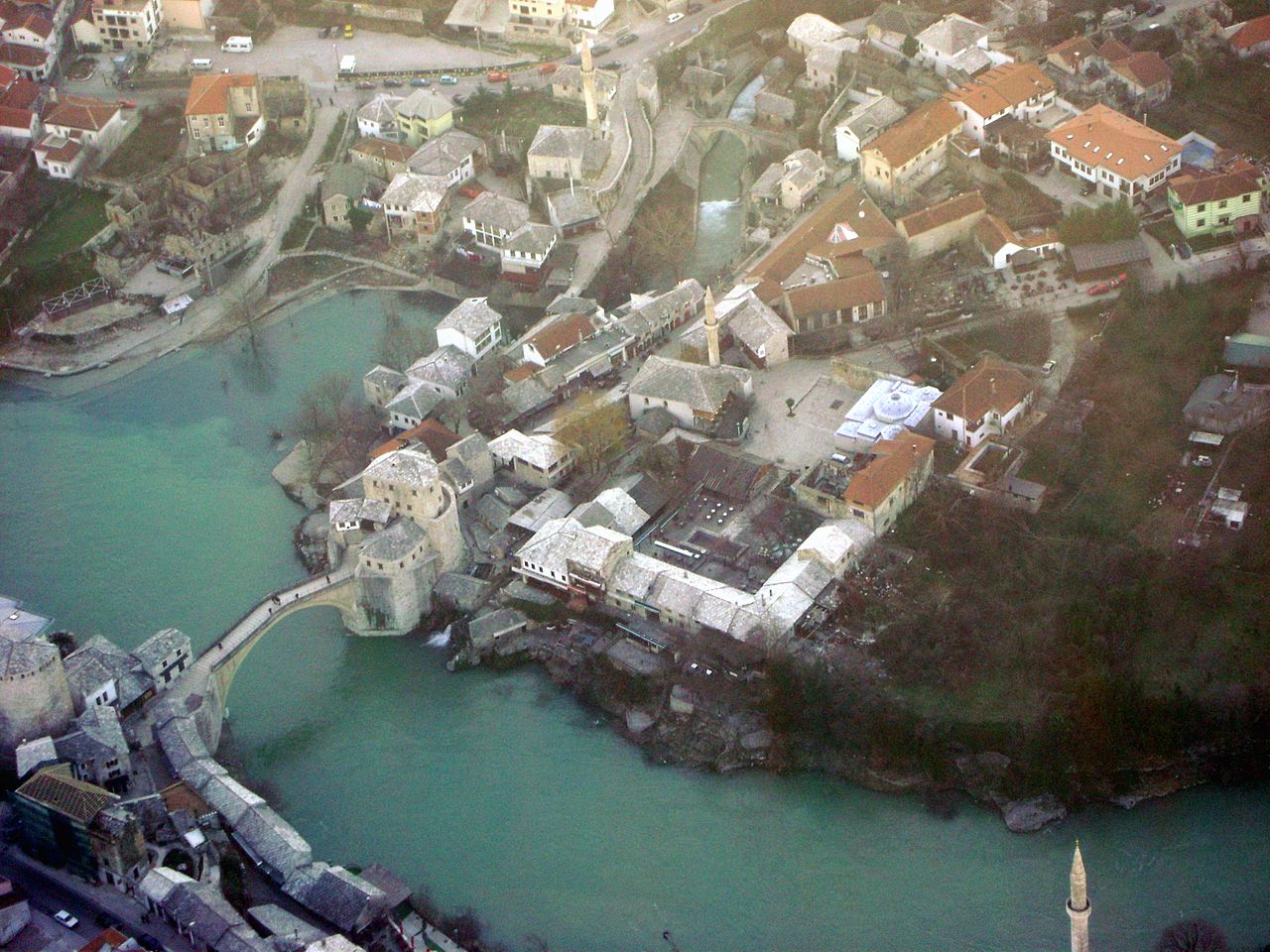
Figure 6. Innenstadt von Mostar mit Stari Most (Wikipedia)
At any rate, al‑Fatih’s wooden bridge was but a temporary solution, serving for nearly a century. It soon became apparent that the existing crossing could not remain a perennial match to the ever‑growing imperial presence and aspirations of the Ottomans. For the bridge was not merely a structure: it was the very identity and axial center of gravity of the new urban wonder, Mostar. As the city expanded, the bridge too was compelled to grow and evolve, so as to appear and perform on a par with the other bustling components of the rising metropolis.
These needs—and the sentiment behind them—were most conspicuous during the golden age of the Ottoman state, under Sultan Suleyman the Magnificent, and during the golden age of Ottoman architecture, when Mimar Sinan served as imperial chief architect. One may say that the stage was set and the prerequisites fulfilled for the Old Bridge to be conceived at the highest levels of power in the greatest empire of the day, and to be implemented by some of its finest architectural and engineering minds.
It seemed as though destiny itself conspired in Mostar’s favor: the city and its bridge became inseparable, the bridge its ambassador, and together they emerged as one of the most recognizable emblems of the Ottoman presence in the Balkans.
Following the completion of Sultan al-Fatih’s bridge, the people bestowed upon it names that spoke of both reverence and inevitability. It was called the Old Bridge – though the name may have emerged much later to reflect its accumulated legacy – as if to suggest that its origins reached back into antiquity, predating even the Ottomans. It was also hailed as the Great Bridge, a title that proclaimed its stature among the crossings of the Neretva and augured the unavoidability of future transformations. And it was known simply as the Bridge over the Neretva, a designation that affirmed its geographical singularity and its role as the artery binding the two shores. Over the ages, though, the names kept evolving, reflecting changing perceptions and cultural memory.
However, by the latter years of Sultan Suleyman’s reign, the Osmanli archives reveal that al-Fatih’s wooden bridge—erected nearly a century earlier—was succumbing to decay. Its beams sagged, its joints weakened, and its structure stood in serious dilapidation. The bridge had fulfilled its projected socio-political and economic mantle, proving its worth for a hundred years, but its ephemeral wooden form could no longer bear the weight of fate. What had once sufficed for conquest and immediacy now demanded permanence.
Sultan Suleyman, renowned for his hyperbolic and gargantuan solutions, responded in a manner befitting the grandeur of his empire. To him, simplicity and ephemerality were relics of the past. The bridge was to be reborn, not in timber, nor in any substance prone to decay, but in stone. It was to rise in the contour of a single, soaring arch, commencing from the foot of one fortification tower and ending near the other. In this vision, the bridge ceased to be a mere passage; it became a proclamation of endurance, a civilizational arch binding not only the two banks of the Neretva but also the legacy of Ottoman longevity to the flow of history itself.
According to authentic historical texts, since the bridge had fallen into a derelict state, in 1565 the citizens of Mostar submitted a petition to Sultan Suleyman in Istanbul. They reported that in the kasaba of Mostar, across the river Neretva, there stood a bridge in ruinous condition, and they requested that a new one be built in its place. The Sultan approved the demolition of the old bridge and the commencement of new construction, issuing the necessary decrees accordingly. Several documents preserved in the Ottoman State Archives in Istanbul provide highly significant information about the preparatory works for the bridge’s construction. They shed light on the social categories and legal entities that, under law, were obliged to contribute financially to the project, on the estimated costs required for the complete construction of the bridge, as well as on the professional and physical executors of the building works.[9]

Figure 7. Franz Laforest, Mostar Stari Most, 1883 (Wikipedia)
Once completed, the curved span of the bridge measured 34.9 meters in length, stretching gracefully across the Neretva. Its reach was nearly 29 meters—precisely 28.71 meters on the upstream side and 28.62 meters on the downstream.[10] Its crossing deck was between 4 and 4.5 meters in width, while the arch rose nearly 21 meters above the river, making it one of the most daring single-span stone arches of its age—and still a striking engineering landmark today.[11] The arch ascends with deceptive lightness, appearing slender at its crown but thickening as it descends towards the bearing points. This tapering was deliberate: at the crown, where compressive forces dominate, the stones could be arranged in a leaner profile, lending the bridge its graceful silhouette. At the support bases, however, the arch swells to nearly eight meters in mass, absorbing immense lateral thrust and channeling it into the fortified abutments.
The bridge was primarily built of finely cut stone known as tenelija, quarried in Mukoša, about five kilometers south of Mostar. More than 456 blocks of this stone were incorporated into the structure, though the exact number cannot be determined, since around sixty blocks in the central section were later concealed beneath mortar during repairs.[12] Tenelija was the essential material for the arch and visible façade, chosen for its fine grain, pale shimmer, and workability.
Complementary types of locally available limestone were also employed. Harder, heavier, and erosion-resistant varieties were reserved for the foundations and load-bearing sections, ensuring stability against the Neretva’s forceful currents. Softer, lighter stones were applied in non-structural segments and decorative details, including the delicate surfacing of the bridge’s stairs-like pathway.[13] This careful texturing addressed both aesthetic and practical concerns, such as slipperiness, safety, and the tactile rhythm of passage across the span.
The parapets of the bridge were fashioned from long, thin stone slabs, elegantly framing the pavement on both sides.[14] The pavement itself descended in a subtle, laddered or stepped contour, cascading from the highest midpoint—the climax of the semicircular arch—towards both ends of the span. This cadenced surfacing not only accentuated the bridge’s dramatic silhouette but also guided the pedestrian’s movement, transforming the act of crossing into a ritual of ascent and descent. In later centuries, iron railings were added to augment the safety of the low parapets, a pragmatic intervention that nonetheless altered the original Ottoman balance between openness and enclosure.
As indicated earlier, the larger stones were deliberately set into the lower sections of the bridge, where they bore the immense load and absorbed the stresses of the rising edifice above. As the arch ascends and tapers, the stones progressively diminish in size and weight, proportionate to the reduction in both gravitational burden and structural tension. At the crown—the apex of the span—the smallest and lightest stones are placed, culminating the sequence with a gesture of delicacy.
The structure seems to move in aesthetic motion, as if engaged in dialogue with itself while reaching outward to embrace its surroundings. Though its form is inert, its flawless functionality and overwhelming aesthetic impulse radiate a soul – a living presence of emotion and thought. It is not merely an achievement of engineering mastery, but a choreography of stone that reconciles gravity with elegance.
To call the bridge only an engineering marvel, only an architectural masterpiece, only a symbol, or only a sanctuary of recollection would be to diminish its essence. It is all of these at once, subtly integrated into a singular aggregate. If Goethe’s celebrated phrase—“architecture is frozen music”—can be applied to any work of genius, it is to the Old Bridge. For here, architecture and conquering aesthetics, like music, personify rhythm, harmony, and proportion. Yet unlike music, which unfolds in time, the bridge crystallizes those principles in space, fixed and enduring.
No wonder that all who beheld it acknowledged its symmetry, equilibrium, and the consummate skill of its architect. Its innermost harmony with itself and with its milieu was consistently praised by both locals and foreign travelers. Its intimate beauty and richness were not confined within stone but generously poured into the world, transforming utility into poetry, and intransience into breathing remembrance and sustained legacy. That is why its destruction can be regarded as a form of memoricide, which is an attempt to eradicate memory itself, to obliterate the past and efface every trace that might recall a targeted people and their undesired presence. In this way, remembrance is not merely silenced but systematically wiped out.
The foundations of the bridge were, at least in part, structurally interlaced with those of the adjoining fortification towers, thereby projecting the impression of a unified architectural organism in terms of fundamentals and supports. This interrelationship was most conspicuous on the western, or right, side. Still, such a foundational bond may be more symbolic than actual. The adjoining structures were erected and re‑erected across different periods, their supports varied in form and strength, and their materials diverged in composition—circumstances that preclude any genuine structural symbiosis.

Figure 8. Alte Brücke in Mostar, Ansicht 1978 (Wikipedia)
Juraj Neidhardt, indeed, dismisses the association altogether, regarding the supposed unity as an illusion born of proximity rather than of engineering fact. He rightly observes that the towers, in their present largest, strongest, and most resilient forms, were constructed considerably later than the bridge itself—an historical sequence that inevitably dissociates them from the bridge’s original structural logic.[15] The earlier incarnations of the towers were markedly smaller and simpler, and thus poorly compatible, from an engineering standpoint, with the bridge’s more sophisticated design.
The bridge was constructed at a rocky narrowing of the riverbed, its foundations firmly anchored in the natural bedrock. The stone span thus appears as though rising spontaneously and organically from its geological substratum, forming an entity that not merely fits but truly belongs where it stands. It is as if the two geological and topographical sides of the river ascend and levitate towards one another, eventually conversing, converging, and embracing. The bridge becomes the point at which the sides of the river unite, transforming the waterway from barrier, obstacle, or divider into an enriching, empowering, and garlanding component of the whole.
The bridge has often been likened to a rainbow.[16] From as early as the sixteenth century, poets lavished it with allegories and metaphors, sometimes abstract, even elusive in meaning. A prominent motif was the comparison to a flamboyant rainbow, a heavenly arch, and a vaulted span.[17] To the naked eye, the bridge was stone and mortar. But to the awakened spirit, guided by a sixth sense and divinely inspired intuition, it revealed something beyond the physical: its soul. Only those endowed with a vivacious Mostarian heart and an Islamically awakened consciousness could truly feel and experience that essence. The fortunate ones did not merely see the bridge; they interacted with it differently, as if conversing with a living being. How blessed they are to have touched eternity through stone.
This reading is but one of many windows through which one may glimpse and sense the quintessence of Islamic art and architecture. Much more will be said later, for the bridge is not an isolated marvel but part of a greater civilizational tapestry. What truly sets the bridge apart is its Islamic identity. This identity elevates the structure beyond mere engineering achievement, raising it to greater heights of ontological significance and civilizational purpose. In its arch of stone resides also the metaphysical imprint of the Islamic worldview, which is a vision not confined by time or space, knowing neither restriction nor boundary.
The bridge was realized between 1565 and 1566, the very year Sultan Suleyman passed away. Many have believed, in error, that the bridge rose over nine long years, from 1557 to 1566. How this tale was born, who gave it voice, and how it hardened into memory remains a mystery, for the archives themselves speak plainly otherwise.[18] It is interesting to note that certain 16th‑century Ottoman records even designate the structure as Sultan Suleyman’s bridge.[19]
For the construction of the bridge, according to the initial professional assessments, it was necessary to secure 300,000 akçe (silver coins). These funds were to be collected from taxes imposed on specific legal categories of inhabitants of the Herzegovinian and Klis sanjaks. In accordance with subsequent sultanic orders, the required funds—already exceeding the original projections—were to be provided by the following taxpayers: from those paying extraordinary state taxes in the kadiluks (jurisdictions of a qadi) of Novi, Nevesinje, and Mostar: 40,000 akçe; from the filurija Vlachs in the kadiluk of Novi: 100,000 akçe (filurija being a tax levied primarily on Vlach pastoralist communities, often tied to their semi-nomadic lifestyle and livestock economy); from nomadic herdsmen in the Herzegovinian sanjak: 60,000 akçe; from the filurija Vlachs of the Klis sanjak: 100,000 akçe; and from extraordinary state levies: 150,000 akçe. The total sum thus reached 450,000 akçe.[20]
Of this, a substantial allocation of 140,000 akçe was spent on stone, timber, lead, iron, beams, and other essential building materials. Timber was to be prepared before the construction season of 1566, and all workers were required to be present at the site once building commenced. Timber is specifically drawn attention to perhaps because it was relatively scarce in Mostar compared to stone, both owing to the region’s geology and given that stone was the more abundant and durable building material available locally. The karstic terrain of Herzegovina provided plentiful limestone, while timber supplies were limited and often had to be imported from surrounding forested areas.[21]
As can be seen, the costs of procuring materials and carrying out the construction surpassed the originally estimated sum of 300,000 akçe. How much was ultimately collected and spent cannot be determined from the surviving documents, particularly since certain categories of taxpayers rebelled against the levying of the required taxes. Those communities argued either that they were, by law, exempt from extraordinary state levies, or that their harsh living conditions and meagre economic status warranted exemption. The Sultan approved some of the petitions but declined others, emphasizing that the bridge was being built also for their benefit. Once completed, it would enable them to conduct their affairs with greater ease.[22]
Preparations and deliberations stretched from early and mid‑1565 into early 1566, focusing on the design and plan of the bridge, the means of translating them into structural and architectural reality, and the question of who exactly would execute the work, necessitating the importation of foreign experts. The construction season, namely the late spring and summer of 1566, was targeted, with expectations that the work would be completed within two to three months. Indeed, it is believed that construction began in earnest sometime after March 1566, and was completed as planned during that same season.[23]
With the erection of the bridge, the fast‑decaying fortification towers that flanked it were set to be dwarfed both in quality and in form. It was therefore proposed that they too be to some extent renovated – an exercise that paved the way for their complete rebuilding more than a century later. Additionally, in an effort to optimize the ramifications of the impending bridge project, it was suggested that one side of the Neretva, where water supply was insufficient, be attended to by constructing a waterworks system integrated with the new bridge, so that drinking water from one bank could be conveyed to the other. While the renovation of the towers was approved, the proposal for waterworks was met with caution. It was eventually sanctioned on the condition that maximum care be taken to avoid jeopardizing the structural and operational integrity of the bridge. Should any damage occur, those who had insisted on associating the water supply with the bridge would be held responsible for compensation.[24]

Figure 9. Mostar Bridge from a postcard , 1911 (Wikipedia)

Figure 10. The architect and engineer behind the bridge’s monumental enterprise was Mimar Hayruddin, a distinguished apprentice of the celebrated master Mimar Sinan (photo by author)
The architect and engineer behind this monumental enterprise was Mimar Hayruddin, an apprentice of the celebrated Mimar Sinan. Oversight and management were entrusted to the shoulders of Karađoz Mehmed Beg, who supervised a revenue concession in Herzegovina as part of the Ottoman fiscal system. Let us remember that Karađoz Mehmed Beg was, at the same time, the patron of Mostar’s most important mosque complex, the Karađoz Beg Mosque. Each tier of the organizational structure—from the Sultan as patron, to Hayruddin as the leading architect, and to Karađoz Mehmed Beg as project supervisor—was indispensable. Their coordination was remarkable, ensuring that the work proceeded immaculately according to prescribed procedures. The qadi of the city likely played his part too, consistent with his judicial responsibilities as custodian of law and moral order.
To this must be added a qualified workforce, many of whom were imported from Dubrovnik and Herceg Novi, seasoned master builders accompanied by their assistants and apprentices. They were required to bring their tools and equipment, since every aspect of erecting a colossal arched bridge demanded exceptional preparation. Local manual laborers were likewise employed, as were soldiers from the garrisons of Mostar and Blagaj. Together, this diverse assembly of patronage, expertise, and manpower built beyond a bridge, as time and people bore witness.[25]
If truth be told, external architectural assistance proved necessary for the bridge, and in equal measure for numerous other Ottoman undertakings, because the standards of construction were so elevated that Bosnia, newly opened to Islam, could not yet provide adequate resources. The disparity required recourse to nearby alternatives. However, with foreigners comprising the chief technical workforce, the bridge’s creation has at times been provocatively ascribed to Dalmatian-Italian experts exclusively, as though Ottoman genius were eclipsed by imported skill.[26]

Figure 11. The bridge is flanked by two fortification towers. The one on the western, or right-hand side, is known as Halebija (also called Halebinka). (photo by author)

Figure 12. The fortification tower on the eastern, or left-hand side, was called Herceguša (“Herzeg’s Tower”), reflecting its medieval origins tied to the Duchy of Stjepan Vukčić Kosača, the Herceg of Hum/Herzegovina. It was later renamed the Tara Tower. (photo by author)
An array of meanings and values has been inscribed within the bridge. Indeed, one may rightly proclaim that what the Taj Mahal is to Agra and India, what the Alhambra Palace is to Andalusia and Spain, and what the resplendent bridges of Isfahan—shimmering in stone—are to Iran, that is what the Old Bridge is to Mostar and to the whole of Bosnia. These are jewels fashioned to adorn and illuminate not only the architectural landscape but also the intellectual universe of humanity. They stand as gifts to the world, enduring testaments of skill and sublimity, luminous with the majesty of civilizations.
At this juncture, one feels compelled to pause and reflect upon the possible role of Mimar Sinan in the construction of the Old Bridge. The coincidence of time is striking: it was precisely then that Sinan, at the height of his career as the Ottoman imperial chief architect, was striving to equal—and ultimately surpass—the span and daring of Hagia Sophia’s dome. Parenthetically, the dome, as a fundamental architectural component, is best understood as an extension of the arch principle, for it is essentially an arch rotated around its vertical axis, producing a continuous and encompassing curved surface. In this light, what was unfolding in Mostar could scarcely have escaped Sinan’s notice.
The span of the bridge’s arch—slightly less than 29 meters—was in itself an impressive achievement for its time, audacious and groundbreaking in many respects. Nevertheless, its construction coincided with the very moment when Mimar Sinan’s mosque architecture was reaching its zenith. Sinan, indirectly and perhaps deep within, was challenged by the monumental scale of Hagia Sophia, and was subtly impelled to strive not only to equal but to beat the greatness of its dome, which spans 31 meters. The undertaking of the Old Bridge was thus sandwiched between two of Sinan’s defining works: the Suleymaniye Mosque in Istanbul, completed in 1557—the very year the bridge project was unveiled—whose dome spans 26.5 meters; and the Selimiye Mosque in Edirne, begun in 1568, two years after the bridge’s completion, whose dome measures 31.2 meters in diameter, thereby not only matching but slightly surpassing Hagia Sophia. With Selimiye, it was as if the long-standing challenge of outdoing Hagia Sophia had finally been met. The mission, so to speak, was accomplished. For this reason, Sinan named the Selimiye Mosque his masterpiece, the crowning testament of his genius and the fulfillment of his architectural mission.

Figure 13. View of the bridge complex from the Tara Tower. (photo by author)
This suggests something both curious and telling. To an insightful observer, the Old Bridge in Mostar may well appear as part of an experiment—or rather a process—through which Mimar Sinan and his architectural school sought to intensify their achievements to such a degree that even the imposing and challenging diameter of Hagia Sophia’s dome might be topped. That one of Sinan’s apprentices, Mimar Hayruddin, was entrusted with the bridge—perhaps on behalf of his master—only reinforces this hypothesis, while simultaneously re‑underlining both the architectural‑engineering standing and the civilizational magnitude of the bridge.
Be that as it may, Sinan must have been fully aware of the importance of the idea and phenomenon of the Old Bridge, keeping a close eye on its development. It is further plausible that he may have played a role, however limited, in its conceptualization and design, guiding his student in the process. Such indirect, behind‑the‑scenes involvement apparently prompted several to assert—mistakenly—that it was Sinan himself, and not Hayruddin, who designed and built the bridge. Among them was none other than Evliya Celebi, the seventeenth‑century Ottoman traveler and chronicler, who visited Mostar in 1664, less than a century after the bridge’s completion, and marveled at its wonder.[27]
Furthermore, Slobodan Ćurčić, in his monumental “Architecture in the Balkans,” likewise pondered whether Sinan might have been the designer, using the bridge as part of his continuous experiments and architectural advancements. To his credit, Ćurčić acknowledged that attempting to answer the question inevitably enters the realm of speculation, for no solid evidence exists. Still, he insisted that the question, though hypothetical, is worth posing—if only to diversify perspectives – “even if a definitive answer may be impossible.”[28]

Figure 14-15. az Öreg híd (Stari most) hídfője a híd közepéről nézve 1903 (Wikipedia)
Given that Mostar was one of the frontier cities of the Ottoman Empire—strategically extending along the Neretva valley and guarding the approaches between Dalmatia and the Bosnian interior—it gradually grew in stature and strategic importance. The city was not an antemurale (bulwark) in the classical sense of the term, however, it was undeniably one of the foremost border cities: exposed, vulnerable, and in constant need of protection. In this way, Mostar embodied the very qualities of an antemurale. Its extended urban form and bridge-centered identity made it simultaneously a military outpost and a cultural beacon.
The bridge and its fortifications were integral to the city’s defensive functionality, and it was therefore essential that the bridge complex—comprising the span itself, flanking fortifications, and towers—remain in optimal material and operational condition. Contemporary documents attest that architects, builders, and artisans were entrusted with the ongoing repair and maintenance of the complex. Their work was held in such esteem by the authorities that they were granted exemption from taxes, a privilege underscoring both the vital importance of their craft and its role in safeguarding the city’s survival.[29]
Throughout its long history, the Old Bridge was repaired on several occasions. An inscription from 1676 was embedded into its structure, though the precise works undertaken at that time were not recorded. Another restoration was commemorated on a smaller stone plaque, dating to 1737. Under Austro-Hungarian rule, further interventions and corrections were carried out, yet these diminished the bridge’s originality and authenticity. Later repairs followed, particularly after the Second World War. During works that, with interruptions, extended over many years, damaged stone blocks were replaced, unsightly mortar patches that marred the bridge’s beauty were removed, and the surrounding area was carefully redesigned. Together, the bridge and its environment formed a unified visual and historical-architectural composition, one by which Mostar was recognized and celebrated for centuries.[30]
The 1737 renovation appears to have been the most serious and extensive undertaken on the bridge. Among the measures carried out was the construction of a new storehouse for gunpowder and other equipment intended for the garrisons of the two fortification towers. The existing store was deemed un-strategic and potentially hazardous, threatening the safety of both the bridge and its towers.[31] At the same time, the Herceguša or Tara Tower was completely refurbished.[32]
The only known Ottoman-period drawing of the bridge, dating to 1864, provides valuable insight. In addition to the vertical and horizontal elevations of the bridge and its precise dimensions, the drawing records three dates: two on the left and one on the right. The dual inscriptions on the left mark the original construction of the bridge (974 H) and the construction of one of its fortification towers (1087 H). The date on the right, 1150 H / 1737 CE, attests to the aforementioned extensive renovation. The same drawing also depicts the water supply system—an aqueduct—integrated into the bridge’s urban and defensive ensemble.[33]
According to Džihad Pašić and Amir Pašić, although repairs had been carried out in earlier times, systematic and scientific investigations on the health of the bridge’s construction began only in 1970, when Džihad Pašić prepared the first major report. Detailed drawings of the bridge were produced, and each stone was carefully numbered. In 1979, a preliminary underwater structural survey revealed significant weaknesses in the natural rock beneath the bridge’s footings. The right bank was found to be especially eroded, with caverns forming beneath the right footing. To examine these cavities, specialized divers and underwater equipment were employed, enabling a closer study of the bridge’s hidden vulnerabilities.[34]
Caverns or cavities beneath the bridge’s footing were first identified through structural examinations, prompting engineers to reinforce the foundation. Steel bars were driven deep into the bedrock, strengthening the overhang, while the hollowed areas below were filled with reinforced concrete. Although the bridge was stabilized, it has since remained under constant monitoring and examination. Its resilience over the centuries was undisputed, one of the most striking demonstrations occurring during World War II, when the German army filled the steppings with sand and drove tanks across it. In 1985, however, small holes were discovered in the vaults, allowing water to seep through the interstices and freeze within the hollows, which was a condition that posed a serious threat of damage. To counter this, waterproofing measures were undertaken in March 1986, with bonding and sealing materials applied to the exposed surfaces between the stones.[35]
In the turmoil of the 1992–1995 aggression against Bosnia and Herzegovina, the Old Bridge met its tragic end. On November 9, 1993, during the height of the conflict in Herzegovina, the Croatian Defense Council (HVO), an illegitimate Bosnian Croat military formation, subjected the bridge to relentless artillery and tank shelling. After days of bombardment, the centuries‑old structure collapsed into the Neretva River.

Figure 16. When the bridge was destroyed on November 9, 1993, President Alija Izetbegović described it as one of the most painful days of the war. Surrounded by utter devastation, the bridge is seen here awaiting its appointed hour, when it finally collapsed into the embrace of the Neretva River. (Source)
It took more than sixty shells to bring it down, which is a proof of its abiding strength, and of the cold, calculated will behind its annihilation. This act of endurance was defiance incarnate, a call to all never to waver in defending honor, dignity, and sanity. To the foe it thundered: if such force is needed to break the mere form, then your arsenal is powerless against the edifice of ideas and values. The latter are inaccessible and inviolable, fortified by truth itself.
Eyewitnesses recall that the bridge’s final moments were accompanied by sounds of cracking and snapping, likened to the pangs of a dying creature. The voices seemed to mark the gradual release of its soul, the separation of spirit from matter. Its plunge into the river was not just physical collapse but an emblematic union with its eternal companion—the Neretva currents—whose embrace had defined its existence for centuries.
However, providentially, the story did not end in ruin. In the aftermath of the aggression, a global effort led by UNESCO and the World Bank sought to rebuild the Old Bridge. Between 1997 and 2004, the bridge was reconceived and reconstructed using original techniques and materials wherever possible, restoring not only its physical form but also its symbolic, spiritual, and emotional meaning. Those seven years were defined by intensive and meticulous phases of thought, organization, planning, and implementation. The international domains of ideas, decisions, and applications were compelled to operate in seamless unison and tirelessly. Vision had to be turned into fact. Actual reconstruction work began in 1999 and continued until 2004.[36]
Today, the bridge stands once more, recognized as a UNESCO World Heritage Site. It is, again, a monument of civilization and normalcy. As Idris Bostan observed, the renewed bridge testifies that history cannot be summoned to a “duel,” and that all schemes of distortion or falsification are condemned beforehand to ignominious defeat.[37]

Figure 17. It took more than sixty tank and artillery shells to bring the bridge down, which is a testament to its abiding strength, and to the cold, calculated will behind its annihilation. (Source)
The Old Bridge area of the historic city of Mostar was inscribed on the UNESCO World Heritage List in July 2005, under the banner of “human solidarity for peace and powerful cooperation in the face of overwhelming catastrophes.” The recognition was granted during the 29th session of the World Heritage Committee.[38]
According to the nomination dossier titled “Bosnia and Herzegovina, Nomination Dossier: The Old City of Mostar,” the first temporary bridge on the traces of the Old Bridge was erected in only three days and opened on December 30, 1993. This provisional structure was subsequently upgraded three times, eventually linking the two shores with a more secure cable‑stayed bridge until the proper reconstruction of the bridge could be undertaken.[39]
The reconstruction of the bridge formed part of the broader efforts to rebuild and revive the city of Mostar. Central attention was given to the Ottoman historic core — the area most devastated during the aggression — along with several related sites. The municipality of Mostar, working in close collaboration with the World Bank, UNESCO, the Aga Khan Trust for Culture (AKTC), the World Monuments Fund (WMF), the Research Centre for Islamic History, Art and Culture (IRCICA), and other international partners, coordinated the activities.
The year 2004 was designated as the celebration year of Mostar’s renewal and as a prelude to UNESCO recognition. It was underscored that if the destruction of the bridge had symbolized the disintegration of Bosnia and Herzegovina, then its rebuilding must connote a symbol of restoration — of the country itself and of the reconciliation of its peoples, who should come together to rebuild the Old Bridge and, with it, all of Mostar’s bridges, linking them once more as a unified nation. The aspiration was that the bridge would embody the revival of Bosnia and Herzegovina’s multi‑ethnic and multi‑religious society, offering a powerful example to a world beset by turbulence. Finally in the summer of 2004, after years of painstaking research and rebuilding, the Old Bridge complex was reopened to the public.[40]
The international rehabilitation project, guided by the Municipality of Mostar in partnership with the World Bank and UNESCO, brought together a distinguished body of experts of global reputation. Structural design was based on photogrammetry conducted in 1955 and 1982 by the Survey Institute of the University of Zagreb. General Engineering of Florence prepared detailed structural plans, mapping the disposition of every stone block, under the leadership of recognized specialists. Their two‑year effort produced not only structural calculations but also manuals on stone cutting and chiseling, which became direct sources for the reconstruction.
Material analyses were undertaken by the LGA Institute of Nuremberg, resulting in three volumes on stone, metals, and mortars. Tests were conducted on arch remnants recovered from the river and on stone samples from the reopened original quarry. LGA also installed a monitoring system — strain gauges and pressure cells at the arch joints and extrados — to track displacements and stresses during the bridge’s early years of use. Comparative analyses with modern materials were likewise performed.[41]
Further research on the remnants, foundation rock mass, and abutment walls was carried out by the joint venture “Conex” and “Yeralti Armacilik,” employing both standard methods and advanced ultrasound and topographic testing. Consolidation of the foundations and strengthening of the rock mass was executed by the Turkish company “Yapi‑Merkezi.” Each phase of preliminary work was monitored by UNESCO’s International Committee of Experts (ICE), whose conclusions guided the project.
Ultimately, a facsimile reconstruction was chosen. The Turkish company ER‑BU Ankara, with numerous subcontractors, carried out the reconstruction. Supervision was provided by “Omega Engineering” of Dubrovnik, which also prepared the detailed design for the rehabilitation of the towers and surrounding structures, as well as archaeological investigations. Tower reconstruction was undertaken by the joint venture “Građevinar‑Fajić,” “Kara‑Drvo,” and “HP Investing” of Mostar, with subcontractors. Stone cutting was performed by “Kara‑Drvo,” under the supervision of the Geological Institute of Sarajevo. Each construction phase was carefully monitored by UNESCO’s expert committee, which convened eight sessions to direct the works.[42]
The remarkable philosophy guiding the bridge’s reconstruction is summarized in a document displayed at the Museum of Herzegovina in Mostar.[43] Central to this philosophy is the principle that the reconstruction must remain faithful to the ideas and spirit of the original structure. At the same time, it should allow for the historical stigmata (marks or scars) and patina (surface aging or weathering) that emerge through time, while acknowledging earlier restoration efforts.
Equally important was the aim of re‑appropriation, ensuring that the monument would be reclaimed by the people of Mostar through their close involvement in every phase of the reconstruction. In consequence, the project emphasized respect for original materials and practices, and sought to involve the local population in restoration activities to the greatest possible extent.
While the use of certain machines was tolerated for rough dressing operations on stone blocks, the philosophy insisted that hand‑cutting remain central. The basic rules of stonemasonry were to be strictly observed, and traditional techniques and tools were to be employed wherever possible. Like so, the reconstruction was envisioned not as a mechanical replication, but as a living continuation of the bridge’s historical self.[44]
In other words, the bridge was not meant simply to be rebuilt, but to be revived and restored to its past identity and glory. As if, in collapsing in 1993, it proclaimed to its surrounding urban setting, and by extension to the watching world — filled with awe, compassion, and horror — “I will return. I will rise again. And when I do, I shall be stronger, nobler, and more determined.”
Hence, the restoration was the bridge’s second coming. It was the same bridge, albeit reborn in a new vesture, bearing the scars of history and transfigured into a timeless monument of truth and reconciliation. It returned as a victor against all odds and against the proliferating forces of evil. In this rebirth, it ceased to be merely the possession of Mostar or Bosnia and Herzegovina; it became the heritage of all humanity as well as a universal asset. It emerged as a global ambassador of peace and integrity.

Figure 18. Between 1997 and 2004, the bridge was reconceived and reconstructed using original techniques and materials wherever possible, restoring not only its physical form but also its symbolic, spiritual, and emotional meaning. It became the heritage of all humanity as well as a universal asset, emerging as a global ambassador of peace and integrity. (photo by author)
From the architectural perspective, the Old Bridge had it all: perfect form, supremely compelling functionality, sophisticated engineering, and profound symbolism. It never ceased to mesmerize, inspiring armies of poets, artists, dreamers, fantasists, and romantics. Everyone could discover something of themselves within the bridge’s multilayered universe, for it was so cordial and welcoming that it unfailingly found its way into each visitor’s heart, mind, and soul. The bridge belonged to everyone, and everyone belonged to the bridge. The feeling was reciprocal.
Nevertheless, one dimension is often overlooked — deliberately or otherwise — for it does not fit neatly into the molds and fanfare that have come to surround the bridge in the disoriented ages of modernity and postmodernity. The problem also lies in the incompatibility between the bridge’s undeniable uniqueness and the ideological trajectory increasingly pursued by the institutionalized segment of Bosnia and Herzegovina. As one observer rightly noted, the old Ottoman Mostar, with the bridge at its heart, is being converted concurrently into an object and an instrument of reckless consumerism, into a kind of Disneyland, so to speak.
In the process, the actual role of Mostar’s historical urban marvel is being sidelined. Its expected function today in the struggle for the preservation and sustainability of Bosnia and Herzegovina’s sovereignty and unity is fairly neglected, as are the responsibilities of all parties towards the city itself. What is unfolding is not confined to the commodification of heritage, but extends to the trivialization of memory and the weakening of autonomous governance and its legitimacy. It is the ubiquity of hollow pop‑culture at its most revealing. It is, in fact, the preference of inconsequentiality over substance, the triumph of spectacle over truth, and the enthronement of illusion over identity.

Figure 19. The bridge rests in equipoise, mirroring the Ottoman‑qua‑Islamic vision of harmonizing the city of man with the eternal Kingdom of God. (photo by author)
The overlooked dimension is that the Old Bridge was — and remains — a masterpiece of Islamic architecture. Yet the Islamicity of its architectural genius is often disregarded, for many forces, both internal and external, go tooth and nail to dissociate Bosnia and Herzegovina from its deeply entrenched, indelibly etched centuries‑old Islamic consciousness and individuality. At best, the country’s Islamic history, culture, and civilization are treated as an overcome experimental legacy, after which Bosnia is expected to move forward along Western anti‑Islamic, anti‑spiritual, and anti‑moral currents.
Accordingly, anything from the nation’s past deemed relevant to contemporary times must be de‑Islamized, secularized, and post‑modernized, in the sense of being stripped of authoritative, objective, religious, and ideological truth. However, since Islam can neither be denied nor prevented, it is therefore tolerated only as a private matter, preference, or experience. It must be stripped of all public relevance. Thus the bridge, likewise, was made a target, leaving it conceptually impoverished and deprived of its deeper architectural logic.
Taking into consideration the ever‑growing renown and influence of the bridge, its Islamicity was deliberately demoted and eclipsed by honeyed — and often misleading — rhetoric about universality, pluralism, and the abstraction of humanity’s “humanness.” Such language is expected to function as no more than distraction and smokescreen. Which is unfair, for it sidelines the bridge’s core personality, relegating it to obscurity and suppressing the ethos it was built to proclaim.

Figure 20. City of Mostar, southern Bosnia and Herzegovina 2004-07 (Wikipedia)
In short, the bridge embodied all concerns, answered all demands, and fulfilled every requirement – but in an Islamic way. Ignoring this fact is itself a complicity; it is an indirect hand in the crimes committed against the bridge. Needless to say, this additionally plays into the hands of such as are unfriendly to the cause of Bosnia and Herzegovina and the Bosniaks. Even Islamophobes rejoice in this reduction, as evidenced – for example – by the praises and lyrical intoxication of Ivo Andrić, who is frequently cited as one of the progenitors of Islamophobia in the Balkans. He identifies the entire city of Mostar — inseparable from the Old Bridge and its Ottoman core surroundings — with light. For Andrić, Mostar was more than a place; it was an atmosphere, a radiance that defined its very essence. He wrote: “Light greeted me upon my arrival in Mostar, accompanied me throughout my stay from morning until evening, and later, after my departure, it remained within me as the chief characteristic of my memory of Mostar.”[45]
Thus, in Andrić’s vision, Mostar becomes the city of light: light in stone, light in water, light in memory. But one must ask — which light? Certainly not the Ottoman‑Islamic light that conceived, nurtured, and gave rise to Mostar. Rather, it is a “light” manufactured — or at least magnified — by the absence and neutralization of that original source. A borrowed radiance, detached from its civilizational roots, rebranded as deceptively ecumenical and profanely temporal.
This obsession with a de‑Islamicized light was not Andrić’s alone. Aleksa Šantić too was captivated by it, so much so that Mostar is sometimes even called Šantić’s Mostar, a city refracted through his poetic lens.[46] In his verses, the city’s atmosphere is fondly articulated, albeit always in tension with the deeper Ottoman‑Islamic fundamental nature that had truly shaped its soul.
Nobody can dispute that, were it not for the Ottomans, there would be no Mostar as we know it today: a historical and civilizational jewel. Without them, its bridge would never have risen from nothing into something, nor would it have seen the light that made it shine brighter. The Old Bridge is not an accidental marvel but the deliberate fruit of genius conceived in faith, executed with mastery, and endowed with a transcendent raison d’etre. To erase this origin is to falsify history, and to neutralize it is to devalue civilization itself.
In any case, the architectural vision and execution of the bridge were Islamic par excellence. To comprehend this is to comprehend the very character of Islamic architecture; to misunderstand it is to misrepresent that same character. The question, then, is pressing: What is the authentic meaning of Islamic architecture?

Figure 21. So long as the Neretva flows beneath its arch, the bridge will remain a lasting witness, simultaneously to the trials and the triumphs of civilization. (photo by author)
In a nutshell, Islamic architecture is far more than a style; it is the embodiment of the Islamic ‘aqidah — the belief system and moral values that shape Muslim life. It operates in unison as philosophy, process, and outcome, manifesting itself in the conceptualization, planning, design, construction, and use of the built environment. This manifestation occurs intuitively, as believers radiate their faith into daily life, and consciously, through deliberate methods and guidelines.
As a framework, Islamic architecture contains human life and exteriorizes Islam itself. Since Islam is a comprehensive way of life, architecture becomes the medium through which faith and existence mutually actualize one another. It nurtures, facilitates, and promotes this relationship, coping with the dynamism and vicissitudes of life while remaining anchored in profound meaning and inviolable purpose.
The strength of Islamic architecture lies in its balance: unity of vision, values, and purpose, coupled with diversity of forms, styles, and materials. Across centuries and regions, it has maintained remarkable consistency in content and spirit, while allowing for local variation. This universality ensures that Muslims, regardless of race, language, or homeland, encounter a familiar architectural identity wherever they go. It is a microcosm of cultural and civilizational awareness, a volition made visible in stone, wood, and light.
At its heart resides tawhid, the principle of divine Oneness. Architecture, like civilization itself, is created upon this foundation, translating faith into a common identity across time and space. Yet within the parameters of faith and piety, Islam guarantees creativity and freedom of thought, fostering diversity where diversity is due. This has enriched the history of Islamic architecture with forms that are not mere copies, but integral parts of a living, organic whole.
Ultimately, Islamic architecture is simultaneously universal and particular, timeless yet adaptive. It is a luminous expression of Islam’s message woven into the fabric of human life. Hence, though varied in intensity and eloquence, Islamic architecture is represented in mosques, madrasahs, and private dwellings, as well as in communal buildings, including bridges. Simply put: as far as Muslims are concerned, where there is life, there must be Islam; and wherever Islam and life converge, there must be Islamic architectural awareness and ingenuity. This convergence ensures the presence of Islamic architecture as idea and tangible reality, demonstrated as much in the smallest structures as in the grandest and most consequential monuments.
The Prophet Muhammad (peace and blessings be upon him and his family) said in a hadith narrated by Muslim in his “Sahih”: “Allah is Beautiful and loves beauty.” This profound declaration opens a window into the metaphysical core of Islam, where beauty is not merely an aesthetic preference but a divine attribute and existential principle. It implies that, in addition to being transcendentally beautiful, whatever Almighty Allah does and creates is inherently beautiful, too, consistent with the celestial standards of perfection.
What is more, by virtue of being Allah’s vicegerent on earth — entitled and empowered to cultivate and develop His creation, which itself is a repository of divine beauty — man is not only recommended but summoned to generate a realm of beauty in the course of living a purposeful and productive life. Nothing but beauty will be accepted from him. Nothing but beauty, furthermore, will serve as validation of the fulfillment of his vicegerency, provided, of course, that such is fully aligned with the criteria of heavenly beauty.

Figure 22. Ploča na Starom Masleničkom mostu. 2010 (Wikipedia)
Herein lies the architectural greatness of the Old Bridge within the Islamic tradition, which is a greatness that must never be forgotten. First and foremost, the structure was conceived, designed, built, used, and maintained from Muslims, by Muslims, and for Muslims. True, certain non-Muslim elements were present at particular stages of its creation and utilization, but those remained secondary, serving only the predominant Islamic genesis and purpose. Every aspect of the bridge’s conception, function, and enduring existence radiated the general spirit of Islam – a message that is not merely a philosophy, nor a set of abstract ideals and detached rituals, but a holistic system of thought, belief, and practice encompassing the full spectrum of life’s dimensions: existential, physical, and metaphysical.
The Qur’an itself proclaims: “Say: Indeed, my prayer, my rites of sacrifice, my living and my dying are all for Allah, Lord of the worlds” (al-An’am, 162). Elsewhere (al-Dhariyat, 56), Allah declares that mankind has been created for no purpose except to worship Him. In Islam, therefore, life and worship are inseparable: every act must be carried out in the name of, and according to the will and guidance of, Allah, the Creator and Sustainer of the universe.
The overarching mission of human existence, it follows, is worship. These existential-cum-religious tenets are so deeply embedded in the soul and psyche of devout Muslims that many of their undertakings flow forth spontaneously, without prior calculation or design. Only minor deviations from this ideological, moral, and spiritual framework occur, and they remain precisely that — minor — seldom infringing upon the structural or operational integrity of the whole. For this reason, Islam teaches that the sins of a sincere believer are forgivable. Such lapses are rarely intentional, nor born of rebellious arrogance; they are regarded instead as mere slips, incidental to the human condition yet encompassed by divine mercy.
Consequently, before the bridge was ever cast in stone, it was first cast in the molds of Islam’s intellectual tradition, the crucible of its ethical scaffold, and the vitality of its spiritual ethos. Its material form was but the outer embodiment of an inner reality, which is a testimony to the fusion of faith, thought, and life. Inspired and guided by these Islamic beliefs and values, the act of constructing the bridge was seen as an integral dimension of servitude to the Creator and as a means of actualizing His truth upon the earth. It was part of the people’s vicegerency mission, too, threaded through the specific responsibilities that emanate therefrom. Once recognized as gravely needed and as the best option, the bridge ceased to be a mere possibility; it became a responsibility, a trust (amanah) entrusted to the Muslims as part of their consequential and accountable living.
In this sense, the bridge epitomized the very notion of maqasid al-shari’ah — the higher objectives and overarching purposes of Islamic legislation — which aim to preserve and promote human wellbeing while preventing harm. More specifically, they safeguard life, religion, intellect, lineage, and property, and by extension uphold justice, human dignity, freedom, social welfare, and environmental stewardship. The beneficiaries of such responsible undertakings extend beyond Muslims to non-Muslims, and indeed to the whole of creation. For in Islam’s holistic worldview, this is the true meaning of sustainability and sustainable development: a vision where faith and utility, form and spiritual mandate, come together in service of the Creator and in benefit to all.
To adopt the verbatim architectural terminology of the Qur’an, the bridge’s foundations were those of righteousness, piety, duty to Allah (taqwa), and His good pleasure (ridwan) (al-Tawbah, 108–109). In stark contrast stand structures whose foundations are laid upon the edge of a crumbling bank, destined to collapse (al-Tawbah, 109). The more such edifices deviate from the doctrines of taqwa and ridwan, progressively leaning towards their antitheses, the less stable and secure they become, according to the celestial principles and laws of subsistence, and hence, the less Islamic they are.
Such buildings, together with the worlds of ideas and values that surround them, are anomalies within the visionarily beautiful and consequentially created life-locus. The greater their deviation, the closer they draw to total degeneration, collapsing into the fire of spiritual and ethical ruin in this world, and into the fire of Hell in the Hereafter. They resound as discordant notes in the grand symphony of existence, and so both the structures and their patrons are doomed (al-Tawbah, 109–110).
Further echoing the multidimensional spectacle of Islamic architecture, the bridge’s building materials were “borrowed” and appropriated, never “snatched” or misappropriated for ends that were misuseful or ontologically unconstitutional, for in such cases the very materials themselves would be abused. This is because Islam’s universally profound cosmology, revealed by the Creator, teaches that the heavens, the earth, and everything within them are the work and possession of Allah. All creation serves as His signs (ayat), each bearing an existential identity and awareness. In equal measure, they incessantly worship their Creator, consistently glorifying and singing praises to Him. The Qur’an is replete with such references.
It stands to reason, therefore, that when building materials are employed within a broader paradigm that is worship‑disposed and worship‑oriented, they are “pleased.” Such usage constitutes an act of transcendent justice towards them. Conversely, misuse signals acts of mischief and unfairness. It is axiomatic that Islam places such great emphasis on these actualities that its concern extends beyond humanity to encompass the rest of animate and inanimate creation. The wellbeing of humanity as a whole, rooted in freedom, justice, and virtue, is sacred and enshrined in revelation.
In this manner, the bridge — as with every gem of Islamic architecture — became a sign (ayah) itself, saturated with meaning and resonant with messages to be discovered, contemplated, and absorbed into the fabric of life. It is, in essence, but a borrowed and processed fragment of Allah’s creation, reminding us of our stewardship, not ownership. And because it was fashioned from the stones of its own soil, the bridge spoke: think in horizons vast and universal, act in the intimacy of the local, yet remain universal; and live in the symbiosis of timeless truths and present needs. It additionally declared: optimize the potentials of the now and here to the service of tomorrow, as much in the temporal realm as in the eternal Hereafter.
Perhaps the greatest Islamic architectural strength of the bridge lay in its being a constitutive segment of Mostar’s Islamic urban fabric. More than a structure, it was organically integrated into the city, inseparable from it, contributing generously to its richness and, in turn, receiving generously from the city and its people for its own metropolitan ascent and symbolic eminence. Mostar itself was profoundly Islamic, and its Islamicity radiated outward, enriching all who were associated with it.
This association conferred upon the bridge added layers of Islamic significance and functional tone. Its rapidly intensifying roles were at once spiritual, moral, and humanistic. It promoted and facilitated every form of good, aligned with the predominantly Islamic yet increasingly multiethnic, multireligious, and multicultural character of Bosnia and Herzegovina. The ethics of professional conduct and of use further infused the rainbowed span with Islamic character.
The bridge was truly trans-regional and trans-dimensional. As an axis mundi, it connected East and West — Muslim and Christian quarters; commerce, culture, and religion — bazaars, homes, and mosques; and hearts as well as histories — diverse communities bound by shared space. Built with intention, not impulse, and designed to serve, not dominate, it embodied the virtues of connection, continuity, communion, dialogue, and harmony, proclaiming its servanthood thereby. As a result, it stood as a cosmic spine where earth’s matter rose to meet heaven’s meaning.
Mimar Sinan — who, as noted earlier, was indirectly involved in the conception and design of the bridge — most eloquently encapsulated the above-mentioned Islamic architectural verities when he asserted that architecture is the most difficult of professions, and that whoever wishes to practice it correctly and justly must, particularly, be pious or religious.[47] What he had in mind were not merely the technical features of architecture, but those facets that pertain to the demands of the aroused soul, the conscious mind, and a strong moral compass. The former — technical knowledge — is relatively easy; it can be purchased, hired, copied, and imitated. The latter, however, must be authentic, veracious, and real, arising only from within. The quality of the latter governs the quality of the former, and it cannot be otherwise.
Hence, before instilling the knowledge of forms, science, mathematics, and creativity into the minds of Muslim architects and structural engineers, their souls must first be purified and filled with the power of faith and God‑consciousness. Only then will they truly be enabled and empowered to know, feel, see, and hear beyond the stifling parameters of matter. This is to imbue them with discernment and extrasensory awareness, so that they may perform their tasks properly, which means genuinely and Islamically. For that reason, although it may appear unconventional, for Muslim professionals in the built environment — as for all Muslim scholars in any discipline — the Qur’an remains the primary and ultimate epistemological source. With it, people rise; without it, they fall.
The same discernment and intuition must, furthermore, be cultivated within the wider circles of Muslims, so that they may recognize, appreciate, and duly coexist with the dynamic realm of Islamic architecture. Frankly, today only those who possess this understanding — together with the desired perspicacity of judgment — can truly grasp the Islamicity of the Old Bridge. Those who do not tend to reduce its eminence and glory to a mere assemblage of gracefully arranged components of physical substance, whose functionality is correspondingly diminished to limited, worldly, and transient considerations. To do so is an injustice to the bridge, and can even be seen as complicity in its “mistreatment.” If some seek to destroy its form, we must not partake in destroying its trans-material character.
By being both stylish and resilient, the bridge endured the centuries, withstanding floods, earthquakes, and the ceaseless tread of countless generations. It rests in equipoise, mirroring the Ottoman‑qua‑Islamic vision of harmonizing the city of man with the eternal Kingdom of God. Another testimony to this civilizational vision—one that sought to weave faith, community, and architecture into a single living ensemble—is the presence of mosques in the immediate vicinity of the bridge complex.
One such mosque, dedicated to Sultan Selim Yavuz (d. 1520), was constructed immediately beside the bridge, practically as part of it, on the left bank of the Neretva. Built in the name of the sultan, it served not only the public but also the soldiers who guarded the bridge and resided in the nearby fortification towers.[48] Positioned between the left‑side Herceguša (later Tara) Tower and the bridge proper, the mosque formed part of a sanctified composition, which was fully architectural, fully urban, and fully spiritual. Significantly, this mosque was erected well before the bridge reached its final form, halfway between the latter and its Sultan al‑Fatih version. This means that from the very outset, the religious, urban, and architectural components of the bridge’s vision coexisted as one.[49] They were conceived, grew, and reached their climax together. Not for a single moment were they separated, nor was one treated at the expense of the other.

Figure 23. One day before the opening of the “new” bridge 2004 (Wikipedia)
The Old Bridge of Mostar stands as a testimony to the city’s architectural vision, its vulnerability in times of conflict, and its enduring symbolic power. From the early idea of a permanent crossing to Sultan Suleyman’s commission and Mimar Hayruddin’s realization, the bridge became a defining achievement of Ottoman engineering. Its structural features and civic role gave Mostar cohesion and prominence, linking daily life with broader cultural identity.
The destruction of the bridge in 1993 marked a profound rupture, exposing the brutality of aggression and the fragility of cultural heritage. It was more than the loss of a structure; it was intended as the eradication of a vision and a way of life, together with their civilizational receptacle. Through the bridge, the aggressors sought to erase a people’s history, diminish their role in the present, and deny them a future. The tragedy was not only an act of physical demolition but of memoricide—an assault on collective memory—entwined with broader plans of genocide and urbicide that targeted Mostar and beyond.
Eventually, truth and goodness prevailed, even if only in part, while falsehood and aggression were not allowed to triumph or flaunt their ugliness and devastation. The bridge may have lost a battle, but it won the war, standing once more with dignity as a sign, an ayah upon the earth, whispering fortitude and grace, and reminding us that what is steadfast in creation can awaken steadfastness in the soul. Reconstructed and resurrected, the bridge now continually affirms inclusivity, righteousness, humanity, and normalcy, serving as a lasting witness in favor of virtue and against degeneracy. As such, it embodies three destinies: as a creation that gave life to the city, as a victim of barbarism, and as an eternal symbol of renewal.
Viewed through the lens of Islamic architecture, the bridge is more than a functional crossing. It represents the integration of engineering, aesthetics, and meaning, showing how built form can embody faith, worldview, and existential values while at the same time expressing unity, dignity, and permanence. As long as the Neretva flows beneath its arch, the bridge will remain inseparable from Mostar and its people, a lasting witness to both the challenges and the achievements of civilization. It will also continue to personify both the Bosniaks’ often painful historical destiny, taken as a whole, and their enduring aspiration for a better and fairer future.

Figure 24. 360 degree panoramic of the old bridge in Mostar (Stari Most), 2008 (Wikipedia)
[1] Zuko Džumhur, “Vedri Grad Svjetlosti (Radiant City of Light),” inside: Mostar Moj Grad (Mostar My City), ed. Hamica Ramić, (Sarajevo-Mostar: ART RABIC-IC Štamparija, 2018), vol. 3 pp. 9-24.
[2] Alija Izetbegović o Danu Kada je Srušen Stari Most u Mostaru (9.11.1993.g.) (Alija Izetbegović on the Day When the Old Bridge in Mostar Was Destroyed (November 9, 1993)), retrieved 11 March 2026 from https://muzejalijaizetbegovic.ba/alija-izetbegovic-o-danu-kada-je-srusen-stari-most-u-mostaru-9-11-1993-g/.
[3] Irfan Mirza, The History of Bosnia and Herzegovina, (Vancouver: Halton Creek Publishing, 2018), pp. 20-120.
[4] Dejan Ćupina, Mostar i Okolica (Mostar and Its Surroundings), (Zagreb: Turistkomerc, 1974), pp. 10-12. Nastanak Gradske Jezgre (Emergence of the City Nucleus), courtesy of the Old Bridge Museum, Mostar. Prije Kamenog Mosta (Before the Stone Bridge), courtesy of the Old Bridge Museum, Mostar.
[5] Amir Pašić, A Short History of Mostar. In Conservation and Revitalization of Historic Mostar. Geneva: The Aga Khan Trust for Culture, 2004. Hatidža Čar-Drnda, Nastanak Mostara: Urbani i Demografski Razvoj Grada do Kraja 16. st. (The Origins of Mostar: Urban and Demographic Development of the City through the End of the Sixteenth Century), (Sarajevo: Orijentalni Institut u Sarajevu, 2014), pp. 17-27.
[6] Hamdija Kreševljaković and Hamdija Kapidžić, Mostarske Kule (Mostar’s Towers), inside: Mostar Moj Grad (Mostar My City), vol. 3, pp. 35-40.
[7] Hatidža Čar-Drnda, Nastanak Mostara: Urbani i Demografski Razvoj Grada do Kraja 16. st. (The Origins of Mostar: Urban and Demographic Development of the City through the End of the Sixteenth Century), pp. 41-43.
[8] Enes Pelidija, Blagaj u Prvim Decenijama Osmanske Vladavine (Blagaj in the First Decades of Ottoman Rule), inside: Naučni Skup Povodom 600 Godina od Prvog Spomena Blagaja 1423-2023 (Academic Conference Marking 600 Years Since the First Mention of Blagaj 1423–2023), pp. 15-32.
[9] Hatidža Čar-Drnda, Stari Most u Mostaru (The Old Bridge in Mostar), inside: Znakovi Vremena, Sarajevo, Jesen-Zima 2008, Vol. 11, Dvobroj 41/42, pp. 204-216.
[10] The Structure of the Bridge, courtesy of the Museum of Herzegovina, Mostar.
[11] Konstrukcija Mosta (Construction of the Bridge), courtesy of the Old Bridge Museum, Mostar. Idris Bostan, Stari Most u Osmanskim Dokumentima (The Old Bridge in Ottoman Documents), (Mostar: Museum of Herzegovina, 2018), p. 8. Hatidža Čar-Drnda, Stari Most u Mostaru (The Old Bridge in Mostar), pp. 204-216.
[12] Hatidža Čar-Drnda, Stari Most u Mostaru (The Old Bridge in Mostar), pp. 204-216.
[13] The Stone Types of the Bridge, courtesy of the Museum of Herzegovina, Mostar.
[14] The Structure of the Bridge, courtesy of the Museum of Herzegovina, Mostar.
[15] Juraj Neidhardt, Stari Most u Mostaru (The Old Bridge in Mostar), retrieved 15 March 2026 from https://www.scribd.com/document/381367854/Juraj-Neidhardt-Stari-Most.
[16] Džemal Čelić and Mehmed Mujezinović, Stari Mostovi u Bosni i Hercegovini (Old Bridges in Bosnia and Herzegovina), (Sarajevo: Sarajevo-Publishing, 1998), pp. 228-246.
[17] Omer Mušić, Mostar in Turkish Poetry of XVII century, (2017), inside: Prilozi za Orijentalnu Filologiju, 50(50), pp. 83–112. Available at: https://pof.ois.unsa.ba/index.php/pof/article/view/244 (Accessed: 18 March 2026).
[18] Hatidža Čar-Drnda, Stari Most u Mostaru (The Old Bridge in Mostar), pp. 204-216.
[19] Ibid.
[20] Ibid.
[21] Džihad Pašić and Amir Pašić, Conservation of Mostar Old Town, The Aga Khan Award for Architecture, 1978-1993, p. 106.
[22] Hatidža Čar-Drnda, Stari Most u Mostaru (The Old Bridge in Mostar), pp. 204-21. Idris Bostan, Stari Most u Osmanskim Dokumentima (The Old Bridge in Ottoman Documents), pp. 9-10.
[23] Hatidža Čar-Drnda, Stari Most u Mostaru (The Old Bridge in Mostar), pp. 204-216. Idris Bostan, Stari Most u Osmanskim Dokumentima (The Old Bridge in Ottoman Documents), p. 9.
[24] Idris Bostan, Stari Most u Osmanskim Dokumentima (The Old Bridge in Ottoman Documents), p. 9.
[25] Ibid. pp. 9-10.
[26] Hatidža Čar-Drnda, Stari Most u Mostaru (The Old Bridge in Mostar), pp. 204-216.
[27] Evliya Celebi, The Seyahatname (Putopis, Odlomci o Jugoslavenskim Zemljama), translation into Bosnian by Hazim Šabanović, (Sarajevo: Svjetlost, 1967), p. 464.
[28] Slobodan Ćurčić, Architecture in the Balkans, (New Haven: Yale University Press, 2010), pp. 786-787.
[29] Idris Bostan, Stari Most u Osmanskim Dokumentima (The Old Bridge in Ottoman Documents), p. 11.
[30] Hatidža Čar-Drnda, Stari Most u Mostaru (The Old Bridge in Mostar), pp. 204-216.
[31] Idris Bostan, Stari Most u Osmanskim Dokumentima (The Old Bridge in Ottoman Documents), p. 11.
[32] Džihad Pašić and Amir Pašić, Conservation of Mostar Old Town, p. 110.
[33] Idris Bostan, Stari Most u Osmanskim Dokumentima (The Old Bridge in Ottoman Documents), p. 11.
[34] Džihad Pašić and Amir Pašić, Conservation of Mostar Old Town, p. 110.
[35] Ibid., p. 110.
[36] Creating reconciliation: Mostar Bridge, retrieved 20 March 2026 from https://whc.unesco.org/en/story-mostar-bridge/.
[37] Idris Bostan, Stari Most u Osmanskim Dokumentima (The Old Bridge in Ottoman Documents), p. 11.
[38] Creating reconciliation: Mostar Bridge, retrieved 20 March 2026 from https://whc.unesco.org/en/story-mostar-bridge/.
[39] Bosnia and Herzegovina, Nomination Dossier: The Old City of Mostar, Nomination for Inscription on the World Heritage List, January 2005, p. 30, retrieved 20 March 2026 from https://whc.unesco.org/uploads/nominations/946rev.pdf.
[40] Ibid., pp. 30-35.
[41] Ibid., pp. 35-36.
[42] Ibid., pp. 35-36.
[43] Philosophy of the Reconstruction Project, courtesy of the Museum of Herzegovina, Mostar.
[44] Ibid.
[45] Mostar od Postanka do 1992 (Mostar from the Beginning to 1992), (Mostar: Mutevelić, 1982), see the introductory text.
[46] Vlastimir Brato Pavlović, “U Šantićevom Mostaru (In Šantić’s Mostar),” inside: Mostar Moj Grad (Mostar My City), vol. 4 pp. 7-8.
[47] John Freely and Augusto Burelli, Sinan, (London: Thames and Hudson, 1996), p. 11.
[48] Mesdžid Sultana Selima Javuza na Starom Mostu i Njegov Legitimitet Vakufskog Vjerskog Objekta (The Masjid of Sultan Selim Yavuz at the Old Bridge and Its Legitimacy as a Waqf Religious Institution), retrieved 25 March 2026 from https://www.muftijstvo-mostarsko.ba/index.php/bastina/991-mesdzid-sultana-selima-javuza-na-starom-mostu-i-njegov-legitimitet-vakufskog-vjerskog-objekta.
[49] Amir Pašić, Islamic Architecture in Bosnia and Herzegovina, translated into English by Midhat Ridjanović, (Istanbul: Research Centre for Islamic History, Art and Culture, 1994), p. 41.

Discover the golden
age of Muslim civilisation.

© Copyright FSTC Ltd 2002-2020. All Rights Reserved.