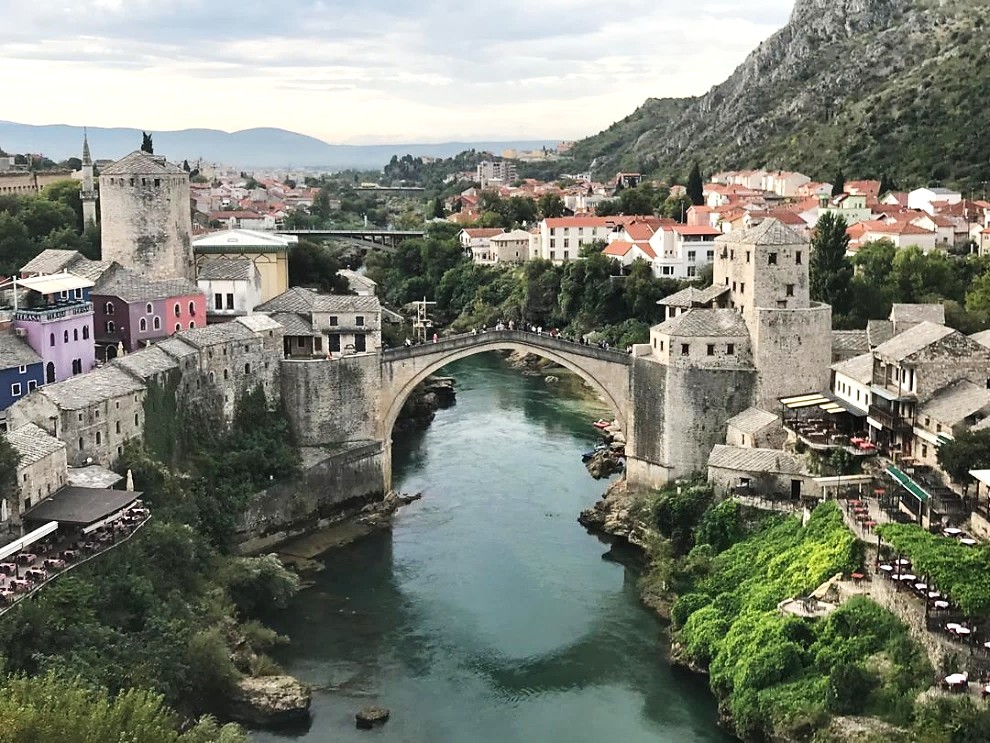
The Old Bridge (Stari Most) of Mostar, erected in the sixteenth century under Ottoman patronage, stands as one of the most profound architectural achievements of Islamic civilization in the Balkans. Conceived as both a functional…
This article examines the distinctive architecture of the Nesuh-aga Mosque in Mostar, presenting it as a lasting archetype of Ottoman-Islamic design in the region, one that has withstood the test of time and the trials…

This article examines the hammam, or traditional Islamic bathhouse, as both a spiritual and communal institution in Muslim societies. Building on Greco-Roman thermae, the hammam evolved into a space rooted in Islamic principles of purification,…

With the Ottomans' arrival in Bosnia, the general identity of Islamic architecture was already established, and the specific Ottoman Islamic architectural style was beginning to take shape. This transition from a formative stage to a…

During Ottoman rule, Sarajevo was heralded as the “European Jerusalem”, as its invaluable contributions to civil engineering, industry, trade and architecture attracted people from various ethnic and religious backgrounds. Aesthetic beauty alongside scientific ingenuity made,…

The Bosniac Muslims played a crucial role integrated in the Austro-Hungarian empire and Muslims and Islam continues to have great recognition in Austria.

Discover the golden
age of Muslim civilisation.

© Copyright FSTC Ltd 2002-2020. All Rights Reserved.