As the world celebrates World Maths and Pi Day on March 12th and March 14th, April is also Mathematics and Statistics Awareness Month. To celebrate these special occasions, the Muslim Heritage website would like to draw your attention to the invaluable, but often overlooked, contributions of mathematicians from non-European civilisations, in the areas of Algebra, Arithmetic, Geometry and Trigonometry, to name but a few.

Article Image banner by Jemo (©MidJourney CC BY-NC 4.0)
***
Note: Composed by Cem Nizamoglu and first published on Muslim Heritage, 12th March 2016.
***

We owe such mathematicians the development of the numerical system we still use today, for the development of geometrical pattern design, and for the present arithmetical decimal system and the fundamental operations connected with it: addition, subtraction, multiplication, division, exponentiation, and extracting the root. Scientists in Muslim heritage also introduced the ‘zero’ concept to the world.
In order to highlight such contributions, Muslim Heritage has compiled a series of articles on illustrious mathematicians such as Muhammad ibn Musa Al-Khwarizmi, who amongst his many accomplishments made unique advances in algebra; Omar al-Khayyam is renowned for his developments in cubic equations; Abd Al-Hamid Ibn Turk who made substantial developments to algebra; Ali Al-Qushji, who established his own school and educated brilliant scholars such as Milla Sari Lutfi during the Ottoman Empire. The development of Arabic maths was carried on in close interaction with the mathematical traditions of previous cultures. The mathematicians of Islam drew on the treatises of Greek scholars such as Euclid, Archimedes and Apollonius. They also knew and used some results from the early classical period of Indian mathematics, such as those of Aryabhata, Varahamihira, and Brahmagupta.
To draw attention to these scholars and to others as well, we list below some of the papers published on our website:
When one remembers the numerous scholars of Palestine, a significant fact comes to mind. The fact is that Palestine has always been an integral part of the Muslim world and home to many scholars, both male and female, even after the mid-20th century. This article is written to commemorate Ibn al-Ha’im al-Maqdisi (14th/15th century), one of medieval Palestine’s notable polymathic scholars, a jurist, theologian, teacher, author, grammarian, and mathematician. Ibn al-Ha’im took a special interest in a practical branch of mathematics that was of particular use to his contemporary society, namely successional calculations (hisab al-fara’idh). For this reason, he was also known as Ibn al-Ha’im al-Fara’idhi.
The mathematical sciences of the Islamic world flourished between the 8th and 13th centuries, building on Greek, Indian, Babylonian, and Persian traditions while introducing groundbreaking innovations of their own. Muslim scholars refined arithmetic by adopting Hindu numerals and inventing zero (sifr), which revolutionised calculation and spread to Europe through Al-Andalus (Parts of Spain, Italy, and Portugal). Thinkers like al-Khwarizmi, the “father of algebra,” laid the foundations of modern algebra, while Umar Khayyam advanced the study of cubic equations, and al-Battani developed trigonometry with lasting influence on astronomy and navigation. The great polymath Ibn al-Haytham (Alhazen) transformed optics, geometry, and experimental science, his work later inspiring European scholars such as Kepler and Bacon. By integrating algebra with geometry, introducing new number theories, and pioneering mathematical models, it revolutionised calculation and spread to Europe through Al-Andalus. Islamic mathematicians not only preserved ancient knowledge but also pushed it far beyond its origins, shaping the course of mathematics, science, and exploration in both the Islamic world and Renaissance Europe.
The Greek letter pi (symbolised by p) is defined as the ratio of the circumference of the circle to its diameter. It is considered to be a vital element in the calculations of areas and sizes of several mathematical figures: the circle, the cube, the cone and the sphere, from which infinite practical applications have sprung. As a result, mathematicians in many civilisations (Greek, Chinese, Indian, Arabian and European) have been highly concerned with calculating p as carefully as possible. This article by Professor Moustafa Mawaldi, the Dean of the Institute for the History of Arabic Science in Aleppo, sheds light on the contribution of some mathematicians of the Islamic civilisation in refining the value of pi. The works surveyed are those of Al-Khwarizmi, Al-Biruni, Al-Quhi, and Al-Kashi.
Early mathematics was revolutionised by Muslim scholars such as Al-Khwarizmi, the founder of Algebra; Al-Kindi, Al-Khazin, Al-Khujandi, Al-Sijzi, Abul Wafa, and numerous others.This article reviews some of the important works of these mathematicians.
Amazing snapshots from Khiva (formerly known as Khawarizm) in Uzbekistan. The birth place of the famous mathematician Al-Khawarizmi (780 – 850 CE). A prosperous centre of learning during the Golden Age of Muslim Civilisation, it was also a key city on the Silk Road like Bukhara and Samarkand.
The article analyses the mathematical contents of four texts by Nasir al-Din al-Tusi (1201-1274), one of the most original and prolific scientists of the classical Islamic tradition. These four texts on mathematics are: Al-Tusi’s Tahrir (Exposition) of Euclid’s Elements, the text Shakl al-Qatta’, The Risala al-Shafiya in which Al-Tusi made a substantial contribution to solve the classical problem of parallel lines, and finally the treatise of artithmetic Jami’ al-hisab.
The Kerala School of astronomy and mathematics was an Indian school of mathematics and astronomy founded by Madhava of Sangamagrama in Kerala, South India, that included several scientists among its members. The school flourished in the 14th-16th centuries. In its attempts to solve astronomical problems, the Kerala School independently developed several important mathematical concepts. In this well-documented article, Dennis Francis Almeida and George Gheverghese Joseph reconstruct the mathematics of the Kerala School and attempt to show the possible ways in which it was transmitted to modern Europe.
Muhammad ibn Musa Al-Khwarizmi is one of the greatest scientific minds of the medieval period and a most important Muslim mathematician who was justly called the ‘father of algebra’. Besides his founding the science of jabr, he made major contributions in astronomy and mathematical geography. In this article, the focus is on his mathematical work in algebra and his contribution to laying the foundation of the Islamic tradition of mathematical geography and cartography.
Muḥammad Abūʾl-Wafāʾ al-Būzjānī (10 June 940–997 or 998) was a distinguished Muslim astronomer and mathematician who made important contributions to the development of trigonometry. He worked in a private observatory in Baghdad, where he made observations to determine, among other astronomical parameters, the obliquity of the ecliptic, the length of the seasons, and the latitude of the city. In honour of his astronomical work, a crater on the Moon was named for him. His 1073th anniversary falls this June 10th.
‘Umar al-Khayyam (better known as Omar Khayyam, 1048-1123 CE), was a polymath scholar from Nishapur, Persia. A mathematician, philosopher, astronomer and poet, he also wrote treatises in Arabic on mechanics, geography, music and physics. Because of the originality of his contributions, Al-Khayyam was established as one of the major mathematicians and astronomers of the Islamic scientific tradition. Al-Khayyam was born in Nishapur, Khurasan on 18 May 1048. In the following article, we survey his work and celebrate his anniversary.
The famed Muslim scholar Al-Kwarazmi has long been known as the father of Algebra. In this article, Aydin Sayili presents an alternative view of the inception and development of Algebra in the works of ‘Abd al-Hamid Ibn Turk, a well-known mathematician of the early 9th century, probably contemporary to al-Khwarizmi. The author raises an outstanding hypothesis that Ibn Turk may have written the first Arabic book on algebra in Islam, rather than Muhammad ibn Mûsâ al-Khwârazmi.
Ali Al-Qushji was one of the most notable scientists in the Islamic world. He wrote valuable works, especially on astronomy and mathematics. He was a student and co-worker of the famous statesman and scientist Ulugh Beg. After Ulugh Beg’s death, Ali Al-Qushji left Samarqand for Tabriz, where he worked for the Akkoyunlu Ruler Uzun Hasan. Afterwards, he worked for the Ottoman Sultan Muhammad II in Istanbul during the last two years of his life. This article presents a short survey of Al-Qushji’s contributions to mathematics and astronomy.
In this important article, Professor Ahmed Djebbar, the renowned scholar and specialist of the history of Arabic sciences, especially in the Islamic West, presents a general survey on mathematical activities in the Medieval Maghrib since the 9th century. Relying on his own studies and on a direct knowledge of the original sources, the author draws a rich picture of scientific activity in the Islamic West and thus shows the importance of the contribution of Maghribi mathematicians to the Arabic and Islamic mathematical tradition.
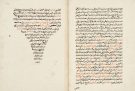
This article was a talk given at the 7th Maghrebi Colloque of the History of Arabic Mathematics held from 30 May to 1 June 2002 in Marrakech, Morocco. It presents a new manuscript of the mathematical work Kitâb al-Bayân by the Moroccan mathematician of the 12th centrury Al-Hassâr, together with related remarks on the transmission of the Hindu-Arabic numerals to the medieval West.
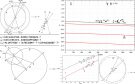
The following article focuses on the cubic measure of the volume of the sphere in Arabic mathematics. After a short presentation of the Greek and Chinese ancient legacies on this topic, the article thoroughly surveys the different formulas and methods proposed by the mathematicians of the Arabic-Islamic civilisation from the 9th to the 17th century to measure the volume of the sphere. The achievements of eminent scholars are thus presented: Banu Musa, Al-Buzgani, Al-Karaji, Ibn Tahir al-Baghdadi, Ibn al-Haytham, Ibn al-Yasamin, Al-Khawam al-Baghdadi, Kamal al-Din al-Farisi, Jamshid al-Kashi, and Baha’ al-Din al-‘Amili.
Mathematics has long been an area of expertise amongst Muslim mathematicians. This article considers the contributions of Al-Tusi, Al-Battani, and others to trigonometry, focusing on the progress their discoveries represented compared with the ancient tradition as displayed in Ptolemy’s Almagest.
Since the middle of the 20th century, the history of Arabic mathematics has evolved as a subfield of the history of science and has become an area of special expertise in which the skills of confirmed mathematicians were intermingled with the cultural sense of professional historians. One of the experts who emerged brilliantly in this field was Ahmad Salim Sa‘idan (1914-1991), a Palestinian born in Safad who settled in Amman for much of his life. This article, intended as homage to this son of Palestine, presents a biographical sketch and an extensive bibliography of his works on the history of mathematics and astronomy in Islamic civilisation.
and many more…

Discover the golden
age of Muslim civilisation.

© Copyright FSTC Ltd 2002-2020. All Rights Reserved.