


Chemistry, Pharmacology and Pharmacy – Contributions of Islamic Scholars to the Scientific Enterprise
by Yasmeen Mahnaz Faruqi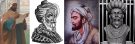


This article explores the groundbreaking medical achievements of the Islamic Golden Age (8th–16th centuries), highlighting how scholars like Al-Razi, Avicenna, and Ibn Al-Nafis preserved, critiqued, and expanded upon ancient knowledge. From pioneering hospitals and medical ethics to revolutionary discoveries like pulmonary circulation, their works bridged classical medicine and the European Renaissance. Rooted in observation, experimentation, and a spirit of shared learning, their legacy remains a testament to the vibrant intellectual and multicultural heritage of Muslim civilisation.

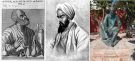
1. Al-Razi (d. 925), Latinised name Rhazes (wiki), Figure 2. Ibn al-Nafis (d.1288-89) (wiki), Figure 3. Ibn Sina (d.1037), Latinised name Avicenna (source)
***
Editor’s Note: This paper was originally published in Sultan Qaboos University Medical Journal, to whom we are grateful for allowing its republication on the Muslim Heritage website.
***
“It is a Muslim history that had been more intellectually accomplished than Christian Europe of the day, and a Muslim past where Christians, Jews, Hindus and Buddhists had flourished and worked together.” [1]
Between the earliest recorded Greek and Roman philosophical theories of medicine and the dynamic spurt in medical discoveries in Western civilizations from the 17th century onwards lies an era of relative obscurity in medical advancements, running parallel with the Islamic conquest of Europe; an era which deserves due recognition. From the 8th to 16th centuries A.D., Islamic physician-philosophers revived the Hippocratic philosophy that based disease causation on bodily ‘humors’. Political patronage promoted these efforts: one excellent example is that of Chosroes I (also known as Khusraw) in the 6th century, who sent the Persian Zoroastrian doctor, Perzhoe, to distant lands like India to learn both philosophy and medicine so as to enrich the lives of the people in his empire. [2] The preeminence of medical men was recorded by Persian littérateurs who held three types of respected society members to be at par: the physician, the ruler (Amir) and the scholar. [3] Lost in the shroud of history is the less acknowledged establishment of the first ‘bimaristans’ (Persian = hospitals for the diseased), noteworthy for being the first formal centres dedicated to the practice of academic medicine. One institution founded at Jundi-Shapur (Persian = “Beautiful garden”; once located in south-west Persia and now in ruins) has secured its place in history due to the belief that Harith Bin Kalada, the Prophet Mohammed’s physician, was trained there. [4] The Arab model of hospitals (remarkably organised into both fixed and mobile units) became the forerunner for European hospitals in later centuries.

Figure 4. From left to right, the statues of Al-Biruni, Ibn Sina, Omar Khayyam, and Al-Razi in the Scholars Pavilion at the United Nations Office, Vienna, Austria (wiki)
As the lingua franca of the medieval Islamic period, the Arabic language anchored the translations of Greek and Roman medical texts, which would otherwise have been doomed to obscurity. [5] From Al-Andalusia (modern day southern Spain), this fount of knowledge found its way back into European medicine in the second millennium. The history of Islamic traditional medicine during the Golden period of Islamic civilisation lists a compendium of prominent scholars, including Al-Razi, Avicenna (also known as Ibn-Sina), Ibn Al-Nafis, Al-Taberi, Al-Magusi, Al-Baitar, Al-Zahrawi, Ibn-Haitam [Ibn al-Haytham (Latinized ‘Alhazen’)], Ibn-Zuhr and Ibn-Rushd [Latinized Averroes]. [6],[7] This article revisits the extraordinary contributions of the first three of these eminent physicians of Islamic medicine. These ‘chosen’ few not only feature prominently in recorded accounts of the period but share the common legacy of being prolific medical writers, free thinkers and achievers in multiple fields, including philosophy, medicine, astrology [astronomy], maths and poetry. Succeeding one another over three centuries, Al-Razi laid the foundations of Islamic medical thought, Avicenna’s medical writings were undisputed for centuries, and Ibn Al-Nafis established unique concepts of cardiopulmonary circulation. They represent a rich academic heritage whose impressive credentials are shared by many of their peers who will earn their place in subsequent writings on the subject.
Al-Razi (Rhazes): The father of Islamic medicine [8]

Figure 5. Abu Bakr al-Razi (Rhazes) (d. 925), Portrait by Hossein Behzad, 1962 (wiki)
Mohammed Ibn Zakariya Al-Razi (Latin = Rhazes), was a Persian physician-philosopher (865–925 A.D.), [8] well-versed in such diverse disciplines as music and alchemy. [9] He was also a devout Muslim who distinguished his medical practice by placing an emphasis on reasoning as opposed to blindly following scripture. [9] This free-thinking spirit coloured his medical practice and writings. Long before geographical boundaries separated modern day Iraq and Iran, Al-Razi was sought after as a physician both in his birthplace Rayy (near Tehran, Iran) and Baghdad (Iraq). A seminal feature of his genius was his acknowledgement of the wisdom of the Greeks and Romans balanced by relevant critique and correction when this wisdom was proved otherwise by his own observations and considerable experience, as expressed in his book Shukuk Ala alinusor (Persian = “Doubts about Galen”). [9]
A prolific writer, a host of Al-Razi’s voluminous recordings provide insight into his thought and operational techniques. In Akhlaq-Al-Tabib (Persian = “Medical Ethics”), he stressed the triumvirate of ethical responsibility—the physician to his patient, the patient to his physician and the physician to himself. [8] Al-Razi and his peer Al-Ruhawi, who authored Adab Al Tabib, are credited with laying the foundations of medical ethics; [10] assimilating Hellenistic knowledge with unique insights from Islamic teachings a millennium before modern Western ethical medical principles were recorded. In a series of essays, Al-Razi explored the tenuous trust between physician and patients; one interesting title among his essays reads The Reasons for People’s Preference of Inferior Physicians.[9] A pioneer in medical education, he taught his pupils the art of imparting knowledge: “When you find that conscientious individual who enjoys your confidence, who is not easily moved by whim, and accepts the truth satisfactorily and honestly, he will ask you for its contents, gradually cognisant of the sequence from the precedent”. [11] His paradigm of an ethical physician, which was based on characteristics such as appearance, voice modulation, virtuosity, behaviour as a role model and a life-long desire to update their knowledge, resonate with our current 21st century ideas of professionalism. Confidentiality, empathy and psychological counselling were to him essential ingredients for healing and ethical practice. It is remarkable that he made special mention of the social nuances of medical ethics by exhorting physicians to treat rich and poor alike and to treat women with respect. [10]
The Kitab al-hawi fi al-tibb (Persian = “The Comprehensive Book of Medicine”), also known as Continens Liber (Latin) and The Virtuous Life (English), conveyed its encyclopaedic knowledge in over 23 volumes covering the causes and manifestations of diseases in different systems. [12] This book would sustain generations of medical students over the following centuries. The oldest recorded copy of part of this treatise covers gastrointestinal diseases and is preserved in the United States National Library of Medicine. [13] Political patronage, an important incentive for scientific productivity, ensured the contribution of the Samanid prince Abu Salih al-Mansur Ibn Ishaq (10th century) to his 10-volume epic Al-Mansuri, complementing the Kitab al-hawi fi al-tibb as a reference in medical teaching. His appreciation of the role of overconsumption by the affluent class (with its accompanying ills and dietary remedies) is well chronicled in the Kitab al-hawi fi al-tibb.
Al-Razi was apparently the first to attribute hay fever to the smell of roses at springtime in his manual on coryza (rhinitis). [13] Stones of the kidney and bladder, small pox and measles were some of the specific diseases on which he wrote extensively. [9] He also described the valves of the heart. [14],[15]

Figure 6. The Advent of Experimental Chemistry
Avicenna (Ibn Sina): The Arab Galen [11],[16]

Figure 7. Portrait of Avicenna. (Source)
Abu Ali Al Hussein Ibn Abdulla Ibn Sina (980–1037 A.D.), a Persian scholar, was born in Afshaneh, Bokhara (part of the Persian empire then and now in present-day Uzbeikistan).[17] Referred to in Western records as Avicenna, this pioneer of Islamic medicine (who was also a poet, politician, philosopher and mathematician) has his name etched in the annals of medical history. A child prodigy, he received timely patronage to pursue his studies when he treated a prince of the Samanid dynasty. In a twist of fortunes, he later suffered imprisonment for his political stance. Western writings refer to him as ‘the Aristotle of Islam’.[18]
A prolific writer, whose repertoire spanned philosophy, religion, medicine, astronomy and natural sciences, Avicenna made seminal contributions to medicine with Al Shifa (Arabic = “The Book of Healing for the Soul”) and the Qanun fil tibb (Arabic = “The Canon of Medicine for the Body”),[19] among the 300 or so books he is known to have authored.[16],[20] His dedication to science without boundaries is reflected in his painstaking preservation for posterity of the knowledge accrued from Aristotle and Ptolemy in the first, and of Galen in the second of the two aforementioned books. To this heritage he applied his own appreciation of science derived through Islamic culture and practices. It is interesting to note that under the shadow of turbulent times the Canon was written in Arabic and not in Persian.

Figure 8. The title page of The Canon of Medicine (Source)
The Canon was translated into Latin by Gerardo de Cremona in the 13th century and dominated medical curriculum in European universities until the 17th century,[20] earning the accolade of ‘the most famous medical textbook ever written’ by Sir William Osler.[21] The expansive five volumes are remarkable in their inclusivity, expounding on a wide range of subjects from structure-function relationships and causes of disease to therapy and lifestyle choices. A good example is volume three which gives detailed accounts of neuroanatomy, neurological and neuropsychiatric disorders, history, signs and symptoms.[21],[22] This inclusivity and level of detail explains the influence this opus has had for centuries. The depth of observation and logic are illustrated within this volume in the section detailing an impressive 15 types of headaches and simple remedies to alleviate them. This labour of love constructed over twelve years (1012–1024) lays the foundation of the scientific method, which was unusual for the times. It is the opinion of the author that Avicenna’s pronouncements on the psychological and organic causation of ulcers and the curability of superficial versus deep cancers are validated in contemporary medical knowledge. A teacher par excellence, he distilled the essence of his medical knowledge in a poem called Al-Urjuzah Fi Al-Tibb (Arabic = “The Medical Poem”) which is a fine illustration of inspiring pupils of medicine through the humanities. Readers are exhorted to refer to an eloquent appraisal of this poem in a recent review.[23]
Avicenna’s legacy is alive today through the establishment of an award by the United Nations Educational, Scientific and Cultural Organization in 2002, titled the Avicenna Prize for Ethics in Science.[22] It is noteworthy that the second recipient of this award was Dr. Abdallah Daar, an Omani academic associated with the Sultan Qaboos University in Muscat, Oman.[24] Avicenna’s name finds mention in the Avicenna Directory of Medical Schools maintained by the World Federation for Medical Education and the Foundation for Advancement of International Medical Education and Research in collaboration with the University of Copenhagen and the World Health Organization. In 2014, this directory was merged with the International Medical Education Directory to create the World Directory of Medical Schools. The Avicenna Journal of Medicine and the Avicenna Journal of Medical Biotechnology honour his timeless contributions. This ‘prince of physicians’ lives on in the 21st century through his inspirational heritage.

Figure 9. Translation: “Medicine is a science from which one learns the conditions of the human body with regard to health and the absence of health, the aim being to protect health when it exists and restore it when absent. Someone might say to us that medicine is divided into theoretical and practical parts and that, by calling it a science, we have considered it as being all theoretical. To this we respond by saying that some arts and philosophy have theoretical and practical parts, and medicine, too, has its theoretical and practical parts. The division into theoretical and practical parts differs from case to case, but we need not discuss these divisions in disciplines other than medicine. If it is said that some parts of medicine are theoretical and other parts are practical, this does not mean that one part teaches medicine and the other puts it into practice – as many researchers in this subject believe. One should be aware that the intention is something else: it is that both parts of medicine are science, but one part is the science dealing with the principles of medicine, and the other with how to put those principles into practice.” Translation by Aida Tibi and Emily Savage-Smith (Source)
Ibn Al-Nafis: The second Avicenna [15]

Figure 10. The opening page of one of Ibn al-Nafis’s medical works (wiki)
A 13th century Syrian physician, Alauddin Ibn Al-Nafis (1210–1288 A.D.) trained at one of the scholarly centres of medicine, the Al-Nasiri hospital in Damascus.[25] At a youthful 29 years of age, he authored the Commentary on Anatomy in Avicenna’s Canon, questioning Galen’s view that blood flow was directed from the right to the left ventricle through the septum, pithily remarking that “the septum between the two ventricles is of thicker substance than other parts”.[25] He proposed instead that the right ventricular blood travelled through the pulmonary circulatory system before reaching the left side of the heart. This revolutionary idea was reiterated by Michael Servetus (1511– 1533), who was burnt at the stake for this and other pronouncements that were declared as heresies by the church, and predated William Harvey’s supposed ‘discovery’ of the circulation system by seven centuries. Ibn Al-Nafis went on to coin the term manafidh (Arabic = pores) for the communications between the pulmonary venous and arterial circulations (which we recognise today as the pulmonary capillary bed). He is, appropriately, recognised by many to be the ‘father of circulatory physiology’.[25],[26]
Ibn Al-Nafis also described the coronary circulatory system, stipulating that the heart could not draw its perfusion directly from the blood in its chambers.[15] Among several other compositions, his Kitab al-Mujaz fi al-Tibb was a valuable handbook for medical students.[27] His authoritative observations of anatomy and physiology are unlikely to have been founded on human dissections, as his grounding in Shari’a law would have dictated otherwise.[28] Other authors refute this conclusion, citing the prevalent practice of using the corpses of criminals to study disease as well as the strong belief among Muslims that anyone who undertook dissection was also increasing their faith in God, as underscored by the Muslim philosopher-physician Averroes (1149– 1209).[29] However there is ample evidence that the strong traditions of evidence-based medicine supported by experimentation, initiated by Al-Razi, are echoed time and time again in the works of Avicenna and Ibn Al-Nafis. These included the rational recording and analysis of case histories, case-controlled testing of therapeutic procedures, drug potency trials and even animal experimentation.[30]
Lessons from the Exemplars of Islamic Medicine

Figure 11. Names and portraits of Greek physicians on the opening page of an Arabic medical manuscript written in the region of Mosul (Iraq) between 1220 and 1250. Source: David W. Tschanz, “History of Medicine: Arab Roots of European Medicine” (Source)
Al-Razi, Avicenna and Ibn Al-Nafis’ lives enriched the medical fraternity and their patients through their philosophical insights, excellence in medical practice and the arduous scholarly preservation and assimilation of medical knowledge in their writings. Individually, they are remembered best for their ground-breaking contribution to ethics (Al-Razi), medical teaching (Avicenna) and experimental research (Ibn Al-Nafis).
The richness of Islamic civilisation nourished and promoted medical advancement. Political endowments nurtured scientific effort; political antagonism could diminish productivity or inhibit free thought. The enormous impact of the triumvirate who dominate this article originated in their willingness to draw from the wisdom of others—Hellenic, Roman and Indian medical lore—and then to review and critique this wisdom, aided by their own experimentation and observations. In turn, their prodigious written records and later translations laid the foundations on which medicine was to thrive in the Renaissance period. Today, when the globalisation of medicine brings with it the virtue of enhanced access to knowledge and the contrasting vices of patents and secrecy, Al-Razi and his contemporaries remind us of the necessity of freely sharing knowledge for the benefit of humanity. Their vital principles of scientific thought and ethics were ideas well before their time. These luminaries of the Islamic Golden age were distinguished polymaths, integrating the sciences and humanities, and providing a vision of health and life beyond the narrow field of medical practice.
***
***
References
[1] Morgan MH. Lost History: The Enduring Legacy of Muslim Scientists, Thinkers, and Artists. Washington D.C., USA: National Geographic Society; 2007. pp. xx111–iv.
[2] Meletis J, Konstantopoulos K. The beliefs, myths, and reality surrounding the word hema (blood) from Homer to the present. Anemia. 2010;2010:857657. doi: 10.1155/2010/857657. [DOI]
[3] Kolahdouzan A, Vahabi F. Medicinal behavior in Persian literature by emphasis on Ibn-Sina popular literature. Mat Sociomed. 2013;25:70–1. doi: 10.5455/msm.2013.25.70-71. [DOI]
[4] Miller AC. Jundi-Shapur, bimaristans, and the rise of academic medical centres. J R Soc Med. 2006;99:615–17. doi: 10.1258/jrsm.99.12.615. [DOI]
[5] Batirel HF. Early Islamic physicians and thorax. Ann Thorac Surg. 1999;67:578–80. doi: 10.1016/S0003-4975(98)01295-8. [DOI]
[6] Masić I, Konjhodzić F. [Great Arab physician-practitioners] Med Arh. 1994;48:79–84.
[7] Kelishadi R, Hatami H. Avicenna as the forerunner of preventive medicine: On the occasion of 1032nd birth anniversary of Avicenna (22 August 980) Int J Prev Med. 2012;3:517–19.
[8] Karaman H. Abu Bakr Al-Razi (Rhazes) and medical ethics. Ondokuz Mayis Univ Rev Faculty Divinity. 2011;30:77–87.
[9] Islamic Philosophy Online Inc. Philosophia Islamica. Al-Razi (Rhazes) From: www.muslimphilosophy.com/ei2/razi.htm Accessed: Jun 2014.
[10] Chamsi-Pasha H, Albar MA. Islamic medical ethics a thousand years ago. Saudi Med J. 2013;34:673–5.
[11] Sa’di LM. Glimpses into the history of Arabic medicine. Bull Med Libr Assoc. 1958;46:206–18.
[12] World Digital Library The Comprehensive Book on Medicine. From: www.wdl.org/en/item/7458/ Accessed: Jun 2014.
[13] United States National Library of Medicine Islamic Culture and the Medical Arts: Al-Razi, the Clinician. From: www.nlm.nih.gov/exhibition/islamic_medical/islamic_06.html Accessed: Jun 2014.
[14] Azizi MH, Nayernouri T, Azizi F. A brief history of the discovery of the circulation of blood in the human body. Arch Iran Med. 2008;11:345–50. doi: 08113/AIM.0022.
[15] Masic I, Dilic M, Solakovic E, Rustempasic N, Ridjanovic Z. Why historians of medicine called Ibn al-Nafis second Avicenna? Med Arh. 2008;62:244–9.
[16] Aburawi EH. The great professor Ibnosina (Avicenna) Libyan J Med. 2007;2:116–17. doi: 10.4176/070515. [DOI]
[17] James Lind Library Ibn Sīnā (c.1012 CE; c.402 AH) Portraits. From: www.jameslindlibrary.org/illustrating/records/kitab-alqanun-fi-al-tibb-avicennas-the-canon-of-medicine/portraits Accessed: Aug 2014.
[18] Golzari SE, Khan ZH, Ghabili K, Hosseinzadeh H, Soleimanpour H, Azarfarin R, et al. Contributions of medieval Islamic physicians to the history of tracheostomy. Anesth Analg. 2013;116:1123–32. doi: 10.1213/ANE.0b013e3182884313. [DOI]
[19] James Lind Library Ibn Sīnā (c.1012 CE; c.402 AH) Title Page(s) From: www.jameslindlibrary.org/illustrating/records/kitab-al-qanun-fi-al-tibb-avicennas-the-canon-of-medicine/title_pages Accessed: Aug 2014.
[20] Masic I. Thousand-year anniversary of the historical book: “Kitab al-Qanun fit-Tibb” – The Canon of Medicine, written by Abdullah ibn Sina. J Res Med Sci. 2012;17:993–1000.
[21] Mannan AA, Kahvic M. Ibn Sina: A tribute. Gulf J Oncolog. 2010;7:60–3.
[22] Zargaran A, Mehdizadeh A, Zarshenas MM, Mohagheghzadeh A. Avicenna (980-1037 AD) J Neurol. 2012;259:389–90. doi: 10.1007/s00415-011-6219-2. [DOI]
[23] Abdel-Halim Rel-S The role of Ibn Sina (Avicenna)’s medical poem in the transmission of medical knowledge to medieval Europe. Urol Ann. 2014;6:1–12. doi: 10.4103/0974-7796.127010. [DOI]
[24] United Nations Educational Scientific Cultural Organization Avicenna Prize for Ethics in Science. From: www.unesco.org/new/en/social-and-human-sciences/events/prizes-and-celebrations/unesco-prizes/avicenna-prize/ Accessed: Aug 2014.
[25] West JB. Ibn al-Nafis, the pulmonary circulation, and the Islamic Golden Age. J Appl Physiol (1985) 2008;105:1877–80. doi: 10.1152/japplphysiol.91171.2008. [DOI]
[26] Hehmeyer I, Khan A. Islam’s forgotten contributions to medical science. CMAJ. 2007;176:1467–8. doi: 10.1503/cmaj.061464. [DOI]
[27] Abdel-Halim RE. Contributions of Ibn Al-Nafis (1210-1288 AD) to the progress of medicine and urology: A study and translations from his medical works. Saudi Med J. 2008;29:13–22.
[28] Savage-Smith E. Attitudes toward dissection in medieval Islam. J Hist Med Allied Sci. 1995;50:67–110. doi: 10.1093/jhmas/50.1.67. [DOI]
[29] Shoja MM, Tubbs RS. The history of anatomy in Persia. J Anat. 2007;210:359–78. doi: 10.1111/j.1469-7580.2007.00711.x. [DOI]
[30] Abdel-Halim RE. Experimental medicine 1000 years ago. Urol Ann. 2011;3:55–61. doi: 10.4103/0974-7796.82168. [DOI]

Discover the golden
age of Muslim civilisation.

© Copyright FSTC Ltd 2002-2020. All Rights Reserved.


