




Chemistry, Pharmacology and Pharmacy – Contributions of Islamic Scholars to the Scientific Enterprise
by Yasmeen Mahnaz Faruqi
In the medieval Arabic and Islamic medical tradition, physicians paid particular attention to the medical needs of children, and wrote profusely on the subject of paediatrics...
***
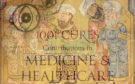
Note of the Editor: This article, “Paediatrics” written by Mahmoud Misry, is Chapter Nine, Pages 96-103, extracted from the book “1001 Cures: Contributions in Medicine & Healthcare from Muslim Civilisation” editor Peter Pormann, published by the Foundation for Science, Technology and Civilisation, UK. The content of this chapter is relevant to the current pandemic environment around the world.
***

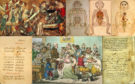
Figure 1. In the bathhouse (ḥammām). Miniature from a 16th-century Persian manuscript.
In this day and age, there are various medical encyclopaedias that comprise invaluable studies in the field of childcare and the medical well-being of children. In addition to this, there are also a number of independent works specifically dealing with paediatrics. Likewise, in the medieval Islamic world, children’s health and diseases were discussed in the great encyclopaedias and handbooks produced from the ninth century onwards, and in the monographs on the subject that developed into a genre of their own.
The earliest such encyclopaedia still extant today, the Paradise of Wisdom (Firdaws al-Ḥikma) by ʿAlī bin Rabban al-Ṭabarī (fl. c. 850), dealt with the issue of children’s wellbeing on two levels, namely the physical and psychological.
As regards the latter, al-Ṭabarī discussed mental, emotional, educational, behavioural, and even professional aspects. Another al-Ṭabarī, called Aḥmad ibn Muḥammad and living in the mid-tenth century, wrote a medical handbook entitled The Hippocratic Treatments (al-Muʿālajāt al-Buqrāṭīya). It included an independent section comprising sixty chapters discussing children’s diseases and their treatments…
From the early tenth century onwards, a number of authors wrote paediatric monographs. Abū Bakr Muḥammad ibn Zakarīyāʾ al-Rāzī (d. 925) is reportedly the author of a monograph entitled On the Treatment of Small Children.
This monograph only survives in a Latin translation, made from the Arabic original, and in Hebrew translations made from Latin. Although it appears in some manuscripts in connection with other works by al-Rāzī, it is far from certain whether al-Rāzī is the author. Be that as it may, it certainly is a very interesting paediatric treatise which had a great influence in the Latin West, surviving in more than 35 manuscripts (eds Bos/McVaugh 2015)…

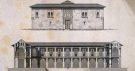
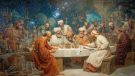
Figure 2. In school. Al-Jāḥiẓ said: ‘God has divided stupidity into 100 parts. He gave 99 parts to teachers and the last part to other people.’
ʿArīb ibn Saʿīd, a historian and secretary to the Andalusian caliphs ʿAbd al-Raḥmān III (r. 912–61) and al-Ḥakam II (r. 961–76), also wrote a monograph in the 960s with the title The Creation of the Embryo and the Regimen of Pregnant Women and Newborns (Khalq al-janīn wa-tadbīr al-ḥabālā wa-l-mawlūdīn). It is largely excerpted from al-Ṭabarī’s Paradise of Wisdom, and discusses conception, the formation of the embryo, obstetrics, and neonatal care.
The Tunisian author Ibn al-Jazzār (d. 980) wrote a treatise on The Guidance and Regimen of Children (Siyāsat al-Ṣibyān wa-tadbīruhum). And his Syrian near-contemporary Aḥmad ibn Muḥammad al-Baladī (fl. c. 970s) penned a paediatric monograph with the long title Regimen, Prophylactics, and Therapeutics for Pregnant Women and Children (Tadbīr al-ḥabālā wa-l-ṣibyān wa-ḥifẓ ṣiḥḥatihim wa-mudāwāt al-amrāḍ al-ʿāriḍa lahum).
Drawing on Hippocratic numerology, al-Baladī divided children’s ages into three ‘hebdomads (asābīʿ)’ or periods of seven years. The first hebdomad encompasses the first seven years of a child’s life (the ‘early childhood’ in modern terminology); the second hebdomad refers to the period between seven and fourteen years (‘late childhood’); and the third hebdomad consists of the phase between fourteen and twenty-one years.
All these paediatric monographs also discuss the topic of obstetrics, or how one can assist in the birthing process…


Discover the golden
age of Muslim civilisation.

© Copyright FSTC Ltd 2002-2020. All Rights Reserved.