Arib Ibn Sa'id was born circa 912 to a Muwallad family in what is now Córdoba province. His father had adopted the name of Sa'id after one of the members of the noble Arab family that offered him patronage. His extensive training in religion, literature, history, astronomy, and science, together with his social standing, allowed him to hold important government and political offices during the reigns of Abd al-Rahman III, Al-Hakam II, and Hisham II. A renowned poet and excellent historian, he was also one of the most important doctors of his time. He was a prolific writer on many topics, and his scientific texts include the first treatise on obstetrics and paediatrics ever written on the Iberian Peninsula (Spanish title: El libro de la generación del feto, tratamiento de las mujeres embarazadas y de los recién nacidos). This book contains notes on neurological processes in children, including cognitive development, convulsions, and epilepsy, which we will describe and analyse in the context of current knowledge.

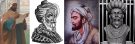
Figure 1. Imaginary statue image of Arib the Cordoban, Andalusia, Spain (Arib Ibn Said) by Jemo (©MidJourney CC BY-NC 4.0)
***

Figure 2. Dr. Manuel Nieto Barrera (1934-2016) (Source)
Note: This paper was originally published in the Neurosciences and History Journal, to whom we are grateful for allowing its republication on the Muslim Heritage website. It is with sadness that we share the news of Dr. Manuel Nieto-Barrera’s death, and with this republication, we hope to honour the legacy of his work.
***
After rapid Arab expansion in the seventh and eighth centuries, the conquered territories remained stable and splendid until the late 13th century ushered in a period of decline. In addition to their military might, Arab conquerors showed an enormous capacity for assimilating the wisdom of earlier cultures, especially the Greeks and Romans, on theology, philosophy, astronomy, mathematics, law, medicine, and more. The two epicentres of this cultural explosion were Baghdad in the east, and by the tenth century, Córdoba in the west. Medical texts by Hippocrates, Archigenes, Dioscorides, Euclid, Ptolemy, Galen, and other learned men of classical antiquity were translated into Arabic. The process by which Greco-Roman medicine was assimilated and incorporated into the empirical and faith-based Islamic medical tradition (the Medicine of the Prophet) [1] gave rise to great Arab doctors, including many of Jewish origin. Their heyday was during the ninth, tenth, and eleventh centuries, and their influence remained strong until the 15th and 16th centuries. Anticipating the great figures of the Renaissance by several centuries, their knowledge was not limited to medicine; almost all were scholars in other fields, such as philosophy, theology, mathematics, astrology, etc. From the ninth to the eleventh centuries, in areas removed from Arab influence, medical knowledge had regressed to ancient beliefs, except in certain monasteries with translation schools (one outstanding example was the Toledo School of Translators).
Key figures in the eastern territories in the tenth century included Abu Bakr Muhammad ibn Zakariya al-Razi or Rhazes (865-925), [2] Ali ibn al-Abbas, Isaac Judaeus, and Abu Ali al-Husayn ibn Abd Allah ibn Sina, known as Avicenna (980-1034). [3][4] Texts written by Rhazes and Avicenna served as medical references until the 15th century. These texts provide a systematic and structured version of Galenic writings and also show the influence of Aristotle and Hippocrates, complete with critical views and original observations on some topics. In the Western world, the works of Abu l-Qasim Jalaf ibn al-Abbas al-Zahrawi, also known as Albucasis (936-1013), remained highly regarded until the 18th century, especially his treatise on surgery, Kitab al-Tasrif. Later Andalusi scholars of the 11th and 12th centuries (Avenzoar, 1091-1162; Averroes, 1126-1198; and Maimonides, 1135-1204) marked the pinnacle of Arab medicine. [5] Other scholars, less well-known internationally, also made contributions. One such doctor was Arib ibn Sa’id, whose texts have been translated into two languages, [1] [6] and who also inspired two brief biographies. [7] [8] A handwritten summary of his works is conserved in Oxford [9]; more recently, in the 20th century, he was studied by Spanish and French scholars.[10] [11] [12] [13]
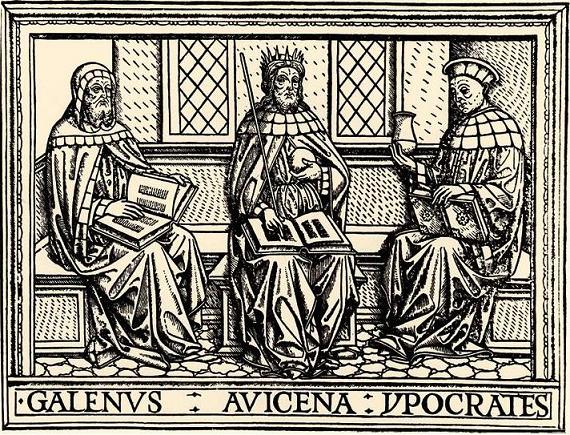
Figure 3. Galen, Ibn Sina (Avecena), and Hippocrates, the three authorities on medical theory and practice in a woodcut from an early 15th-century Latin medical book (Source)

Figure 4. Imaginary potrait of Arib ibn Said by Jemo (©MidJourney CC BY-NC 4.0)
Abu al-Hassan Arib ibn Sa’id al Kalid al-Quturbi al-Andalusi, better known in life as Arib ibn Sa’id, was born in or near Córdoba circa 300 (Islamic calendar) or 912 (Gregorian calendar). His Muwallad family was under the patronage of a noble Arab family named Banü-Turki when Abd al-Rahman III acceded to the throne and inaugurated the splendid rise of the Caliphate of Córdoba. [1] [10] Arib’s Christian father converted to Islam and adopted the name of Sa’id after a member of the influential family offering him patronage. [13]
The life of Arib ibn Sa’id has been described in depth by two major Arabists. [12] [13] We know that his patrons provided him with a solid education in religion, literature, history, astronomy, botany, zoology, agriculture, and above all, the sciences, as we glean from his very diverse writings. [10] Arib ibn Sa’id spoke perfect Arabic, the language of his educators, and Old Castilian, the romance language spoken by his ancestors. [1] His cultivated mind and social standing would send him on his way to a brilliant career.
He was soon recognised as an outstanding doctor because his knowledge of Arabic allowed him to study works by great scholars of Greek and Roman antiquity, including Hippocrates, Galen, and Dioscorides, which had been translated by the Baghdad and Damascus schools. Treatises by these and other doctors had been brought to Córdoba by Abd al-Rahman III and above all by Al-Hakam II, and they had a significant influence on Arib’s writings and clinical practice.
While his appointment as a doctor to the harem of Abd al-Rahman III owed much to his social standing, that decision was based most of all on his knowledge of obstetrics. In this capacity, he assisted in the births of several of the Caliph’s children. His good work helped him win the Caliph’s trust and launch his political career. He was later appointed secretary to Abd al-Rahman III; subsequently, despite his reserve and his brusque manners, he was named Governor of the Territory of Osuna in 943 because of his superior education. [1] [10] At a later point, he was made the Guardian of the Military Forces. Upon the death of Abd al-Rahman III, he came under the protection of Al-Hakam II, who named him Secretary of the Royal Chancery. During the caliphate of Hisham II, a period dominated by the military and political genius of Almanzor, Arib retained his high status, but his influence gradually waned until he was relieved of the positions he had held. He died in about the year 990 at the ripe old age, for that time, of 78. [1]
He was a prolific writer on a wide variety of subjects. A poet and historian as well, he completed the bulk of his writings during the reign of Al-Hakam II and dedicated most of them to that ruler. [10]
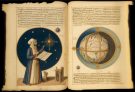
His scientific works consist of three volumes. Unfortunately, his Book of Medicines has been lost. The Calendar of Córdoba, written in 961 and believed by some to have been a joint undertaking with the bishop Recemundus, is a major treatise presenting his knowledge of astronomy, nutrition, agriculture, botany, zoology, falconry, and horsemanship. His study of fetal development, pregnancy, and newborns [Spanish title: El libro de la generación del feto, de las mujeres embarazadas y de los recién nacidos], was written between 961 and 970 and dedicated to Al-Hakam II. The book is divided into 15 chapters; the first eight are dedicated to obstetrics and gynaecology, and the remainder to paediatrics and child- rearing. The only Spanish version we can read today was translated from the Arabic by Dr Antonio Arjona Castro,[1] an excellent paediatrician from Córdoba with ample knowledge of Arabic as it was written in the times of the Caliphate of Córdoba. The book’s most noticeable feature is that its chapters are presented in chronological order. It draws from Greco-Latin sources, especially Hippocrates, Galen, Archigenes, Aristotle, and Dioscorides (from most to least cited material), as well as texts from the Medicine of the Prophet. In one chapter, we can find concepts pertaining to the theory of temperaments (warm/cold, moist/dry) and ancient Arab practices. Other chapters comment on the influence of the heavenly bodies and provide the doctor’s personal observations. It makes no mention whatsoever of the great physicians of the Eastern Caliphate. This may be due to the fact that ancient texts were more widespread in both the east and the west, whereas newer scientific texts became known only gradually. Avicenna in particular would not have been mentioned because he was born when Arib ibn Sa’id was already an elderly man; in fact, Arib died before Avicenna had written his masterpiece, The Canon of Medicine (1012-1023). Our interest in this book, which may well be considered the first treatise on obstetric and paediatric medicine written in Spain, was sparked by the chapters offering either passing references to or detailed descriptions of neurological conditions. These passages are well worth a closer look because they offer a view of medicine at the time, and more surprisingly, they seem to describe modern conditions.

Figure 5. Inside image of the Canon of Medicine book (Source)
Arib ibn Sa’id describes fetal development [1] (p.74-6) according to the wisdom of his time and texts by Hippocrates [14] and Galen. [15] His sources offer conflicting information regarding whether the heart or the brain is the first organ to be formed. For example, in El libro de la generación del feto, he quotes Hippocrates [14] as stating that:
“…the first organ to be formed is the brain, which is the seat of the senses and the source of the nerves. The eyes are formed later”
The description of the early development of the nervous system is well presented, given that the neural tube closes between the 21st and 28th days of gestation. The subsequent passage on fetal development is less insightful; in the texts available to Arib in those times, nothing was known of the different phases of embryonic and fetal development.
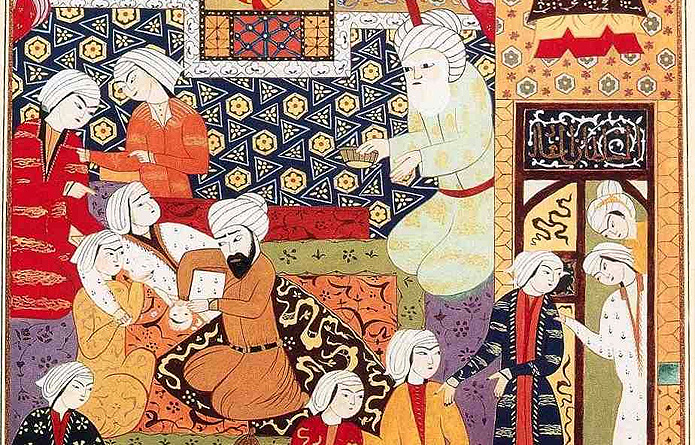
Figure 6. The miniature depicting of Rustem’s birth by Nursel Uvendire (Original source: Shahnama-i Firdawsī, Turk-Islam Exhibits Museum, Istanbul, MS 1955). Image taken from: Turkish Medical History through Miniature Pictures. ed. Nil Sari, Istanbul 2002.(Source) (Archived)

Figure 7. The start of the third book depicting disease of the brain. Avicenna, Canon, Isfahan (Source)
Fetal distress, birth asphyxia, or hypoxic-ischaemic encephalopathy (HIE) is usually caused by difficulty delivering the fetus. Depending on the severity of fetal distress, 42% of the cases result in neurological sequelae, [16] including varying degrees of mental disability in all cases, childhood cerebral palsy in most, epileptic seizures in 30% to 55%, and also hyperactivity-attention deficit disorder in preschool years and early childhood. [16] On the other hand, 50% to 60% of all cases of profound mental disability, 30% to 40% of cases of symptomatic focal epilepsy, and 22.5% to 38.1% of childhood cerebral palsy cases are caused by HIE.[17] Arib ibn Sa’id catalogues these entities meticulously:
“…difficulties in childbirth may arise on three fronts, namely, the woman, the fetus, and external circumstances” [1] (p.104-5)
In his list of problems originating with the mother, leaving aside others of little interest today, he lists “the problem of narrowness in the uterine canal”, which probably indicates a narrow birth canal. “Problems originating with the fetus may include death of the fetus or difficulty extracting it”. He then describes a variety of dystocic presentations, probably drawing on his personal experience:
“Sometimes a fetus lying on its side may turn crosswise or cause a difficult birth. If the fetus’s hand comes out with its head, this will place strain on the woman and weaken her so much that an ungentle midwife may kill her. If both hands are delivered with the head, the fetus will exert much more force on its mother, thereby increasing her suffering. Another difficult position for the fetus in childbirth is when its feet present before its head. If only one foot appears, the other will be displaced transversely and become lodged in the hip. If both feet emerge, the body will become lodged when either the two hands or the head are delivered. Sometimes the fetus will move backwards, and other times the umbilical cord will pass around its neck, causing it severe pain. Newborns may die from the compressive force of the looped cord. The fetus will sometimes suffer swelling due to pressure, which will later cause fatal illness.”[1] (p.108-9)
Arib ibn Sa’id showed concern for both the mothers and their infants; in his final paragraphs, he makes it clear that he understood the harm that may come to a newborn. He provides detailed descriptions of manoeuvres that experienced midwives could use when assisting in delivery and lists drugs that may help with difficult childbirth. There are considerable differences with respect to current practices in both cases.

Figure 8. The anatomy of a pregnant female body as illustrated in Manṣūr’s Anatomy (tashrīḥ-i Manṣūrī) (Source)
Chapters 10 and 15 address the stages in general child development, including cognitive development, and draw from two different sources: Hippocrates [14] and faith-based Islamic medicine.
“Hippocrates distinguishes four stages in childhood. The first period spans the first 40 days after the child leaves the uterus and takes its first breath of air.” [1] (p.125)
“In the second period, from its 40th day until its teeth erupt, the child begins to develop. Growth accelerates and the infant begins to look toward bright objects and hear sounds, which it could not have done before. This is possible because by this stage, the infant has become more aware of its surroundings. Similarly, in On the Eighth Month’s Foetus, Hippocrates wrote that an infant’s imagination and capacity for thought increase as it ages, and it will display more intelligence than it did as a newborn. For that reason, it laughs and cries both when it is asleep and when it is awake and thinking.”[1] (p.126-8)
“The third stage extends from eruption of the teeth to the time when the child acquires the use of reason (knowledge), its movements or activities increase, and its intelligence grows considerably. The mind begins to differentiate between objects. During this period, children learn to walk and talk. “[1] (p.128-9)
“The fourth stage is heralded by the end of dentition and extends until puberty and the appearance of body hair. Movements are more vigorous and both intelligence and interest in possessions increase greatly in this stage. Memory reaches its optimal state, which is why we say that a boy’s memory is as if graven in stone. During this time, they are educated and learn the laws of religion…At the age of 12, they will learn arithmetic and geometry and the basics of philosophy and medicine. Their intelligence is heightened and they quickly understand what they are taught. This is the last stage of child- hood before they will be directed by the rules that apply to men.”[1] (p.129)
The developmental stages established by Hippocrates and accepted by Arib ibn Sa’id are vague and lack clearly defined endpoints. The exception would be the first stage, which is approximately equivalent to the neonatal period (currently considered by paediatricians to include the first 28 days after birth) [18] and the first stage of development which we define, based on clinical and neurophysiological criteria, as extending up to three months.[19] Since they listed knowledge or intelligence as a very early phenomenon, ancient authors probably defined intelligence as a response to a stimulus. This differs from the modern concept which considers behaviour to be intelligent when it is adapted to the situation. It is true, however, that a child will acquire auditory and visual tracking skills, voluntary grasping, and the concept of object permanence in its first few months of life. By the end of its first year, it will begin to walk and talk. It is also difficult to match these stages with the concept of psychomotor development.[20] This process takes place up to the age of three, during which motor, cognitive, and affective skills develop as a whole. After the age of three, the above skills continue developing independently, although they will always be linked to each other. Likewise, the Hippocratic stages do not correspond well to Piaget’s stages of development [21] although the two systems have certain points in common. The sensorimotor stage, from birth to two years of age, is characterised by progressive differentiation of the neonate’s reflex responses until the child is fully capable of locomotion and object manipulation, can represent ideas with symbols and language (a process beginning at the age of one year), and has developed elementary gnostic and practical knowledge frameworks. That stage more or less corresponds to the first two periods described by Hippocrates. Piaget’s operational period is divided into three stages. The first or preoperational stage, from three to six years, is the one in which mental representation, symbolic play, deferred imitation and graphic representation appear. The concrete operational stage, from age seven to eleven, is characterised by logical operations involving tangible objects, increasingly social behaviour, acceptance of external rules, and objective thought. Some of the milestones of the third stage and part of the fourth, according to Arib ibn Sa’id, may correspond to this stage in Piaget’s schema. The formal operational stage, between the ages of 12 and 15 years, is typified by the acquisition of hypothetico-deductive reasoning and abstract thought. As such, the child will have acquired adult intellectual capacities by the end of this period. This coincides with the Hippocratic concept of the end of the fourth stage.
In chapter 15, [1] (p.176-8) Arib lists four stages based on the Medicine of the Prophet. Three of these stages –the first, second, and fourth– are subdivided into two substages each, according to scholars in this field. They depend on the combination of factors in the air, blood, other humours, and the heavenly bodies. As in other parts of the book, this section refers to certain elements (earth, water, air, and fire) or humours, listed in an earlier section as dry, moist, warm, and cold. These factors made up the basis of theories on constitution and predisposition to disease which Hippocrates [14] and Galen [15] had transmitted to Rhazes [22] and Avicenna [3][4] but we have decided not to examine these theories in detail in this article.
“The first part of life is childhood, which lasts until the age of 18 years and is a time for education, enthusiasm, and activity”. The first stage “is the time of unawareness of things, in which the foundation of thought and reflection is set and character may be modified”; in the second stage of life, the individual “builds his character and acquires intelligence, reflection, discernment, eagerness to learn, lessons from nature, and assimilation of those lessons… The essence of youth is displayed by the characters of people in this age range, who desire fame, nobility, and greatness”; it ends between the ages of 35 and 41. Thirdly, “maturity…is an age frequently accompanied by the tension of the soul and a yearning for greatness”. Lastly,“with old age…the body grows weaker and cooler; capacity for control and reflection decrease, the mind becomes less sharp, and natural strength wanes”.
The division of ages according to Arib ibn Sa’id, who followed “the opinions of scholars in this field” is the same as the one popularly used today: childhood, youth, maturity, and old age. We have more or less glossed over references to physical ageing, which he described in greater detail, so as to focus primarily on mental ageing.

Figure 9. “Among Europeans, al-Razi’s (Rhazes) most sought after work was his Kitab al-Hawi fi al-tibb (The comprehensive book on medicine), which was translated into Latin in 1279 under the title Continens Rasis by Faraj ben Salim, a physician of Sicilian-Jewish origin employed by Charles of Anjou to translate medical works. This book is also known in Latin as Continens Liber and in English as The Virtuous Life. Shown here is the rare 1529 edition of Continens Rasis, which was printed in Venice by Johannes Hamman” (Source)

Figure 10. A miniature illustrating the treatment of a patient. Serefeddin Sabuncuoglu. Jarrahiyatu’l-Hâniya. Millet Library, Ali Emiri, Tib 79.
Arib ibn Sa’id would probably have regarded any transient attack of brusque movements as a convulsion, as well as episodes of lassitude and more vague complaints that might or might not have been epileptic in origin. Convulsions, in the most general sense of the word, are mentioned in several chapters in the text. They may appear at any of the stages already cited.
“The second and third stages of childhood, corresponding to infancy and the preschool period, are especially prone to epileptic seizures. Spastic illness (illat al-tasannuy) in childhood was very harmful and greatly feared” (chapter 9) [1] (p.120-1)
Another passage mentions:
“convulsions or attacks of epilepsy that strike children by producing contractions of the limbs.” (chapter 12) [1] (p.143)
“The spasms that afflict children are among the most grievous and severe diseases in childhood. These spasms (tasannuy) are known as the children’s sickness, a type of epilepsy (darb min alsar), and they generally appear until the child’s fourth year of life. They increase during the second year.” (chapter 12) [1] (p.145)
These observations coincide with our modern understanding that severe epileptic syndromes present frequently (but not exclusively) during the first three years of life (West syndrome, Lennox-Gastaut syndrome, Dravet syndrome, etc.). Regardless of their potential causes, the above-mentioned convulsions in infants and toddlers would probably have been infantile spasms. At a later time, in the second or third year of life, there may be brief tonic or atonic seizures, which are typical in Lennox-Gastaut syndrome.
“Most frequently, this disease exhibits one of two causes: one due to a cold and moist complexion that pervades the brain, and the other, due to harmful items in the diet….Cases caused by complexion appear from birth and they are cured between that age and puberty…” (chapter 12) [1] (p.146)
The significance of this passage is that Arib is probably describing forms of epilepsy that resolve by or before puberty, as is the case with many types of idiopathic generalised epilepsy and above all, benign partial epilepsies and especially rolandic epilepsy. [23][19] Faith-based medicine is also used to explain the course of epilepsy.
“It is said that the type of convulsion sickness that begins and persists in infancy is a disease that will remain throughout the patient’s lifetime if it does not abate before puberty. Puberty is a milestone that marks the end of childhood diseases, and those in whom such diseases are evident after puberty are unlikely to be cured…Epileptic disease is more intense in children than in adults.” (chapter 15) [1] (p.174)
These last two notes probably refer to the epileptic encephalopathies listed above. Arib also stresses that:
“adults have a better tolerance (for epilepsy) because their blood vessels are wider…” (chapter 12). [1] (p.146)
The vascular theory elaborated by Hippocrates [14] maintained by Galen, [15] and supported by both Avicenna [3][4] and Rhazes [22] (who wrote extensively on epilepsy), was based on the notion of vascular occlusion due to phlegm or pituita, the cold and moist humour.
We also find a very insightful remark on psychogenic seizures:
“When menstruation has been interrupted for an extended period, there appear hysterical convulsions (ijtinag fi’al-rahim) [12] caused by lack of menses. These illnesses are the most damaging to the uterus and take the greatest toll on the strength of the body. Their symptoms consist of a sensation of heaviness below the navel radiating upward from the pubis. In other cases, they may cause fainting and the woman may appear to be dead; her breathing and pulse will barely be detectable.” (chapter 3) [1] (p.58)
The signs he describes are commonly seen in psychogenic seizures, which in any case are very polymorphic from a clinical point of view. On the other hand, he repeats the erroneous notion that the illness originated in the uterus, a theory that circulated for centuries since the disease was thought to be exclusive to women. Today, we know that such crises are triggered by situations of unresolved conflict, and that they serve as a means of achieving an end, gaining protection, attracting attention, and so on. While they present more frequently in women, especially in young women, they are also experienced by men.
“if convulsions are due to harmful foods, fright, or other things that cause the disease, the child will be treated from the earliest moment by removing those causes” (chapter 12). [1] (p.146).
“If children suffer from idiocy before puberty and it does not disappear before that, there is no sense in hoping for a cure, or that the child will become intelligent and quick-minded if God does not will it. It has been observed that intelligence in the young increases until the age of 28 .” (chapter 15) [1] (p.174)
It is refreshing to note that he supported the idea of intellectual development up to the age of 28; many later writers opined that the process ended with puberty. We now know that intellectual development may continue throughout life provided that no degenerative disease is present, even if the process becomes decreasingly efficient, lucid, decisive, and constructive, depending on the state of the other mental functions.
Although Arib Ibn Sa’id was one of the Caliphate of Córdoba’s most important scientists of the tenth century, his medical texts have attracted little attention in later years. One partial explanation is that his work is mainly a summary of texts by Hippocrates and Galen integrated with the Medicine of the Prophet (Islamic medicine of his time, based on empiricism and theology). Another factor was the limited dissemination of his work; the first translations of his writings were not undertaken until the 20th century. Lastly, we find that he was overshadowed by the great figures of the 11th and 12th centuries. His contributions to paediatric neurology mainly consist of copious notes on convulsions in his main text, in which he highlights the poor prognosis of spasms in infants and the remission of epilepsy in school-age children, as well as describing psychogenic seizures and mentions cognitive factors. Based on these insights, his clinical talents were considerable and deserve their place in history.

Figure 11. Albucasis (Al-Zahwari) blistering a patient in the hospital at Cordova*, 1100 AD. (*Córdoba or sometimes Cordova is a city in Andalusia, Spain) – (Source)
[1] Arjona A. El libro de la generación del feto, el tratamiento de las mujeres embarazadas y de los recién nacidos de Arib Ibn Sa’id. Seville: Sociedad de Pediatría de Andalucía Occi- dental y Extremadura; 1990.
[2] Rhasis. Liber nonus ad Almansorem cum expositione Sillani de Nigris: Receptae Petri de Tussignano supra nonum ad Almansorem. Venetiis: Bernardinus Stagninus, de Tridino; 1483
[3] Avicenne. Poème de la Mèdecine. Trad. Jahier H, Noured- dine A. Paris: Les Belles Lettres; 1956.
[4] Avicenne. Le livre de science. Trad. Achena M, Masse H. Paris: Les Belles Lettres, Unesco; 1986.
[5] Lain P. Historia de la Medicina. Barcelona: Salvat; 1982. p.127-33.
[6] Jahier H, Noureddine A. Le Livre de la génération du foetus et le traitement des femmes enceintes et des nouvaux nés de Arib Ibn Sa’id. Alger: Ferraris; 1956.
[7] Alarcón M, González-Palencia CA. Apéndice a la edición codera de la “Técmila” de Aben Al-Abbar. Misceláneas de estudios y textos árabes. 1915;2461:263.
[8] Kreukov P. Deux nouveaux manuscrits arabes sur l’Espagne musulmane acquis par le Musée Britannique. Hespéris. 1930;10:2-3.
[9] Sezgin F. Geschichte des arabischen Schrifttums. Vol. 7. Leiden: E.J. Bril; 1979. p. 385.
[10] López AC. Vida y obra del famoso polígrafo cordobés del siglo X “Arib Ibn Sa’id”. In: García E, editor. Ciencias de la naturaleza en al-Andalus: textos y estudios. Granada: CSIC, Escuela de Estudios Árabes; 1990. p. 317-47.
[11] Arjona A. Prólogo: La personalidad de Abul-l-Hasan Arib Ibn Sa’id al-Katib Al-Qurtubi Al-Andalusi. In: Arjona A. El libro de la generación del feto, el tratamiento de las mujeres embarazadas y de los recién nacidos de Arib Ibn Sa’id. Seville: Sociedad de Pediatría de Andalucía Occidental y Extremadura; 1990.
[12] Dozy R. Supplement aux dictionnaires arabes. Paris: Leiden; 1967.
[13] Casiri M. Biblioteca Arábigo-Hispana Escuria-Censis. Vol. 1-2. Madrid: [s.n.]; 1760-1770. p.127, 273-374.
[14] Hipocrates: Oevres completes. Paris: Littré; 1961.
[15] García-Ballester L. Galeno, en la sociedad y en la ciencia de su tiempo: c. 130-c. 200 d. de C. Madrid: Guadarrama; 1972.
[16] Volpe JJ. Neurology of the Newborn. Philadelphia: Saunders; 1981. p.180-203, 214-23.
[17] Nelson KB, Ellemberg JH. Neonatal signs as predictors of cerebral palsy. Pediatr. 1979; 64:225-32.
[18] Behrman RE, Vaughan VC. Nelson Tratado de Pediatría. Vol. 1. 13 ed. Madrid: McGraw-Hill; Interamericana de España; 1990. p.176.
[19] Nieto-Barrera M, Pita E. Epilepsias y síndromes epilépticos en el niño. Granada: Universidad de Granada; 1993.
[20] Dupré E. Pathologie de l’imagination et de l’émotivité. Paris: Payot; 1925.
[21] Piaget J. Six Études de Psychologie. Ginebra: Gouthier; 1964.
[22] Arjona A. El legado andalusí pediátrico. Inst. Est. Califales. 2005;5:15-32.
[23] Loiseau P, Faure J. Une forme particulière d’épilepsie de la seconde enfance. J Med Bordeaux. 1961;138:381-9.

Discover the golden
age of Muslim civilisation.

© Copyright FSTC Ltd 2002-2020. All Rights Reserved.