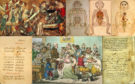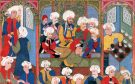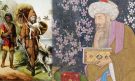


A Trio of Exemplars of Medieval Islamic Medicine: Al-Razi, Avicenna and Ibn Al-Nafis
by Ritu Lakhtakia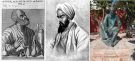
Chemistry, Pharmacology and Pharmacy – Contributions of Islamic Scholars to the Scientific Enterprise
by Yasmeen Mahnaz Faruqi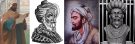

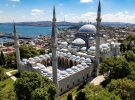

From rose water to hair dye, soap to paint, early chemists worked to create a panoply of useful substances. As early as the middle of the ninth century, experimenters in Muslim civilisation were aware of the processes of crystallisation, oxidation, evaporation, sublimation, and filtration. To make their experiments more accurate...
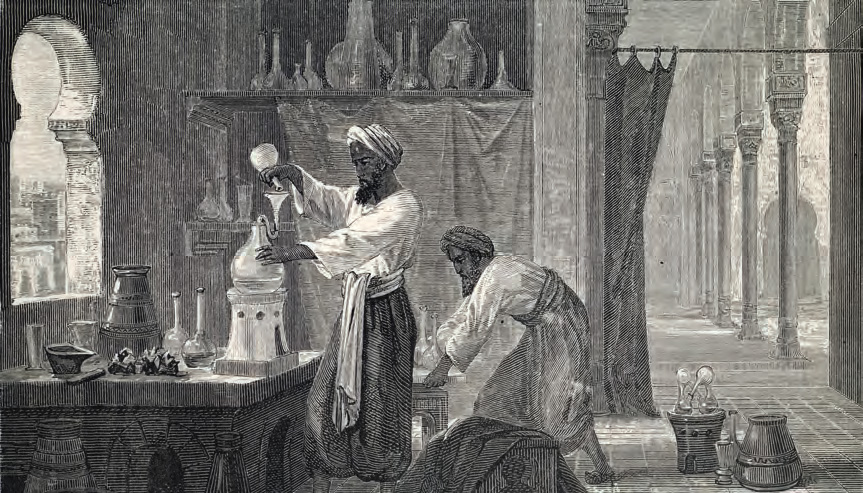
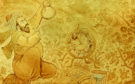
Figure 1. Ninth-century chemist Al-Razi is shown in his Baghdad laboratory. Modern perfumes would not exist today without the distillation process. (Source: 1001 Inventions: The Enduring Legacy of Muslim Civilization, 3rd edition, age 91)
From rose water to hair dye, soap to paint, early chemists worked to create a panoply of useful substances. As early as the middle of the ninth century, experimenters in Muslim civilisation were aware of the processes of crystallisation, oxidation, evaporation, sublimation, and filtration. To make their experiments more accurate, they invented precise scales to use for weighing chemical samples. But alongside this experimental work, they came up with new theoretical ideas and chemical concepts, some of which survived for centuries.
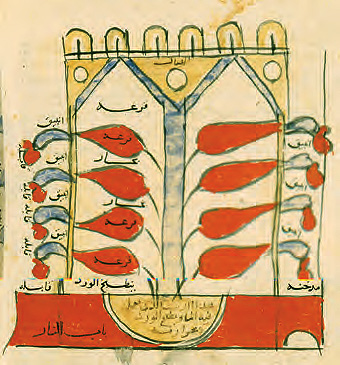
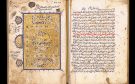
Figure 2. A 14th-century manuscript shows hemispherical vessels with a rose-and-water mixture resting on a fire red base. The vapours are collected and cooled in the eight vessels, which feed into eight external alembics. (Source: 1001 Inventions: The Enduring Legacy of Muslim Civilization, 3rd edition, page 90)
Scientists of this period laid important foundations for the modern chemical industry. Jabir ibn Hayyan and his successor, Muhammad ibn Zakariya al-Razi, developed new ways of classifying substances and organizing chemical knowledge. They wrote chemical textbooks and researched processes to improve ceramic glazes, formulate new hair dyes, and create varnishes for waterproofing fabrics. Other scholars worked on synthetic chemicals useful for pesticides, papermaking, paints, and medicines. Al-Razi, or Rhazes in Latin, made many discoveries, writing up his findings in a book intriguingly entitled The Book of the Secret of Secrets.
 Without the process of distillation, and in this case of crude oil, we would have no gasoline, kerosene, asphalts, or plastics.” Extract from ‘commercial chemistry’, 1001 Inventions: The Enduring Legacy of Muslim Civilization Reference (4th edition)
Jabir, known as Geber in the West, carried out many experiments, including attempts to make paper that would not burn and ink that you could read in the dark. He is said to have used an alembic still for distillation. A liquid could be boiled down in this curiously shaped glass vessel, allowing its separate pure parts to be collected as they condensed and trickled down the spout. Rose water was one of the first products of the distillation process, a delicately scented liquid vital for flavouring foods and drinks, and in perfumes and cosmetics. Al-Kindi wrote a book on the chemistry of perfumes, which contained 107 recipes for different scents.
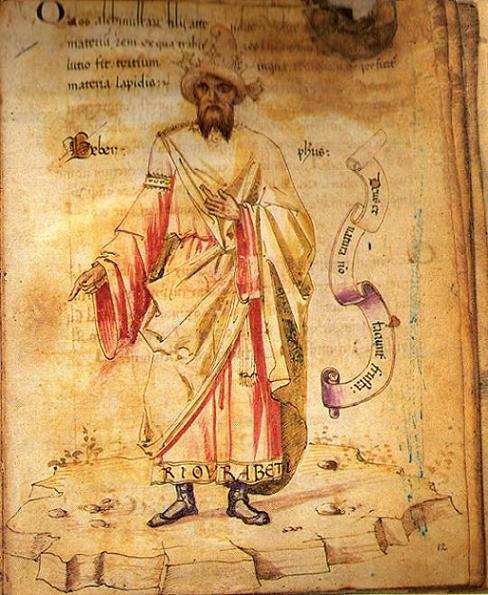
Figure 3. 15th-century European portrait of “Geber” in Codici Ashburnhamiani 1166, Biblioteca Medicea Laurenziana, Florence (image in the public domain).
Jabir ibn Hayyan (722 to ca 815) was known in the West as Geber. The son of a druggist, he spent most of his life in Kufa, Iraq.* He devised and perfected sublimation, liquefaction, crystallization, distillation, purification, amalgamation, oxidation, evaporation, and filtration.” Extract from ‘commercial chemistry’, 1001 Inventions: The Enduring Legacy of Muslim Civilization Reference (4th edition)
* R. Arnaldez-L. Massignon, Arabic Science, in Ancient and Medieval Science, R. Taton, ed. (London: Thames and Hudson, English tr. 1963), 385-421, at 413.
Muhammad ibn Zakariya’ al-Razi was known in the West as Rhazes, and he wrote The Book of the Secret of the Secrets. In this, he proved himself to be a greater expert than all his predecessors, including Jabir, in the exact classification of natural substances. He also excelled in writing up his experiments. From his Secret of the Secrets we know he was performing distillation, calcination, and crystallization more than 1,100 years ago.
The early chemists distilled wine, not to make a drink but to use the pure alcohol as a disinfectant or ink mixed with ground silver filings. Perhaps most valuable of all, they distilled the thick crude oil known as naft to produce the fuel kerosene, and in the 12th century made stronger acids by distilling vinegar. Today, distillation is still crucial for refining oil and is used widely in the chemical industry.
During the 12th and 13th centuries, many Arabic textbooks and writings on chemistry were translated into Latin. One particular set of works said to be associated with Jabir was republished many times up to the 17th century.
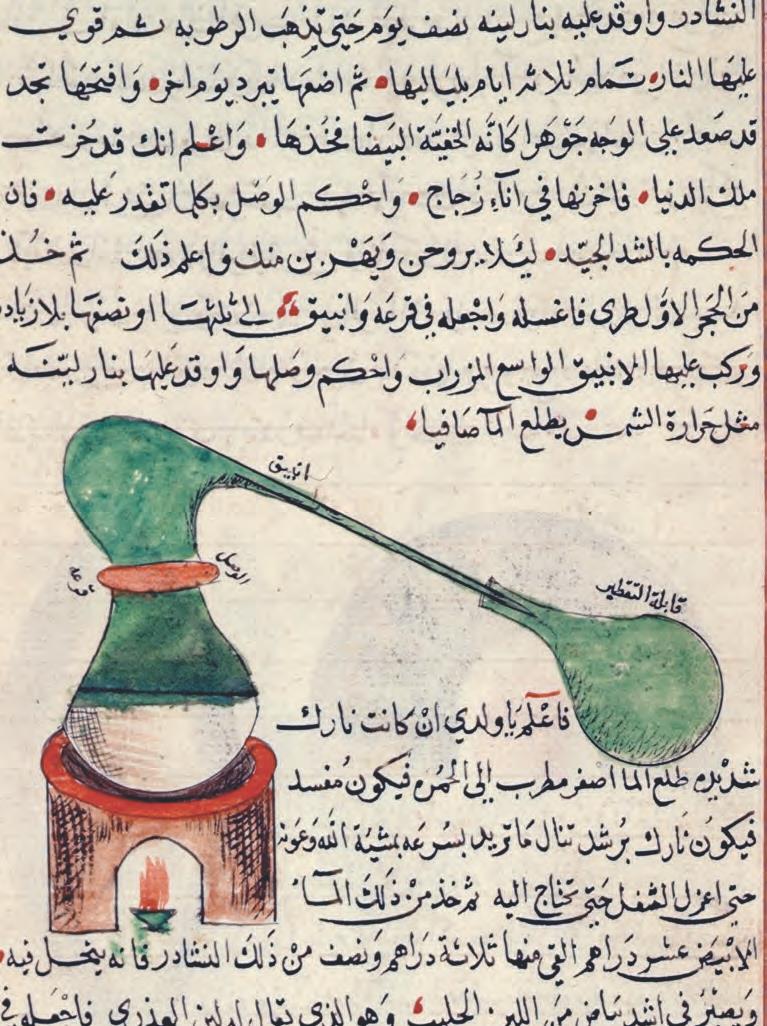
Figure 4. The distillation process is shown in an 18th-century Arabic treatise on chemistry. The Arabic text refers to the various vessels and the alembic, describing how the condensation is conveyed from the upper cooling vessel to the recipient flask. (Source: 1001 inventions: The Enduring Legacy of Muslim Civilization, 3rd eition, page 93)

Discover the golden
age of Muslim civilisation.

© Copyright FSTC Ltd 2002-2020. All Rights Reserved.