
This article is a summarised transcript of a webinar given on 1st January 2025 by Professor Salim Al-Hassani, Emeritus Professor of the University of Manchester and President of the Foundation for Science, Technology and Civilisation (UK). The webinar was organised by HIM (History of Islamic Medicine) and sponsored by the Federation of Islamic Medical Associations (FIMA), the British Islamic Medical Association, and the Foundation for Science, Technology and Civilisation.
Why did I choose this title – ‘The Strategic Importance of the History of Science and Medicine’? Perhaps people might ask: what does a professor of mechanical engineering have to do with the History of Science and History of medicine? We’ll come to this in a minute.
In this short presentation, I’m going to rely on some personal anecdotal stories which will reveal the various answers to the questions that are posed through this topic of strategic importance. Obviously, there are tactical reasons for the study of history, such as the need to learn from the experiences of early scientists, build upon them, publish books and journals, teach courses, and so on. These are what I call tactical reasons, but the question here is: what are the strategic reasons for studying the history of science and medicine?
What I’m going to do in my talk is to first share some phrases from important scholars in history and then go through some personal encounters from which you will be able to glean what I meant by strategic importance, along with lessons to take away from those stories.
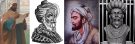
Abu Bakr Muhammad ibn Zakaria al-Razi is famous to have said:
“It is the person who attains complete knowledge of the achievement of those who came before him who will be able to add original contributions to it.”
This is a fantastic phrase because what he is actually defining is a strategic approach, as far back as the 9th century.
The other phrase I will share is from the 11th century Omar Khayyam. He said:
“When I want to understand what is happening today or try to decide what will happen tomorrow, I look back.” What he meant by this is to look at history.
The next is from the 17th century Isaac Newton:
“If I have seen further, it is by standing on the shoulders of giants.”
He wrote this as part of a letter to Robert Hook.
One wonders what he meant by ‘giants’, but what he is really saying in simple terms is that the knowledge that I have today is effectively built upon the knowledge and experiences of previous scientists.
The next statement I will share is from the 10th century Ibn al-Haytham. It actually puts the scientific method in its first perspective, which has not changed until the present time. What he says is:
“The seeker after truth is not one who studies the writings of the ancients and, following his natural disposition, puts his trust in them, but rather the one who suspects his faith in them and questions what he gathers from them, the one who submits to argument and demonstration and not the sayings of human beings whose nature is fraught with all kinds of imperfection and deficiency. Thus, the duty of the investigator, [that means the historian or even the scientist today] if learning the truth is his goal, is to make himself an enemy of all that he reads, and, applying his mind to the core and margins of its content, attack it from every side. He should also suspect himself as he performs his critical examination of it, so that he may avoid falling into either prejudice or leniency.”
This is remarkable because the perception of people, including historians, is that if you really want to write good history you have to go to the primary sources. I found this to be the case myself. It is so complicated because, when one does research and looks at a manuscript, we tend to say: ‘This is a primary source’, and therefore believe what it says. But what about the perception of the writer himself? It’s not a question of just transmitting what the writer has said, but what about his own perception? Is it likely to be erroneous?

I put a slide in front of you here to illustrate my point about perception. Now, if I tell you that the slide on the left shows a series of vertical lines and the other one is a series of horizontal lines, you’ll be surprised because they don’t appear to be vertical or horizontal–but they actually are! So, if an author is writing about an event and describes what he sees–assuming that he is honest–we must question if what he is seeing is the full reality, or is it a perception that he has created in his mind? I feel that this is essential when we are looking at history.
Al-Kindi in the 9th century alluded to the strategy of historiography. He said:
“We ought not to be ashamed of appreciating the truth and of obtaining it wherever it comes from, even if it comes from races distant and nations different from us.”
The strategy he put forward for us to adopt is not to be biased or prejudiced against races or nations that are different to our own.
Now, what I would like to do is go through some personal anecdotal events that I have encountered. These all relate to the strategic issues of identity and socio-political impact.
Firstly, how did I come to engage with the subject of the History of Science and Technology? I must refer to Professor Donald Cardwell and the way he introduced me to this subject. Professor Donald Cardwell was the founder of the Science and Industry Museum in Manchester and he was the head of the Department of History of Science and Technology in the University of Manchester where I was at the time. We became good colleagues, and one day he said to me:
“Look Salim, I find a huge gap in the history of science and technology. It is more than a thousand years long, a period which we call the Dark Ages, and it has something to do with your civilisation. As you are now a distinguished professor of engineering and you are at the peak of your career, how about doing something about it? You know, this gap needs filling!”
I said, “Look Donald, I’m sorry, but I hate history!” Donald asked, “What do you mean you hate history?” I replied, “Look, the history that I was taught when I was at school in Baghdad was the history of people killing one another, the history of wars and battles, and the struggle of nations against others.”
He said, “No, no, no, look Salim, historians always use lenses through which they look at history. These people who wrote the history that you read used the lenses of dynasties and politics and religion. What I’m talking about is using the lens of science. Try to look at history through the lens of science and then you can decide whether it is a path worth embarking on.” He was quite right.
Now, I personally encountered the problem of this enormous gap in history when I began to verify what Professor Donald Cardwell had brought to my attention. I visited libraries at the time and found a popular book. It was a coffee table size book called ‘Scientists and Inventors’ and it claimed to list the people who made technology from the earliest times to the present day.

I read this book, and lo and behold! This book has two pages for every scientist in the history of mankind. When it came to Archimedes in the year 287 BC, the next scientist listed is Johannes Gutenberg! I mean this is more than a thousand years after. This a huge gap! He has escaped the contributions of all non-European people: Chinese, Indian, Muslim, Persian. Then he goes from Johannes immediately to Leonardo Da Vinci. I was absolutely gobsmacked. I just couldn’t believe this.
After some time of study, my conclusion confirmed what Professor Cardwell had pointed out to me: when you look at Science and Technology as taught by many education systems, it typically looks like this:

You get a bit of information on the Greeks, the Romans, then there’s a huge gap which is called the Dark Ages, and then suddenly knowledge, you know, springs up out of nowhere–what we call the Renaissance in Europe–and then the Industrial Revolution, then modern day civilisation. Did the Renaissance rise from nothing? That was the immediate question that I asked, and it is the same question that everybody will ask when they go through the same experience. So, this is really a strategic question, not a tactical issue.
We tried to populate this and bring in the contributions of others–not the exact contribution, but what we know about their existence. For example, we know about the existence of earlier civilisations, such as the Pharaohs, Mesopotamians, Sumerians, and so on. After that, you have the Persians, Greeks, and Romans. Even before that, and during, we have the Chinese, the Indians, the Muslims, and then the Renaissance. When you populate this, it looks something like that, which seems to make logical sense because humanity contributes to each other.

How is it that we could know about the European Renaissance and science and technology during this period, yet we don’t know about science, technology, and medicine when Muslims ruled over Spain and Portugal (which was called Al-Andalus)? I put that red line there, as you can see, to highlight Al-Andalus. It was a huge period in Muslim history, yet it seems to be missing.
What struck me was that Andalusia, spanning more than 750 years and smack in the middle of the so-called gap, was missing! Spain and Portugal are European, not Asian or African–this is Europe!
“By adding contributions of non-European scholars, Science subjects will be viewed as a continuation of multiple origins as opposed to derivatives of a single origin.”
This remains a strategic issue until now. It’s incredible how hundreds of years have passed without this issue being resolved.
After I had been effectively tutored by Donald Cardwell and gave a successful presentation at the Literary and Philosophical Society in Manchester, I received a phone call from a lecturer in Birmingham University who was originally from Egypt. He said, “Professor Salim, I have a request for you. I’ve been asked to give a lecture about Arab and Muslim contributions in science and technology. In my attempt to gather information, I came across your name as someone who might be able to help.” We had a long chat over the phone and then towards the end of the call, he said, “Can you please give this lecture yourself?” I asked when it was, to which he replied, ‘Next week.’ My next question was, “Well, how can you redo the advertising in time?” He said, “No, no, what we will do is pull a stunt. I will go there as planned and they will think I’m going to give the lecture, and then I will present you to give it on my behalf.” It was a bit naughty, but we ended up doing just that. He stood up for his segment and presented me with some words of praise, saying, “Well there you are, it’s from the horse’s mouth directly. Instead of me copying his words, I have brought him to you here!” It was rather embarrassing, but I stood up, offered my thanks, and told them that I hope my presentation would meet their expectations.
The host of the event was the Lady Mayor of Birmingham, who chaired the conference. The event was organised by the Labour Union at the time, with a large audience. I gave my speech, bringing to light various scientific discoveries and scholars that are little known. When I sat down, the mayor rose from her seat and said, “I’m angry!” I thought, oh dear, I’ve goofed. I had not done a good job. I almost wanted to hide under the table. She continued, “I’m angry because why is none of this in the national curriculum? Why don’t we know about these contributions in mathematics, physics, chemistry, astronomy, and biology? Why don’t we have this in our national curriculum so that our kids will know about it?” And the next question she posed was, “Why don’t Muslims talk to us about this instead of talking about politics and religion?”
This is truly remarkable because it tells us that there is a strategic issue here: what I mean is education, the syllabus, intercultural relationships, Muslim and non-Muslim interactions, as well as race relations. It seems the language used in conversations between cultures and communities needs to be changed somehow. That was a very interesting encounter, and I think from it, you can read what I meant by strategic importance.
Now, we come to talk about the boy from Bangladesh. A truly remarkable story. After the Birmingham meeting, the project of 1001 Inventions came about due to demand from many people who, when they read about this subject on a website we had set up at the time called Muslimheritage.com, requested an exhibition. It was not sufficient to read articles about the subject; they wanted more. We talked with the Science and Industry Museum which was originally founded by Professor Cardwell. Then we approached various sponsors, including the British government. The project met with a great deal of support. We developed a pilot version of the 1001 Inventions exhibition at the Manchester Science and Industry Museum. Now, I wasn’t there on that day, when a boy visiting this exhibition pulled out a chair, stood on it, and shouted, “I feel human again!” What’s all this about?
Apparently, this boy was from the city of Leeds. I’m not allowed to mention his name or give personal details about him. When he was at his school–I think he was doing his A-Levels–he was having a very difficult time with his peers. He had been looked down upon, felt miserable and depressed, and would go home to poor Bangladeshi parents who were out of touch with the standards of modern society. He felt so miserable to the extent of wanting to commit suicide. Some of his friends heard about the 1001 Inventions exhibition in Manchester. They invited him to join them to change his environment and accompany them on an enjoyable journey to the exhibition.
Whilst walking through the exhibition, he discovered new information about the history of maths, physics, chemistry and biology–subjects that he was studying at school. He was stunned to discover that many of the ideas and inventions he was now learning about were developed by his ancestors. He was amazed because he thought that these were European subjects that his people had nothing to do with. Before the visit, he felt that he was a backward person from a negligible community. He then discovered surprisingly that his ancestors had ownership of those subjects. To him, that was a huge discovery because it struck hard into his perception of his identity. As a result, he stood on a chair and shouted, “I feel human again!”
When I heard about this incident, I realised the strategic importance of this subject, because it changed the life of this Muslim boy who was about to commit suicide–and, as you know, in Islam it is Haram (forbidden) to commit suicide because killing yourself is like killing an innocent person. There is a verse of the Qur’an that states, ‘If you kill an innocent person, it is as if you have killed the whole of humanity, and if you give life to a person, it is as if you’re giving life to the whole of humanity.’ When that boy was in Leeds, his frustration must have reached the edge to want to end his life. The psychological transformation of the boy was sufficient evidence to me of the significant impact that uncovering the hidden history of science and medicine had on identity and perception.
I shall now move on to another important story: ‘The Syrian Refugee girl in Istanbul.’
After the debut of the pilot exhibition in Manchester, 1001 Inventions became a touring exhibition throughout the UK. When the exhibition was in London–in the Science Museum–we had so many important visitors, one of whom was President Erdogan, who was, at the time, the Prime Minister of Türkiye. He was super impressed and invited us to take the exhibition to Istanbul, which we did. The Istanbul municipality set up a special large tent marquee in the Sultan Ahmet garden, between Sultan Ahmet Mosque and the Hagia Sophia Mosque. It was opened by the Prime Minister himself.

That wasn’t an ordinary exhibition; it wasn’t just an exhibition of posters. It was an interactive exhibition where visitors could learn while playing educational quizzes, viewing films, and listening to personalities impersonating male and female scholars from Muslim civilisation, as well as having hands-on experience with modified replicas of past inventions. The impact was noticeable on so many young people, some of whom visited it more than once. Newspapers and TV channels gave it full coverage, emphasizing the positive impact it had on tourists. I’m not trying to overpraise this exhibition, but the impact it had on the perception of the young and non-Muslim tourists was enormous.
After that, I met a Syrian teacher in Istanbul who told me about a young Syrian girl who had written a very worrying message in which she said:
‘We (i.e. Syrian refugees) are neglected by the world and life has become unbearable and is not worth living’.
This reminded me of the Bangladeshi boy.
After hearing this, I began talks with the Syrian teacher and an educational charity organisation, who agreed to sponsor a small project to provide a course to science teachers in a few Syrian refugee schools in Istanbul. The young teacher learnt the content of the 1001 Inventions book and a few articles from Muslimheritage.com. He then organised the course, which was eventually taught to the pupils. They were introduced to the great contributions their ancestors had made to these fields. This exposure had a remarkable impact on their attitudes; it transformed them to the extent that by the end of the year, they celebrated these discoveries with a show and an exhibition.

Each of them impersonated scholars from Muslim civilisation; the girls wore costumes to play the part of early women scholars and the boys did the same, impersonating male scholars. Each of them stood in front of the audience, performing with great enthusiasm and confidence.
The event was attended by important people, such as the Mayor of the Fatih municipality in Istanbul and the two daughters of Erdogan, who was the Prime Minister at the time.
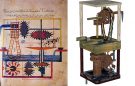
The boys and girls performed their parts. For instance, the girl on the left portrayed Fatimah al-Fihri. She narrated the story of Fatimah al-Fihri and her contribution to establishing the great Al-Qarawiyyin Mosque in the 9th century, which became the first university in the world and still functions today. What is so striking is the girl you can see in the center of the picture; she is holding a small model of Al-Jazari’s Elephant Clock which she built herself. Once she had read about it, she went to the souq (bazaar), found a carpenter and others who helped, and she built it herself. It’s not the same girl who wanted to commit suicide.
It was gratifying to see the success that came from revealing what the ancestors of these children had accomplished. Instead of feeling alien to these subjects, the children now wanted to own them. They wanted to become chemists, physicists, astronomers, engineers, and so on. One of them said he wanted to get a Nobel Prize. So, we witnessed the importance of the history of science and technology and its impact on identity and inspiration to pursue science.
Note that the Elephant Clock held by that young girl is described in Al-Jazari’s manuscript in the year 1206, which includes descriptions of numerous other devices and automatons. A simple look at the Elephant Clock reveals he had gone out of his way to recognise other cultures and civilisations from which he obtained knowledge.
He could have made a very simple clock with pieces of wood here and there, but no. Instead, he carved an elephant, which represents Indian contributions, and inside the elephant there’s waterworks which have something to do with Greek civilisation. The elephant’s back is covered with a Persian carpet. He used a Chinese dragon, symbolising Chinese contributions. At the top, there is a phoenix bird, which is a symbol of the Pharaonic civilisation. The scribe sitting on the elephant’s back is wearing a turban, which represents Muslim civilisation. Some people say that the man on the top represents Sultan Saladin as the Artuq governor, who instructed Al-Jazari to write the book, was under the Ayyubid domain. The real clock that he built worked and we have built large-scale models as part of the exhibition.
Recognising the other is a strategic issue and the best way to recognise is to appreciate their contributions.
Now, there is a verse in the Holy Quran that many people know, in which Allah says: “We created you from a male and a female and made you into peoples and tribes so that you may know each other.” The original Arabic word used in the verse is لِتَعَارَفُوا, commonly translated as ‘to get to know one another.’ I believe that it should be translated as ‘so you may appreciate each other’ instead of ‘so you may know each other.’ If you really want to appreciate someone, you look at the best side of the other person. It’s like when you introduce a person or a speaker at a meeting. An example of this is what Dr. Sharif has mentioned about me at the beginning of our webinar today. He said good things about me and enumerated some of the contributions I have made. Why did he do that? Obviously, so you appreciate and recognise my stature and expertise. And this is what hopefully the curriculum of every subject should do.
I hope that these personal anecdotes have given you a feel of the strategic importance of studying the history of science and medicine.
Finally, I would like to bring to your attention that there will be something soon coming up by the name of 1001 Women, God willing. This project and book will expose the hidden facts about the contributions of female scholars, predominantly from Muslim civilisation, although I have alluded to some women from other civilisations. Watch this space.
I’d like to thank you for giving me this opportunity to raise this important topic.


Discover the golden
age of Muslim civilisation.

© Copyright FSTC Ltd 2002-2020. All Rights Reserved.