The Persian polymath Abū ‘Alī Ibn Sīnā (980-1037 AD), known to early Western sources as Avicenna, records in one of his works, Compendium of the Almagest that ‘I say that I saw Venus as a spot on the surface of the sun’. The date and place of the observation are not given. This statement has been quoted subsequently by some Muslim astronomers, for example, by Nasīr al-Dīn al-Tūsī (1201–1274 AD). A transit of Venus indeed took place in Ibn Sīnā’s time, on 24 May 1032 AD (Julian). Did Ibn Sīnā see this transit or did he merely see a sunspot? The question was addressed by Bernard Goldstein in 1969 who concluded that “this transit may not have been visible where he lived”. The conclusion was based on the input provided to him by Brian Marsden who in turn used mathematical tables prepared by Jean Meeus in 1958 and gave sets of limiting terrestrial latitudes and longitudes from where the Contact I and II could be just observable.
Global view of the surface of Venus is centered at 180 degrees east longitude, 1991. (Wikipedia)
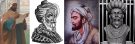
‘I say that I saw Venus as a spot on the surface of the sun’ Ibn Sina
A conjunction of Mercury and Venus, aligned above the Moon, as seen from the Paranal Observatory, 2008. (Wikipedia)
We have re-examined the question employing Espenak’s Transit predictions as also Jubier’s. The astronomical circumstances of the transit episode and the specific commentary on the monumental work Kitāb al-Shifā’ of Ibn Sīnā show that he could indeed have obtained a glimpse of the transit of Venus just before sunset from the place – Isfahan or Hamadan. That is also the best time to view with one’s naked eyes, should ground conditions permit. In other words, when Ibn Sīnā said he saw Venus on the surface of the Sun, he meant it.
We consider also if Ibn Sīnā’s observation could be that of a sunspot. Although the sunspot possibility can not be dismissed altogether, it does not emerge as a cogent proposition. His statement that every conjunction does not result in a transit can come from an actual observation only. Ibn Sīnā’s claim perhaps fills an important gap in the history of astronomy for the period 1030 AD onwards and bears testimony to his observational acumen and computational precision.
1. Introduction
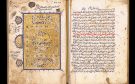
Abū ‘Alī Ibn Sīnā (Avicenna; Şafar 370 AH/–428 AH or 980-1037 AD), the renowned Persian natural philosopher, mathematician, physician, poet and prolific author of works ranging from philosophy to sciences and treatises on medical sciences, has stated in one of his works to have seen Venus as a spot on the surface of the Sun. In the modern times, the observation was discussed by Goldstein when he examined the microfilm of Ibn Sīnā’s Arabic text Compendium of the Almagest from the Bibliotheque Nationale, Paris. In the work that is a commentary on Ptolemy, Ibn Sīnā describes the unusual observation where he likens the disc of Venus as “a mole on the face of the sun” and concludes that Venus was, at least sometimes, below the Sun.
As Hadavi has pointed out, Ibn Sīnā states this observation also in his philosophical work al-Isharāt wa al-Tanbihāt (meaning Pointers and Admonitions, or Instructions and Remarks). The date and place of the observation are not given. Ibn Sīnā’s Venus observation was specifically cited by Nasīr al-Dīn al-Tūsī (1201–1274 AD), the most acclaimed Persian astronomer and natural philosopher at whose instance the Marāgha observatory was built with a view to produce precise astronomical tables and take down planetary movements, while confirming Ptolemy’s planetary order in his astronomical work Risālah Mu‘iniyya in Persian, and later by the astronomer Cyriacus (lived ca. 1482 AD) among others.
The transits of Venus are rare — about 12 in a millennium, either in June (at the descending node) or in December (at the ascending node). In some historical records, instances have been cited, suggestive of naked eye witnessing of the transits of Venus, for instance by the 16th century BC Assyrians and by medieval Arab astronomers in the years 840, 1030, 1068 and 1130 AD, etc. No transit happened in any of the specified years and the sightings could be of sunspots only. Compared to the other pre-telescopic instances, we find Ibn Sīnā’s observation to be relatively convincing and amenable to some exploration.
After the telescope, the first of the transits of Venus as predicted by Johannes Kepler (1571–1630 AD) happened on Dec 7, 1631 AD. The French astronomer Pierre Gassendi (1592–1655 AD), who had already watched the transit of Mercury on Nov 7, 1631, tried to watch the transit of Venus the following month from Paris but did not succeed.
The accuracy of the prediction in Kepler’s (1627) Tabulae Rudolphinae on the one hand, the Contact IV was already over at 06:47 UT before the Sun rose at Paris (sunrise 07:34 UT). Looking through Kepler’s tables, the British astronomer Jeremiah Horrox (1618–41 AD) deduced the next to be on November 24, 16398 (December 4, Greg). He planned and was able to observe it employing projection technique from a place fifteen miles north of Liverpool, possibly Hoole as also his friend William Crabtree from near Manchester.
It was James Gregory in 1663, and later Edmund Halley in1691, who proposed that one should be able to determine solar trigonometric parallax and deduce an unprecedentedly precise measure of distance to the Sun from the timings of ingress and egress of the transit of an inner planet when observed from different locations on the Earth. Halley died in 1742. The next transits of Venus were to happen in 1761 and 1769. As the time drew near, the forthcoming transits evoked great scientific interest in Europe to observe these from different parts of the globe. What then followed is history, and well documented, vide Kurtz (2004) and van Roode (2012).
2. Goldstein’s Observation
Ibn Sīnā’s description amounts to a naked eye observation of the transit of Venus. There indeed was a transit on May 24, 1032 AD (Julian). However, there are also some questions raised thereabout, the foremost being if it was a sunspot that he may have seen. Goldstein was well within reason to pose time constraints that severely limit the claim. He cites Ptolemy who considered the possibility of transits by planets that lay below the Sun in the order and observed that:
“even if a planet did transit the Sun, it might not be visible on account of the brightness of the Sun and the small area of it that the planet would cover.”
In Ptolemy’s planetary order, transits would happen at inferior and superior conjunction both. According to Goldstein, the medieval astronomers picked up the threads concerned as they were to reconcile Ptolemy’s model with actual observations. He cites from literature the examples where al-Kindī (800/803–870/873 AD, etc.), Ibn Sīnā, Ibn Rushd (1126–98 AD) and Ibn Bājja (ca.1095–1138/9 AD) may have observed transits of the planets that are below the Sun. Goldstein examined in detail the claims and found these dismissible on grounds of chronology and feasibility. It is only the report of Ibn Sīnā’s observation that he dwelt upon more, but concluded that:
“this transit may not have been visible where he lived”
Not certain where exactly Ibn Sīnā was on May 24, 1032 AD, Goldstein based this conclusion on the likely time window Brian G Marsden12 provided him in a personal communication of Nov 8, 1967 on the basis of mathematical tables prepared by Meeus (1958). The limits to the time of observation were deduced for a latitude spread between 30º–40ºN and a longitude range correspondingly constrained by the Contact I (earliest possible at 15 21 UT) to 52º.8–59º.3E and by Contact II (latest possible at 16 07 UT) to 41º.3–47º.8E, west of which the respective contacts could be observed. Marsden regarded Meeus’ UT values correct to within about 15 minutes.
Goldstein’s conclusion was not location specific. Besides, the above contact timings are slightly inconsistent with more modern transit predictions by Espenak. According to the latter, the interval between the first two contacts was 16 minutes.
The fact is that there is no additional information on Ibn Sīnā’s observation. It was severally cited but we do not find anything of a follow up. Similarly, there are no discussions that are more definite than Goldstein’s. In this paper, we examine the astronomical circumstances specific to the cities of Isfahan and Hamadan Ibn Sīnā may have observed the transit from employing Fred Espenak’s Transit predictions, as also the part of Xavier Jubier’s website dealing with solar transits (see later), and see if the question can be resolved.
This website uses cookies to improve your experience. We'll assume you're ok with this, but you can opt-out if you wish. Cookie settingsACCEPT
Privacy & Cookies Policy
Privacy Overview
This website uses cookies to improve your experience while you navigate through the website. Out of these cookies, the cookies that are categorized as necessary are stored on your browser as they are as essential for the working of basic functionalities of the website. We also use third-party cookies that help us analyze and understand how you use this website. These cookies will be stored in your browser only with your consent. You also have the option to opt-out of these cookies. But opting out of some of these cookies may have an effect on your browsing experience.
Necessary cookies are absolutely essential for the website to function properly. This category only includes cookies that ensures basic functionalities and security features of the website. These cookies do not store any personal information.