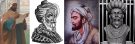


The mathematical sciences of the Islamic world flourished between the 8th and 13th centuries, building on Greek, Indian, Babylonian, and Persian traditions while introducing groundbreaking innovations of their own. Muslim scholars refined arithmetic with the adoption of Hindu numerals and the invention of zero (sifr), which revolutionized calculation and spread to Europe through Al-Andalus (Parts of Spain, Italy and Portogul). Thinkers like al-Khwarizmi, the “father of algebra,” laid the foundations of modern algebra, while Umar Khayyam advanced the study of cubic equations, and al-Battani developed trigonometry with lasting influence on astronomy and navigation. The great polymath Ibn al-Haytham (Alhazen) transformed optics, geometry, and experimental science, his work later inspiring European scholars such as Kepler and Bacon. By integrating algebra with geometry, introducing new number theories, and pioneering mathematical modeling, Islamic mathematicians not only preserved ancient knowledge but also pushed it far beyond its origins, shaping the course of mathematics, science, and exploration in both the Islamic world and Renaissance Europe.
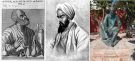
Figure 1. Al-Khwarizmi crater (Wikipedia), Figure 2. Albategnius (al-Battani) crater (Wikipedia), Figure 3. Alhazen (Ibn Al-Haytham) crater (Wikipedia), Figure 4. Omar Khayyam crater (Wikipedia), Figure 5. (below craters) The three brothers – Mohammed, the eldest; Ahmed, the second youngest; and Hasan, the youngest – wrote more than 20 science books under the moniker ‘Banu Musa’ (newarab.com)
***
Editor’s Note: This extract will be part of a series of short articles based on Dr. Yasmeen Mahnaz Faruqi’s article, “Contributions of Islamic Scholars to the Scientific Enterprise”, originally published in the International Education Journal.
***
The mathematical sciences as practised in the Islamic world during this period consisted of mathematics, algebra, and geometry, as well as mathematical geography, astronomy and optics. Muslims derived their theory of numbers (‘ilm al-a‘dad) in arithmetic from translations of the Greek sources such as Books VΙΙ through to ΙX of Euclid’s Elements and the Introduction to the Science of Numbers by Nicomachus of Gerasa (Berggren, 1997).
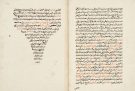
Figure 6. Ishaq Ibn Hunayn’s Arabic Translation of Euclid’s Elementa. Baghdad (probably), Iraq, AD 1270 (AH 699). Chester Beatty Library Ar 3035, ff.105b-106a. Abū Yaʿqūb Isḥāq ibn Ḥunayn (c. 830 – c. 910/911), son of the famed translator Ḥunayn ibn Isḥāq, was a distinguished Arab physician and scholar. He wrote the first biography of physicians in Arabic and is best remembered for his translations of Euclid’s Elements and Ptolemy’s Almagest, which played a key role in transmitting Greek science to the Islamic world and medieval Europe. (Wikipedia)

Figure 7. Extract from Topkapi Palace copy of Muhammad al-Qunawi’s (d. 1524) edition of al-Khalili’s “universal auxiliary tables”. This excerpt contains the solution of functions f(x, y) = sin y / cos x and g(x, y) = sin x tan y for each degree of x, and y = 40° and 40°30′ (Wikipedia)
Moreover, they acquired numerals from India (Hindu) and possibly China and made their use widespread. Mohammad Bin Ahmed [al-Khwarizmi], in the tenth century, invented the concept of zero, also known as sifr. Thus, replacing the cumbersome Roman numerals and creating a revolution in mathematics (Badawi, 2002). This led to advances in the prediction of the movement of the planets and advances in the fields of astronomy and geography.
Muslim mathematics had inherited both the Babylonian sexagesimal system and the Indian (Hindu) decimal system, and this provided the basis for numerical techniques in mathematics (Folkerts, 2001; Rajagopal, 1993). Muslims developed mathematical models using the decimal system, expressing all numbers through ten symbols, where each symbol carried both positional and absolute values (Kettani, 1976). Many creative methods of doing multiplication were developed by Muslims, including methods of checking by casting out nines and decimal fractions (Anawati, 1976). Thus, Muslim scholars contributed and laid the foundations of modern mathematics and the use of mathematics in the fields of science and engineering (Høyrup, 1987).
Thabit bin Qurrah not only translated Greek works but also argued against and elaborated on the widely accepted views of Aristotle. In arithmetic, there emerged the concept of irrational numbers with Islamic mathematicians starting from a non-Euclidean concept. Both Umar Khayyam (10481131) and Nasir al-Din al-Tusi (1201-1274) contributed to research on this concept, which did not have its origins in Greek mathematics.
Eastern Muslims derived numerals from Sanskrit-١‘٢‘٣‘٤‘٥‘٦‘٧‘٨ and ٩, and they were the first to develop the use of the zero (sifr), written as 0 by the Western Muslims and ‘·’ by Eastern Muslims (Kettani, 1976, p.137). Whereas these Eastern Muslims had initially used the Arabic alphabet as numerals, by the ninth century Western Muslims had invented and replaced them with “al-arqam al-gubariyah-1,2,3,4,5,6,7,8 and 9-based on a number of angles equal to the weight of each symbol (Kettani,1976, p.137). Thus, the zero with the numerals made it possible for the simple expressions for numbers to have infinite values, thereby helping solve particular problems. Translations of mathematical treatises in Spain subsequently transferred this knowledge to Europe.
Figure 8. Manuscript page of Al-Kāshī’s calculation of π: jadwal tadhā’if nisbat al-muhīt wa-‘l-qutr (table of the multiples of the ratio of the circumference to the diameter). (Source).
Al-Khwarizmi wrote the first book of algebra, the word ‘algebra’ transliterates into the term al-jabr. Al-jabr represents the two basic operations used by al-Khwarizmi in solving quadratic equations. In the latter half of the twelfth century, the first part of al-Khwarizmi’s Kitab al-Jabr wa al-Muqabalah was translated and made available in Europe (Kettani, 1976; Sarton, 1927). Another famous contributor to this field was Umar Khayyam [Omar Khayyam], who studied cubic equations and algebra came to be regarded as a science in its own right. Subsequently, in later centuries, Italians took over his methods and extended them (Anawati, 1976). Thus, the Muslims not only developed the methods of solving quadratic equations they also produced tables containing sine, cosine, cotangent and other trigonometrical values. Al-Battani (d.929) systematically developed trigonometry and extended it to spherical trigonometry (Kettani, 1976; Sarton, 1927), with important consequences for astronomy, geography and exploration beyond the known world, thus making the construction of better maps and the reconceptualisation of the structure of the planet Earth.
Figure 9. Kitab fi al-Jabr wa al-Muqabala by Muhammad ibn Musa al-Khwarizmi [780-850] (Internet Archive)
Arabic geometry absorbed not only the materials and methods of Euclid’s Elements but also the works of Apollonius and Archimedes. The book, On the Measurements of Planes and Spherical Figures, written on Archimedean problems by the three sons of Musa bin Shakir [Banu Musa] in the ninth century, became known in the West through the translation by Gerard of Cremona. In seventeenth-century Europe, the problems formulated by Ibn al-Haytham (965-1041) became known as “Alhazen’s problem”. Again, his work that was translated into Latin made Europeans aware of al-Haytham’s remarkable achievements in the field of Optics (Kitab al-Manazir) (Meyers, 1964, p.32). Among his works were included a theory of vision and a theory of light, and he was called by his successors of the twelfth century “Ptolemy the Second”. Furthermore, by promoting the use of experiments in scientific research, al-Haytham played an important role in setting the scene in modern science (Rashed, 2002, p.773).
Figure 10. From the Book on the Measurement of Plane and Spherical Figures (Kitāb maʿrifah masāḥat al-ashkāl al-basīṭah wa-al-kuriyyah / Kitāb al-mutawassiṭāt) by the Banu Musa (Internet Archive)

Figure11. The caustic generated by a point source of light (bright point, top) within a circular mirror (light red). This illustration extends each light ray past the mirror to a complete line. For one given point at the light source, Alhazen’s problem has two solutions for a second given point on the dark side of the caustic and four solutions on the light side of the caustic. (Wikipedia)
Al-Haytham’s contributions to geometry and number theory went well beyond the Archimedean tradition. Al-Haytham also worked on analytical geometry and the beginnings of the link between algebra and geometry. Subsequently, this work led in pure mathematics to the harmonious fusion of algebra and geometry that was epitomised by Descartes in geometric analysis and by Newton in the calculus. Al-Haytham was a scientist who made major contributions to the fields of mathematics, physics and astronomy during the latter half of the tenth century. John Peckham, in the late thirteenth century, used al-Haytham’s Kitab al-Manazir and Witelo’s Optics also have echoes of Kitab al-Manazir. Witelo’s work was used by Johannes Kepler. Roger Bacon, the founder of experimental science, probably used the original Arabic works of al-Haytham as well as Latin translations (Meyers, 1964).
Much work was undertaken by Islamic mathematicians regarding the theory of parallels. This theory consisted of a group of theorems whose proofs depended on Euclidean postulates. The Islamic mathematicians continued their research for over 500 years on these postulates in order to obtain proofs and not just the acceptance of them. However, after these problems were transmitted to Europe in the twelfth century, little further research was done until the sixteenth century. Muslim scholars contributed not only to the use of logic in the development of mathematical ideas and relationships, but also to a workable system of numeration that included zero and led to the solution of equations. Muslims had thus begun the work that led on to mathematical modelling and its application for the purpose of testing their theories. This knowledge and approach were slowly transferred to Europe through Spain and Sicily.
Figure 12. Hail the Queen of Mathematics!

Discover the golden
age of Muslim civilisation.

© Copyright FSTC Ltd 2002-2020. All Rights Reserved.