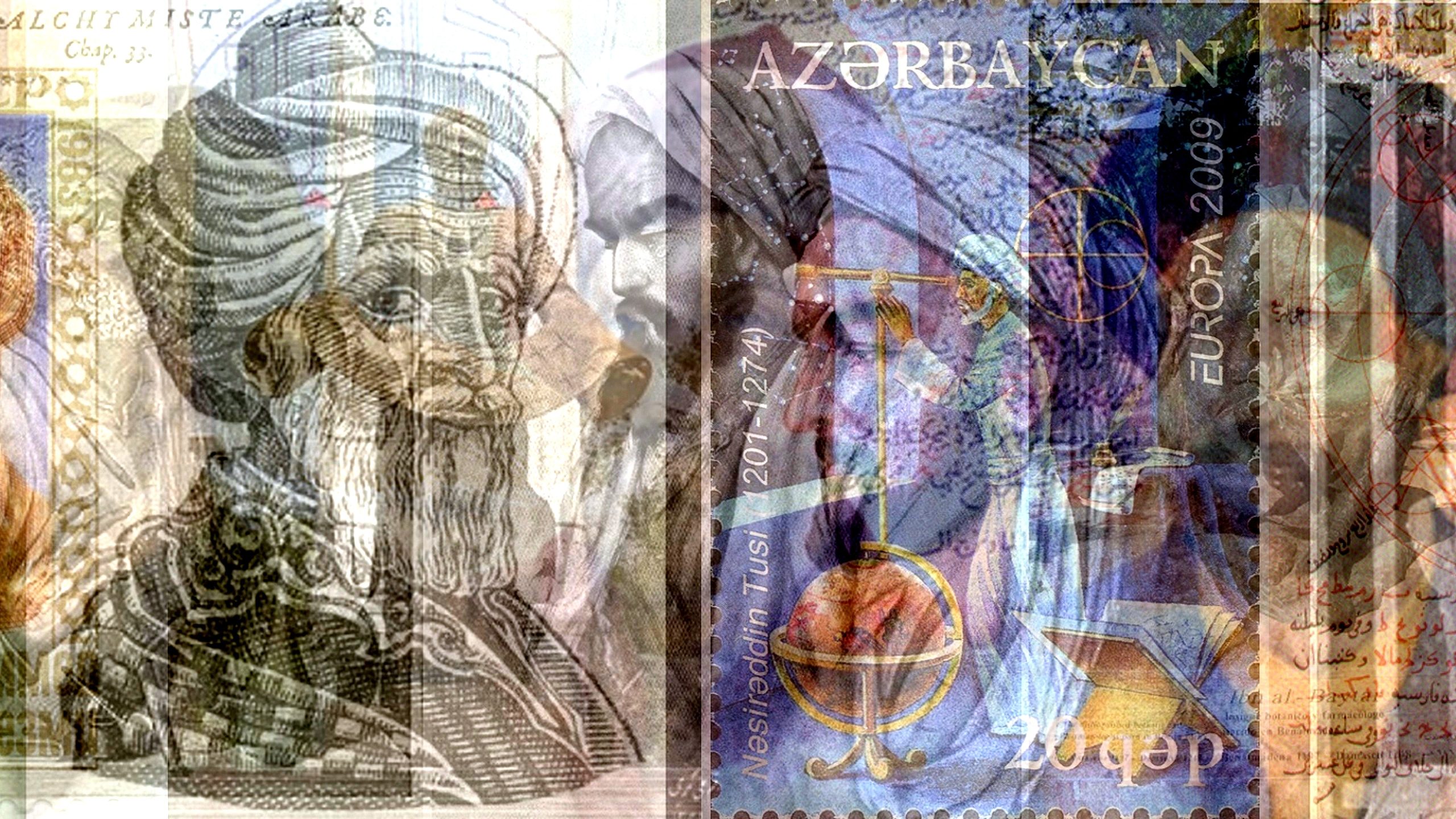
This paper presents a discussion regarding the role that Muslim scholars played in the development of scientific thinking in the Middle Ages. It argues that the Muslims were not just the preservers of the ancient and Greek knowledge, but that they contributed original works to the different fields of science. They were inspired by the Islamic view of nature that is, mankind had a duty to ‘study nature in order to discover God and to use nature for the benefit of mankind’. This knowledge was transferred to Western Europe and subsequently played an important role in revitalising a climate of learning and exploration in Europe, leading to the Renaissance in the sixteenth and seventeenth centuries.
The Contributions of Islamic Scholars
The Islamic Empire consisted of a society that was multicultural in terms of languages, customs, traditions and religion. As Muslims went forth from Arabia to conquer the countries surrounding them, they encompassed vast lands with peoples of different faiths and cultures. Thus the Islamic Empire not only consisted of Muslims from three continents, Arabs, Persians, Turks, Africans, Indians and other Asians, but also Jews, Christians and other faiths. Therefore scholars from all faiths worked under the umbrella of Islam to produce a unique culture of knowledge and learning. In the paragraphs that follow each major known field of science is considered and examined for the contributions made by scholars from the Islamic world.
Filtering of Scientific Knowledge from the Islamic World to Europe
The conquest of the Eastern Empire by the Arabs meant that Western Christendom was deprived of the main reservoir of Greek learning for centuries by intolerance and mutual suspicion of opposing creeds, as well as the breadth of the Mediterranean Sea (Crombie, 1963). But as early as the end of the tenth century knowledge had began filtering from the Islamic world to the West. Thompson (1929) in his article “The Introduction of Arabic Science into Lorraine in the Tenth Century” discussed the question of Arabic science being introduced in the schools of Lorraine as early as the end of the tenth century and thereby into Latin Europe. Thus an intellectual avenue through Spain to Europe beyond the Pyrenees was opened by the expansion of the Islamic Empire across North Africa. Throughout the twelfth and thirteenth centuries in Spain and Sicily, the transmission of scientific knowledge continued with the establishment of an Arabic-Latin translation program. In Sicily after the Norman kingdom was established in 1060, its Latin, Greek and Muslim subjects lived in more favourable conditions than those in Spain (Crombie, 1963) for the growth of intercultural and intellectual exchange. Here the knowledge of antiquity was rediscovered in its original Greek versions and the major developments recorded in Arabic that were subsequently translated into Latin (Burnett, 2001; Schramm: 2001), in corners of Europe prior to the Renaissance. 398 Contributions of Islamic scholars to the scientific enterprise.
Discussion
It has been seen that the scholars working in the Islamic Empire spanning over three continents started in the beginning with the translation movement, as well as creating the necessary language tools in Arabic for the translations of the works of the Greeks, Persians, Indians and all ancient knowledge. But having acquired the knowledge they set about not only assimilating, testing and analysing, but also adding important and original contributions to that knowledge. Beginning from the end of the tenth century this knowledge began to filter back to Europe through the translations of Arabic versions of the Greek knowledge and the original Greek treatises (Burnett, 2001). But also transferred to Europe were the seminal contributions of scholars of the Islamic world. Modern science as we know it today works with theories and models that must be tested empirically, starting in the fields of mathematics, astronomy and medicine. The Muslims developed the procedures for testing knowledge both empirically and logically. However an important characteristic of Islamic science was its experimental character. Islamic scientists were interested especially in the applied sciences, in the construction of apparatus, in testing theories by undertaking observations, and analysis of results through mathematics (Bammate, 1959). These ideas and procedures were all available in Western Europe through the seminal works of Islamic scholars before the times of Galileo, Descartes and Newton to whom they have been largely attributed.
Future Research
While there is currently research being carried out on the use of single works or the ideas and writings of individual authors, it is too early to draw all possible conclusions. In order to form a comprehensive picture of both the translation processes, and the transmission of scientific knowledge from ancient Greek libraries to the Islamic world, culminating in the eighth and ninth centuries (Sabra, 1996; Sabra, 1987) and the subsequent translation and transmission of Islamic scholarly works to Europe during the twelfth to fourteenth centuries further scholarly work is needed. Fortunately various collections of Arabic manuscripts are still preserved in European libraries. Further detailed investigations would help throw light on the critical role of Islamic scholarly works in the development of Renaissance Europe (Saliba, 1999). What is important to note is that the Islamic conception of God (Bausani, 1974) made possible a major advance in scientific thinking during the period of the eighth to the fifteenth centuries in Islamic lands, while Europe lay largely dormant during the Dark Ages. Developments would only appear to have occurred in Europe where there was direct contact with Islamic knowledge in Spain and France, until the fall of Constantinople in 1453. Thus the initial development of Modern Science did not occur in Italy with the spectacular work of Galileo, but in the Islamic world several centuries earlier, where it slowly and gradually advanced in ways that have been largely ignored but scholars in Western Europe.
This website uses cookies to improve your experience. We'll assume you're ok with this, but you can opt-out if you wish. Cookie settingsACCEPT
Privacy & Cookies Policy
Privacy Overview
This website uses cookies to improve your experience while you navigate through the website. Out of these cookies, the cookies that are categorized as necessary are stored on your browser as they are as essential for the working of basic functionalities of the website. We also use third-party cookies that help us analyze and understand how you use this website. These cookies will be stored in your browser only with your consent. You also have the option to opt-out of these cookies. But opting out of some of these cookies may have an effect on your browsing experience.
Necessary cookies are absolutely essential for the website to function properly. This category only includes cookies that ensures basic functionalities and security features of the website. These cookies do not store any personal information.