Browse through selected images taken from Muslim Heritage articles related to Astronomy...
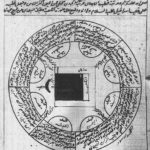
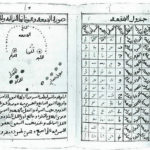
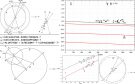
This diagram is a particularly important 8-sector scheme of sacred geography because although it is found in an 18th-century Ottoman Egyptian manuscript it is in fact many centuries (6? 7?) older.
The anonymous 8-sector scheme in MS Şehit Ali Paşa 2776,2, fol. 56v, courtesy of the Süleymaniye Library, Istanbul, which has kindly made the entire manuscript available on the internet.
“An early seventeenth-century margin drawing from the folio in Jahāngīr’s Album showing an astrologer surrounded by his equipment—an astrolabe, zodiac tables and an hourglass (Werner Forman Archive/Naprestek Museum, Prague). ”
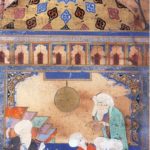
A 15th-century Persian manuscript of Nasir al-Din al-Tusi’s observatory at Maragha depicts astronomers at work teaching astronomy, including how to use an astrolabe. The instrument hangs on the observatory’s wall. (Source: 1001 inventions: The Enduring Legacy of Muslim Civilization, 3rd edition, Page 269)
Adam Smith (1723-1790) and Ibn Khaldun (1332-1406) Source: Ibn Khaldun and Adam Smith: Contributions to Theory of Division of Labor and Modern Economic Thought by James R. Bartkus)
The Samarkand Observatory, Uzbekistan (Source: Ulugh Beg)
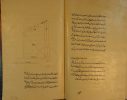
Part of the manuscript which shows Istanbul Observatory
Remains of Jaipur observatory in India built by Maharajah Jai Singh in 1726. Early observations were carried out by the naked eye from the top of this monumental architectural structures. The monuments include a massive sundial, the Samrat Yantra, and a gnomon inclined at 27m , showing the altitude of Jaipur and the height of Pole Star. There is also a large astronomical sextant and a meridian chamber.
The overview of the astronomical instruments and staff of the Istanbul Observatory with Taqi Al-Din Rasid at work from Shahinshahnāme, (Book of the Shah of the Shahs), 1581
Erzurumlu İbrahim Hakkı published an explanation of the Solar Eclipse in his encyclopedia Marifetname
A page from Kâtib Çelebi’s Kitâb-i Cihânnümâ / Jihân-numâ (Cosmorama), Istanbul: Ibrahim Müteferrika, 1732.
Istanbul Observatory
Artistic impression of Ali Al-Qushji
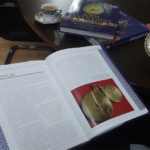
1001 Inventions book, Astrolobe section in Astronomy zone, Page 280-821
The depiction of Orion, as seen from Earth (left) and a mirror-image, from a 13th-century copy of al-Sufi’s Book of the Fixed Stars. In this version, Orion’s shield has become a long sleeve, typical of Islamic dress.
Statue of Ulugh Beg and his students, Registan square, Samarqand, Uzbekistan
A 1973 USSR stamp depicting Al-Biruni
An illustration from Al-Biruni’s astronomical works, explains the different phases of the moon
On the 4th September 2012, Google celebrated Al-Biruni’s birthday with this ‘doodle’
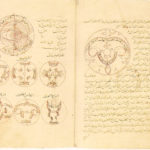
An 18th Century diagram of an astrolabe from Al-Biruni’s Kitab al-Tafhim
Portrait of Rhazes (al-Razi), Wellcome Images
An Ottoman illustration of the al-Aqsa Mosque in Jerusalem 18th century
The plan of the city of Jerusalem from a manuscript collection of various religious, astronomical and historical works dated 1589
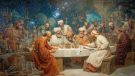
Nasir al-Din al-Tusi at the observatory in Maragha, Persia. Image courtesy of the British Library.
An Arabic translation of the astronomical tables of Ulugh Beg. (Library of Congress).
Babylonian tablet recording Halley’s comet in 164 BCE, the comet was last witnessed in 1986
“Treatise on the Astrolabe” 13th Century manuscript by Mahmud bin Muhammad al Mushi, Sivas, Turkey
[Mariam]* Al-Ijliya al-Asturlabi
“The Anatomy of an Astrolabe: One of the highlights of the Arts of the Islamic World auction in London is a magnificent 11th-century Umayyad brass astrolabe, signed by Muhammad ibn al-Saffar.
Using an astrolabe for navigation, in Arabic manuscript by Iqbâl-nâma Nizâmî, Kâbul or Kandahar, 16th Century
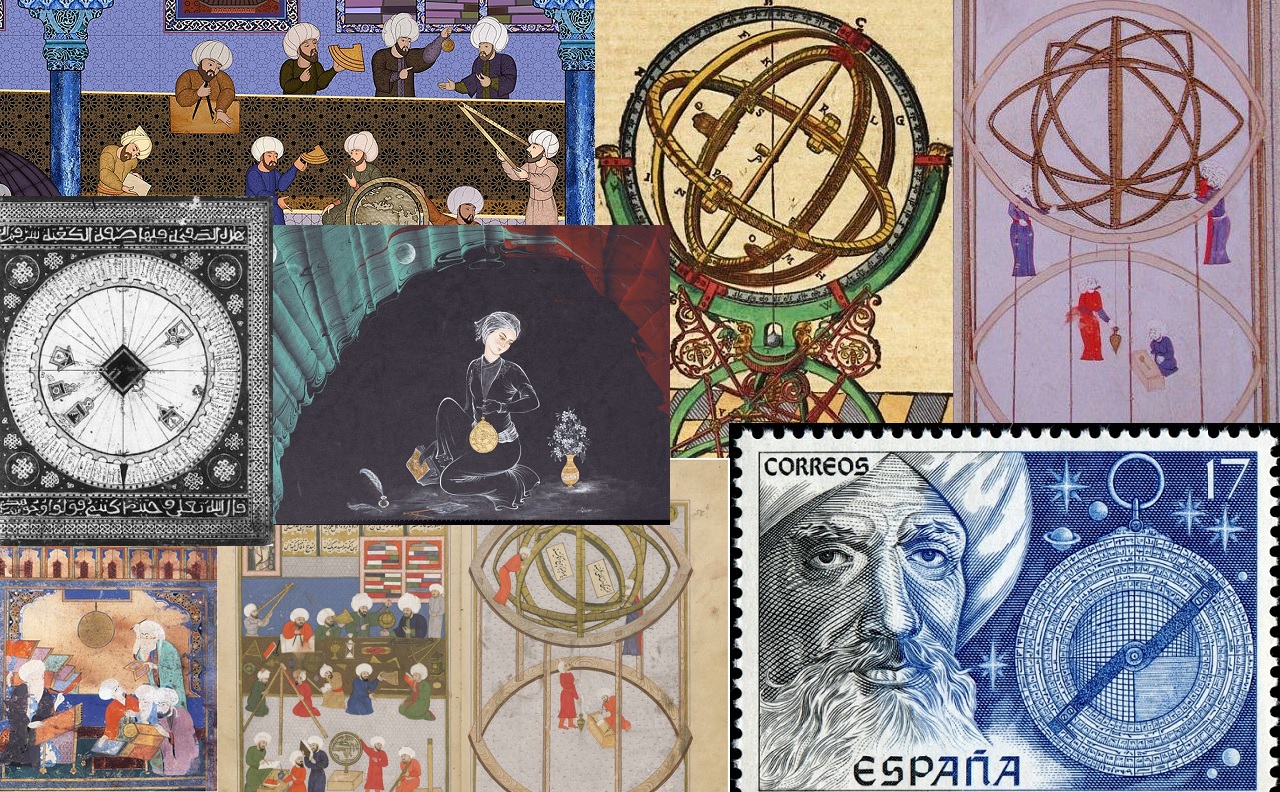
Spanish stamp of Al-Zarqali with universal astrolabe
Diagram showing the parts of an astrolabe
“A depiction of Mariam al Ijliya, a famous astrolabe maker who lived in Aleppo in the 10th century”
Ahmad ibn Khalaf’s Astrolabe, Baghdad, Iraq, 9-10th Century
A Seljuk’s (Seljuq’s / Selcuk’s) Arabic Illustrated manuscript on the construction and use of the astrolabe, ink on paper Sivas and Kayseri, Anatolia (Turkey), 1231-1238 from the The al-Sabah Collection, Dar al-Athar al-lslamiyyah, Kuwait (LNS 67 MS)
Aristotle teaching astronomy while using an astrolabe on an Arabic Manuscript
The front of the universal astrolabe of Ibn al-Sarraj, dated AD 1329.
An illustration of the stars of one of the lunar mansions (al-haq`a) in an Egyptian treatise on folk astronomy.
Armillary sphere of Tycho Brahe
Armillary sphere (dhât al-halaq) of Taqî al-Dîn. Source: Istanbul Topkapi Library, Hazine 452, f. 89
Azimuthal semicircle (dhât al-samt wa-‘l-irtifâ’) of Taqî al-Dîn. Source: Istanbul Topkapi Library, Hazine 452, f. 10a.
Azimuthal semicircle of Tycho Brahe.
Mural quadrant (libna) of Taqî al-Dîn. Source: Istanbul Topkapi Library, Hazine 452, f. 9a.
Mural quadrant of Tycho Brahe.
Observational clock
Parallactic instrument of Taqî al-Dîn. Source: Istanbul Topkapi Library, Hazine 452, f. 11ba.
Parallactic instrument of Tycho Brahe.
Sextant (mushabbaha bi’l-manâtiq) of Taqî al-Dîn. Source: Istanbul Topkapi Library, Hazine 452, f. 14b.
This website uses cookies to improve your experience. We'll assume you're ok with this, but you can opt-out if you wish. Cookie settingsACCEPT
Privacy & Cookies Policy
Privacy Overview
This website uses cookies to improve your experience while you navigate through the website. Out of these cookies, the cookies that are categorized as necessary are stored on your browser as they are as essential for the working of basic functionalities of the website. We also use third-party cookies that help us analyze and understand how you use this website. These cookies will be stored in your browser only with your consent. You also have the option to opt-out of these cookies. But opting out of some of these cookies may have an effect on your browsing experience.
Necessary cookies are absolutely essential for the website to function properly. This category only includes cookies that ensures basic functionalities and security features of the website. These cookies do not store any personal information.