

The Vijećnica Building in Sarajevo: A Symbol of Bosnian Vulnerability, Resilience and Hope
by Spahic Omer

With the Ottomans' arrival in Bosnia, the general identity of Islamic architecture was already established, and the specific Ottoman Islamic architectural style was beginning to take shape. This transition from a formative stage to a classical period in the Ottoman state is often linked to the reign of Sultan Sulayman the Magnificent and the Empire’s chief architect, Mimar Sinan.[1] In Sarajevo, the formative period extended from the rule and construction projects of Isa-beg Ishaković, the founder of Sarajevo, to those of Gazi Husrev-beg. Gazi Husrev-beg, appointed by Sultan Sulayman the Magnificent, is known for representing the classical Ottoman architectural style in Sarajevo. This shift is why many buildings predating Gazi Husrev-beg were relatively small and structurally weak, leading to their deterioration or the need for reconstruction to align with the new architectural trends.

(Gazi Husrev-beg’s mosque denoted the apex of the evolution of the Ottoman Islamic architecture in Sarajevo. Source )
The main dignitary responsible for shaping Sarajevo into what it is today was Gazi Husrev-beg. He ruled the Sanjak of Bosnia on three separate occasions: from 1521 to 1525, 1526 to 1534, and 1536 to 1541. As per Vedad Biščević, Gazi Husrev-beg held a similar significance for Sarajevo as Sultan Sulayman the Magnificent, his superior, did for the entire Ottoman Empire. As the sanjak-beg of Bosnia, Gazi Husrev-beg is considered equal to modern leaders and monarchs in terms of authority, reputation and achievements. He promoted Sarajevo to a šeher (full-fledged city) from its previous status as a kasaba (town).[2]
When Gazi Husrev-beg arrived in Sarajevo, the city featured fifteen closely knit Muslim residential zones (mahalas) with 1,422 houses in total, sixteen mosques, two musafirhanas (guest houses), two imarets (public kitchens), three Sufi tekkes, two madrasahs, a number of maktabs (elementary educational facilities), two huge caravanserais, four hammams, one pharmacy, and a beautiful, diverse and rich commercial center. However, as soon as Gazi Husrev-beg emerged on the urban scene of Sarajevo, the city’s development and growth accelerated, affecting all aspects of life. The impact can be summarized by the fact that within just a decade after his governorship, seventeen new mahalas were created, which was more than double the previous number.[3]
The changes were reflected in the requirements for socio-religious and educational institutions, which were delivered accordingly. There was no segment of either human or social development that was overlooked. Gazi Husrev-beg’s development of Sarajevo was systematic, balanced and sustainable. The following is the list of his endowments: a mosque which was the biggest, most beautiful and most recognizable structure in the city, a fountain and ablution facility, muvekkithana (an institution for determining prayer times and also for drawing up the Islamic Hijri calendar), a maktab, two mausoleums, a khankah or tekke (hanikah), two madrasahs, a library, a musafirhana, an imaret, a clock tower, a bezistan (covered marketplace), a series of hans or inns, a hammam, two hospitals for the poor: one designated for men and the other for women, and a network of sixty shops. He likewise provided water to the city from a distance of seven kilometers.[4]

(The old part of Sarajevo seen from a nearby hill.)
Built in 1531, Gazi Husrev-beg’s mosque signified the pinnacle of the Ottoman Islamic architecture in Sarajevo. It would be unjust to claim that the city never reached such architectural and artistic heights again because the mosque was not in competition. Even terms like “progression” and “growth” cannot fully capture what the mosque and its extensive complex of institutions truly represented. The mosque stood out on its own, a remarkable gift from an extraordinary individual in exceptional circumstances. All the contributing elements aligned at the perfect moment, creating a bond meant to endure forever. This bond continued to grow as each generation of mosque users continuously admired its marvel. The mosque not only served as the heart and soul of Sarajevo but also of Bosnia, connecting the city’s – the country’s – identity, culture and history with its people. It was the focal point, the masterpiece and the model; it was a true reference point.
The mosque, along with the hammam of Gazi Husrev-beg, was constructed using stone quarried from the Ozren mountain situated northeast of the city. This mountain is approximately a 30-minute drive from the city center. It is said as well that hundreds of oxen were used to transport the massive columns for the portico at the Gazi Husrev-beg mosque’s entrance, for which Gazi Husrev-beg generously rewarded the villagers.
Additionally, when Gazi Husrev-beg began his epic construction projects, he had to bring in a group of blacksmiths, builders and carpenters from Dubrovnik. The imbalance between what was needed and what was available in the city’s building industry was significant. In May 1529, Gazi Husrev-beg submitted a request to the government of the Republic of Ragusa (Dubrovnik) for the said laborers, which was approved two months later.[5]
It is believed that Gazi Husrev-beg received specifically five stone masons from Dubrovnik to assist in constructing his mosque. They were needed the most because massive stone structures were uncommon and the expertise was lacking. The building specialists from Dubrovnik, apart from the mosque of Gazi Husrev-beg, also took part in the construction of his hammam, bezistan (covered marketplace) and a han or inn called Tašlihan (stone han), all of which were built of stone, brick and lead for roof covering.[6] They also featured domed and vaulted ceilings.

(A model of Gazi Husrev-beg’s mosque surrounded by many of his other endowments. This image is courtesy of the Sarajevo Museum.)

(Though uncertain, the architect of Gazi Husrev-beg’s mosque was one of the leading architects of the biggest empire in the world at the time.)
The identity of the architect of Gazi Husrev-beg’s mosque is debatable.[7] Some say he was a Persian, Adžem Esir Ali, while others believe, though unknown, the architect belonged to the architectural school of Mimar Hajruddin, who was a student of Mimar Sinan and served as the Empire’s chief architect before him. Regardless, it is widely accepted that the architect of Gazi Husrev-beg’s mosque was one of the Empire’s leading architects, hailing from the top echelons of Istanbul. He could yet have been tasked with designing not just the mosque, but also the madrasah, the library and the khankah (hanikah).[8]
According to Behija Zlatar,[9] Gazi Husrev-beg was able to commission the chief architect of the biggest empire in the world, bringing him from the capital of the world, Istanbul, to Sarajevo, because of his own caliber. In a nutshell, Gazi Husrev-beg was a cousin of Sultan Sulayman the Magnificent, the grandson of Sultan Bayezid II, a celebrated statesman and military leader, and an extremely rich person. Put simply, fame and greatness could only lead to more fame and greatness, further enhancing Sarajevo’s international reputation. Salih Sidki Muvekkit-Hadžihuseinović went on to suggest that Gazi Husrev-beg and his father Ferhad-beg, as sanjak-begs, were more famous and important than beglerbegs (beylerbey as a “lord of lords” or commander-in-chief) and even viziers.[10]
It is interesting to note that the mosque in Istanbul with a layout similar to Gazi Husrev-beg’s mosque, including right and left wings for Sufi activities, is the mosque of Sultan Bayezid II, also known as “Bayezid the Sufi.” Constructed in 1506, this mosque predates Gazi Husrev-beg’s mosque by about 25 years. Designed by Mimar Hajruddin, who also created the iconic Mostar bridge (Stari Most), there is speculation that a member of his architectural team might have been involved in designing Gazi Husrev-beg’s mosque. Additionally, during this period, Mimar Sinan was active and later became the chief architect of the Empire, indirectly influencing the architectural ethos of Sarajevo.
Contrasted with the other domed mosques in the city, which are architectural treasures in their own right, Gazi Husrev-beg’s mosque stands out for its larger, grander and more imposing presence. The mosque’s frontal width spans 32.40 meters, while its length extends to 30.20 meters. The dome, reaching a height of 24.40 meters, serves as the highest point in the mosque, and the minaret stands tall at 45.60 meters. The sturdy walls, constructed from stone, have a width ranging between 1.80 and 2.20 meters.[11]
The prayer hall has a large central dome, a half-dome that extends the interior space towards the qiblah direction, and two smaller side domes topping the mosque’s right and left wings at the front. The domes are supported by pendentives, besides the similar role of the walls. The pendentives of the central dome emerge from and rest upon the meeting points of pairs of large arches. The pendentives feature calligraphic inscriptions framed within circles, as in the case of the two smaller domes, and inside spherical rings, as in the case of the central dome. The calligraphic rings and circles are surrounded by profuse floral and geometrical motifs. On the other hand, the half dome is supported at two corners by two levels of intricate muqarnas, reminiscent of the styles seen in Mamluk buildings in Cairo and those of the Nasrids in Andalusia (Spain). They are in lieu of pendentives; in fact, they are muqarnas-adorned pendentives. The muqarnas structure consists of a lower and upper part, connected by an extended flat surface. This flat surface, which connects rather than separates the two muqarnas parts, acts as a segment of a pendentive meant to extend and so, enhance the dome’s support. The combination of the two-tiered muqarnas and the inserted flat surface, each offering various decorative options, exudes both elegance and beauty, as well as a sense of strength and robustness.
The base of the central dome has a series of windows and a railed passageway encircling it. The purpose of the passageway, accessed by a hidden staircase through the thick walls of the mosque, was to reach the point where lamps could be lit to illuminate the mosque. Below the dome’s base, there are three levels of windows. The third level includes only one circular window, known as an oculus, on all sides except the qiblah side. The purpose of the three circular windows on the mosque’s three sides, given their elevated locations and sizes, is as much to embellish as to enhance the overall symmetry of the structure. The last role is to provide light. The half-dome and the two side domes are also perforated with windows. The half dome features five windows, while each side dome has four. The windows of the first level are square with tympana filled with decorative themes. In contrast, the second level windows and those found in the bases of the domes and the half dome, are arched.

(View of the mosque’s qiblah side)

(It is said that hundreds of oxen were used to transport the massive marble columns for the mosque’s portico.)
The mosque has a large portico at the entrance, consisting of five bays – two on each side and one central bay leading to the mosque’s entrance. Each bay is topped by a dome, totaling five domes. The central dome above the entrance is slightly larger than the others and sits at a slightly higher level. Notably, this central dome is unique as it is supported by an intricate muqarnas, unlike the other domes which are held up by pendentives. Additionally, the portico is upheld by four massive marble columns, each measuring 4.9 meters in height and 0.66 meters in diameter.
The portico is flanked by side walls on both the right and left sides, each containing an arched window. The end walls eliminated the need for two extra pillars. If the portico had been open like in other domed mosques with porticos, there would have been six pillars instead of four. As this is the sole example of a closed portico at both ends among Sarajevo’s domed mosques, one can only speculate whether this was to reduce the number of large and difficult-to-source marble pillars. In this case, the intention would likely have been more about saving costs rather than architectural reasons.
Above the columns of the portico, there are semi-circular slightly pointed arches. These arches moreover span the spaces between the columns and the mosque’s wall, providing full support for the domes and clearly marking the boundaries of each bay below. The ground of the two bays on the right and the two on the left of the portico is elevated, serving as additional prayer areas when the mosque is crowded inside and as an alternative prayer space when the mosque is closed between prayers. Both sections feature a significant mihrab, or prayer niche, with a muqarnas hood, clearly indicating the purpose of these spaces. Typically, the right side is designated for men, while the left side is for women.
Based on the pictures from the time of the Austro-Hungarian rule, the voussoirs or stones used to build the arches of the portico were arranged using the ablaq technique. Ablaq is a system where alternating rows of stones with different colors are used primarily for decoration and to create a visually striking effect. The technique was most popular in Moorish architecture and the architecture of the Mamluks who came before the Ottomans. The same category, if not genuinely used, is at least via a decorative maneuver implied on the surface of the arched hoods of the two mihrabs of the portico, suggesting that the existing ones are recent additions.
Even today, if one carefully examines the voussoirs (stones) of the mosque’s portico arches, one can still notice some slight differences in their colors. It is difficult to determine if the ablaq technique was used when the mosque was first built. However, it is possible, since many Ottoman architectural masterpieces from the 16th century, including those designed by Mimar Sinan like the Sulaymaniya, Shehzade, Sokollu Mehmed Pasha and Rustem Pasha mosques in Istanbul, did incorporate the ablaq technique. Gazi Husrev-beg’s mosque may have simply followed the common trend. This possibility is further supported by the ablaq of the interior massive arches on which the central dome rests. The arches form the fundamental framework of the building, possibly dating back to the original construction.
Regardless, it is certain that the Austro-Hungarian regime, too, through its renovation of the mosque of Gazi Husrev-beg, made a significant impact on both the intensity and quality of the ablaq of the mosque’s portico. The reason behind this is that the Austro-Hungarians preferred a particular Islamic architectural style in Sarajevo, which they tried to introduce and enforce. This style was defined by a mix of neo-Moorish and neo-Mamluk design elements. The Austro-Hungarians must have been pleased to see the largest and most iconic mosque in Sarajevo conform to their architectural ideology. The portico, in some ways the countenance of the mosque for those who interact with it externally and from a distance, was a testament to compliance.
From the wall of the mosque on the right side of the portico, near the entrance, projects a small balcony that is supported by a console and enclosed with a balustrade. The balcony is used by the mu’adhdhin to coordinate congregational prayers when the prayer hall is full, ensuring smooth execution of prayers both inside and outside. Through a window, the balcony is connected to a mahfili, which is located right next to the entrance on the right side. A small spiral staircase leads through the thick wall to the mahfili. The mahfili, about 3.5 meters high, is a platform resting on ten marble pillars with muqarnas capitals. It is approximately 3 meters long and 4 meters wide, directly supported by the pillars without arches, and enclosed with a balustrade. The edges resemble an entablature, with a blank architrave and a frieze covered with muqarnas. The muqarnas on the frieze have tiny pointed niches, while those on the pillars’ capitals are semicircular.
The rectangular shape of the mahfili, a simple architectural element, led Nihad Čengić to mistakenly believe it was inspired by classicism, including the influence of the design of a Greek temple. According to Nihad Čengić,[12] if the nicely proportioned mahfili’s frame included a tympanum at the top instead of a balustrade – obstructing thereby the elevated view and position of the mu’adhdhin, which alludes to the main purpose of the mahfili element and for which a simple platform resting on pillars was the most ideal architectural solution – and if it featured a stylobate as part of a crepidoma, the mahfili would have resembled the frontage of a Greek temple.
Stressing again, the design of the mahfili is not influenced by the Greek temple architecture. In the classical period of the Ottoman Islamic architecture, particularly during the construction of Gazi Husrev-beg’s mosque, there were no Hellenistic influences. Even in later times, during the period of modernization when the Ottomans sought architectural and artistic inspiration from the West, the original Hellenistic influences were minimal. The chances of seeing the simple shape of the mahfili resembling the basic form of the tympanum-less and crepidoma-less Greek temple are high. However, this resemblance is only superficial. It is merely a coincidence and lacks any meaningful import. If this holds true, one could also argue that any platform held up by columns is influenced by the design of a Greek temple, which is an outlandish idea. In any case, what Nihad Čengić was correct about was that the simplicity and style of the mahfili – its proportions, configuration and stone work – are so advanced that they are on par with the mahfilis found in the greatest mosques worldwide.[13]

(The mahfili platform is located right next to the mosque’s entrance on the right side. A small spiral staircase leads through the thick wall to it.)

(The mosque features a single soaring minaret located on the right side of the structure. It stands tall at 45.60 meters.)
The mosque features a single soaring minaret located on the right side of the structure. Initially square-shaped for one-third of the mosque’s height, the minaret then transitions into a twelve-sided shaft. It is crowned with a lead-covered, elongated conical cap and has a single balcony supported by a simple cornice. Some researchers believe that the absence of muqarnas supporting the balcony is the mosque’s only flaw. They suggest that if muqarnas were used to both support and decorate the minaret’s balcony, the building would be nearly perfect. By the way, the Sultan’s mosque in Sarajevo is the only domed mosque in the city that employs muqarnas for the minaret’s balcony.
The first person to point out this “weakness” was Ćiro Truhelka in his book “Gazi Husrefbeg, Njegov Život i Njegovo Doba” (“Gazi Husrev-beg, His Life and His Epoch”),[14] followed by contemporary scholars like Ahmed Mehmedović in his book “Gazi Husrev-beg i Njegove Zadužbine” (Gazi Husrev-beg and His Endowments”).[15] Ćiro Truhelka noted the absence of a “standard muqarnas wreath” below the minaret’s balcony, which he found peculiar.
However, regarding the absence of muqarnas as part of the minaret’s balcony’s shape as a weakness, is inappropriate. Doing so is but an emotional reaction akin to wishful thinking, or a reaction swayed by mass psychology. It is true that the majority of Ottoman mosques from the classical and post-classical periods use exquisite muqarnas for the balconies of minarets, however such is not an all-embracing phenomenon. Doing away with muqarnas is not an anomalous architectural act. There are many, including prominent masterpieces, that do not follow the supposed standard. For example, neither of the two minarets in the mosque of Sultan Mehmed II al-Fatih has muqarnas under their balconies; the same goes to three of the four minarets of Hagia Sophia. Besides, it is intriguing to observe that two minarets on the western side of Hagia Sophia bear some striking resemblance to the minaret of Gazi Husrev-beg’s mosque, including the muqarnas-less balcony.
Furthermore, the absence of muqarnas in question may have been a bold architectural decision aimed at enhancing the symmetry and proportion of Gazi Husrev-beg’s mosque in a way that goes beyond casual observations. This approach may have sought to add more subtlety and depth to the structure. By taking a more creative and unconventional look at the mosque, one can reach an intriguing conclusion. The two highest points in the mosque are the minaret and the central dome, both capped with a filial or hip-knob (alem) for decoration. These elements require support to stand and fulfill their functions. The dome’s striking presence is a captivating visual symbol that calls out to the world and draws people in, while the balcony of the minaret is where a mu’adhdhin stands to call people to the mosque for prayers.
In essence, both architectural components serve a similar purpose: they convey a message and welcome people to the bosom of the mosque, one through visual means and the other through sound. For that reason was it appropriate for the two components to be both partly identical and partly complementing each other. Therefore, if the central dome was supported by pendentives without muqarnas, the balcony was also supported by a cornice without muqarnas. An indirect but potent connection was thus established. Their somewhat similar appearances and roles notwithstanding, the pendentives and the cornice are also delicate decorative elements in their own unique ways, which was optimized to improve the functionality of the dome and the minaret’s balcony and to enhance the ontological relationship between them. Through this approach, the mosque was given such a powerful aesthetic and spiritual alignment.

(While it may not be the largest, the minbar’s beauty and elegance rival those of the magnificent artworks found in Istanbul’s grandest mosques.)
The other ingredients of the mosque, such as the minbar (pulpit), mihrab (praying niche), portal and two raised seats (ćurs) – one at the left end of the wall facing the Qiblah and the other in the middle of the left wall – are like those in other domed mosques in Sarajevo. However, they are significantly bigger and more intricate in terms of design and their visual attractiveness. That is understandable, because all the mentioned ingredients were crucial to ensure the regularity, symmetry and harmony of the large interior. Proportionality was the ultimate canon.
The main entrance frame extends from the wall, creating a recess covered by a triangular vault sculpted with muqarnas. Positioned at the center of the front wall, the portal marks the starting point of an axis that leads to the mihrab, located at the central point of the qiblah wall. To visually connect the two points, the mihrab is designed similarly to the portal: a recess within a rectangular wall projection containing a triangular muqarnas hood. The muqarnas designs in the portal and mihrab are more similar to each other than to any other design in the mosque, displaying a perfect harmony in their physical features.
To the far right of the wall facing the qiblah, there is a large stone minbar. While it may not be the largest, its beauty and elegance rival those of the magnificent artworks found in Istanbul’s grandest mosques. The design follows a standard blueprint: a narrow staircase leading from an entrance to a canopy, adorned with geometric patterns on the railings featuring star and hexagon shapes. The entrance and the sides of the canopy are arched. The dimensions of the entrance, including its tympanum, and the canopy with its elongated conical roof are well-balanced. At the top of the roof, there is a finial that helps the pulpit reach almost halfway up the mosque’s height.

(The mihrab is a recess within a rectangular wall projection containing a triangular muqarnas hood.)
The minbar is moved as far to the right as possible in order to provide a minimum obstruction in front where the space is most optimal. It feels like it could have been placed at the end of the wall if it weren’t for the descending muqarnas supporting the half-dome. The muqarnas obstructed attaching the minbar to the right wall, given that the muqarnas and the minbar’s canopy’s finial almost touch one another. This at the same time shows how high the minbar is. Now, as a result, there is a small space between the minbar and the right wall. The imam uses this space to prepare himself to lead the prayers, while a few individuals use it for prayer or other spiritual activities that require solitude. Right below the canopy, where the main body of the mihrab is highest, there is a small arched passage. Through this passage, the imam moves from his preparation area to the nearby mihrab to lead the prayers.
Nonetheless, since the position of the minbar in any mosque is by no means fixed, its current position in Gazi Husrev-beg’s mosque could be intentional and all the mentioned permutations be due to a meticulous plan. Either way, the minbar’s closeness to, yet affiliation with, the qiblah wall and its right counterpart is undeniable, ensuring the minbar’s organic relationship with the building. If the mihrab projected from the main body of the building, the minbar came to it, as it were, and almost integrated itself with it.
The strategic placement of the minbar minimized its impact on the valuable front space, making the area more harmonious and efficient, according to Nihad Čengić.[16] Rather than being a hindrance, the minbar served as both a structural and aesthetic asset. To enhance the overall equilibrium, two elevated seats (ćurs) were positioned on the opposite end of the qiblah wall and midway along the left wall. These seats not only visually complement the minbar but also serve a functional purpose. While the minbar is reserved for official sermons during the weekly Friday prayers and biannual Eid prayers, the seats (ćurs) are intended for delivering unofficial sermons, talks, lectures and reminders throughout the year.

(The portal marks the starting point of an axis that leads to the mihrab.)
This message is beautifully expressed by Hamdija Kreševljaković, who highlighted the impressive features of Gazi Husrev-beg’s mosque. He said that in the center of the qiblah wall, there is a mihrab, a masterpiece of design. On the right side, there is a splendid minbar, and on the opposite left side, there is a seat called ćurs. The imam leads congregational worship from the mihrab, the khatib delivers sermons in Arabic from the minbar every Friday and during the Eid prayers twice a year, and any other day, the speaker delivers lectures in the native language from the ćurs.[17] This way, the entire qiblah wall becomes vibrant. It is fully activated and utilized to welcome users, offering them intellectual, moral and spiritual enrichment. This demonstrates how a well-rounded and harmonious architectural design can result in a well-rounded and harmonious function, ultimately contributing to comprehensive human development.
Here lies the reason why the beautiful architecture, refined aesthetics and perfect symmetry of mosques cannot fully explain the extraordinary atmosphere and intense emotions felt when visiting mosques like the one of Gazi Husrev-beg. It’s not just about the physical aspects and the experiences they evoke, although they are important. The true essence lies in the spiritual aspect of mosques – the houses of God and the places of worship – which have the ability to touch every individual, whether they are aware of it or not. This is because humans are creations and servants of God, carrying precious gifts like the natural inclination to worship (fitrah), the soul and intellect. Thus, everyone has the ability to connect with God in His house, which is a mosque. If someone persists, he can easily discover himself and the truth there. By embracing a mosque and all it offers, he will also be embraced

(Gazi Husrev-beg’s mosque features an irregular courtyard with a beautiful fountain at its center. The fountain serves for ablution and also enhances the ambiance of the courtyard by providing refreshment and cooling.)
As venerated places replete with acts of devotion to God, mosques hold a spiritual essence that resonates with the pursuit of the ultimate truth. To truly experience mosques, individuals must tap into their intuition and spiritual awareness. The proper use of mosques by spiritually inclined individuals enhances the overall experience within these sacred spaces. The inner spirituality cultivated inside mosques can lead to a deeper spiritual connection outside. Conversely, focusing solely on the physical aspects of life and mosques can hinder one’s understanding of their true significance. While the architectural and aesthetic elements are significant, they only scratch the surface of genuine experiences. Delving deeper requires spiritual guidance. Without it, individuals may struggle to fully grasp, feel and value mosques. This incomplete experience can be frustrating, yet disappointing, resembling an unmet expectation.
The mosque of Gazi Husrev-beg has three entrances: the main front entrance and two additional entrances on the right and left sides, located next to the mosque’s domed wings. Exiting through these entrances leads to an irregular courtyard with a striking twelve-sided fountain at its center. Each side of the fountain has a spout for water discharge, and it is topped by a dome that complements the domes of the mosque. The dome and its extended roof, which are covered with lead, are supported by eight wooden pillars above which there are elliptical wooden arches that are rather ornamental. The flat wooden ceiling is intricately carved with elegant geometric designs. Surrounding the ceiling, the words from the Qur’an, “And We made from water every living thing” (al-Anbiya’ 30), are inscribed for both decoration and reflection.
The mosque’s courtyard has four entrances from nearby streets. The courtyard – with the mosque – and the outside world are separated by a wall with grills. Through these grills, the enduring aura and charm of the mosque flow into the streets, influencing the people who pass by. Not many remain indifferent.
In Gazi Husrev-beg’s mosque, the interior is dominated by a large central dome, a half dome that extends the space towards the qiblah side, and two smaller domes over the right and left wings at the front of the prayer hall. In Islamic architecture – in passing – designing the interior of domes has always attracted special attention. It is right there that the Muslim artistic genius was most eloquently expressed. Perhaps the person who popularized the matter most was Mimar Sinan. To him, for example, the massive dome of the Sulaymaniya mosque in Istanbul – one of Sinan’s many masterpieces – functioned like the center of the mosque’s architectural, engineering and artistic gravity. He likened it to the “revolving heavens.” The other smaller domes he perceived as supplementary ornaments appearing like the “bubbles of the sea of elegance.” To adorn the central dome – and the rest of the Sulaymaniya mosque – the renowned artist and calligrapher Hasan Celebi Karahisari was commissioned. Mimar Sinan referred to him as the qiblah of the calligraphers.[18]

(The mosque has an abundance of windows which ensure that the interior is well lit. The mix of natural light from outside and well-managed artificial lighting inside, along with shades, colors and textures, creates an exceptionally peaceful and relaxing atmosphere within the mosque’s spaces.)
Thus, at their centers, each dome of Gazi Husrev-beg’s mosque is intricately decorated with arabesque designs, which are circular and resemble medallions or roundels. These designs consist of concentric sections, starting with abstract patterns at the core, followed by calligraphic inscriptions, which in turn are surrounded by additional circular abstract designs. The two domes in the wings have the names of Allah and Muhammad incorporated into their core patterns. In the case of the central dome and its adjacent half-dome, the roundels’ ends have chain-like extensions whose tips resemble large pointed spear heads. These chains symbolize continuity, as if the same decorative spirit flows through them to the rest of the mosque’s structure. As expected, the half dome has a correspondingly semicircular roundel.

(The magnificent interior of the central dome.)
The calligraphic inscriptions on the roundels of the three domes and the half dome are different. They have been thoughtfully chosen to display key Islamic beliefs and values. Thus positioned, the inscriptions and their messages practically overshadow, both physically and conceptually, the presence of the mosque users. They are meant to enlighten, inspire awe and instill humility.
The inscription on the central dome in Gazi Husrev-beg’s mosque contains the Qur’anic chapter al-Ikhlas, which is equivalent to a third of the Qur’an – as confirmed by the Prophet[19] – and which captures the quintessence of Islamic monotheism. The chapter is preceded by the basmala as the most important and most frequently repeated formula in Islam, and is followed by another formula that adds more weight to the content of the chapter. The whole inscription reads as follows: The basmala: “In the name of Allah, Most Gracious, Most Merciful.” The Ikhlas chapter: “Say: ‘He is Allah, (who is) One; Allah, the Eternal Refuge. He neither begets nor is born, nor is there to Him any equivalent.’” The closing formula: “Allah, the Almighty, has spoken the truth, and His Prophet, the noble and trustworthy, has conveyed (the message revealed to him).”
The inscription on the half dome features the following words of the Qur’an, which is an excerpt from a verse: “Indeed, prayer prohibits immorality and wrongdoing, and the remembrance of Allah is greater. And Allah knows that which you do” (al-‘Ankabut 45). The last two words “you do” are not included, which could be for two reasons: firstly, to imply an endless continuation of God’s infinite wisdom and the abstract representation of patterns, symbolizing God’s transcendent omnipresence beyond time and space; and secondly, for aesthetic reasons. In this case, the inscription begins (inna, indeed) and ends (ma, that which) with the upright-standing letter alif, providing a perfect border to the semicircular pattern.

(One of the four pendentives supporting the central dome.)
Completing the verse with only the words “Allah knows that which…” suggests that for every believer, especially those who prioritize prayer as the foundation of their lives, it is clear that Allah is not just all-Knowing, but also all-Seeing and all-Hearing. Therefore, it is understood that He knows not only our actions, but also our thoughts, words and deepest emotions. Human destinies are entirely under His control. It is highly unlikely that the last two words “you do” (tasna’un) were left out due to space constraints, given the skill of the calligrapher(s) and the fluidity of arabesque design, making such an omission implausible.
The inscriptions on the two smaller domes above the mosque’s right and left wings differ, but when viewed together, they form a coherent message. They contain parts of two Qur’anic verses. One verse praises God as the origin of light in the heavens and the earth, while the other honors the Prophet and his companions. The connection between these inscriptions suggests that if God is the light source of the entire universe (existence), then the Prophet and later his companions – and indeed whoever follows in the footsteps of the Prophet – are the guiding light for people. However, the guidance provided by the Prophet and his companions is contingent upon the light originating from God.
The inscription on one of the domes begins with the word “Allah” at the center of the decorative roundel. That word starts the verse inscribed, which then continues in a circular ring. The verse is from the chapter al-Nur, which means “The Light,” and it represents its heart. The verse is long, so the following excerpt is inscribed: “(Allah) is the Light of the heavens and the earth. The example of His light is like a niche within which is a lamp, the lamp is within glass, the glass as if it were a pearly (white) star lit from (the oil of) a blessed olive tree, neither of the east nor of the west…” (al-Nur 35)

(Exquisite muqarnas supporting the mosque’s half-dome above the qiblah side.)
The inscription on the other dome begins with the word “Muhammad” at the center of the decorative roundel. That word starts the verse inscribed, which then flows into a concentric ring. The verse is from the chapter al-Fath, which means “The Victory,” and it symbolizes its essence and the essence of the Prophet’s mission. The verse is long, so the following excerpt is etched: “(Muhammad) is the Messenger of Allah; and those with him are forceful against the disbelievers, merciful among themselves. You see them bowing and prostrating (in prayer), seeking bounty from Allah and (His) pleasure. Their mark is on their faces from the trace of prostration…” (al-Fath 29).
It ought to be reminded again that the above inscriptions in Gazi Husrev-beg’s mosque and their surrounding decorative settings are not original. They are simply the most recent version dating back to 2002 and the restoration efforts after the aggression against Bosnia between 1992 and 1995. These restoration efforts replaced a decoration system created in 1885 by the Austro-Hungarian authorities after a major fire in 1879. One of the most prominent Bosnian calligraphers of the period, Hadži hafiz Husejn Rakim-efendija Islamović, was tasked with the first post-Ottoman redecoration of the mosque.[20]
Nonetheless, although the calligraphic inscriptions on the domes of Gazi Husrev-beg’s mosque, along with their overall artistic backgrounds, displayed diverse content from different eras, they conveyed similar messages and generated a similar impact. All inscriptions were excerpts from the Qur’an, showcasing powerful monotheistic and eschatological teachings.
The current inscription on the central dome cited earlier has replaced the following decorative combination composed in 1885: the basmala: “In the name of Allah, Most Gracious, Most Merciful”; the Qur’anic words: “Allah is the Light of the heavens and the earth. The example of His light is like a niche within which is a lamp, the lamp is within glass, the glass as if it were a pearly (white) star lit from (the oil of) a blessed olive tree, neither of the east nor of the west…” (al-Nur 35); and the closing formula: “Allah has spoken the truth.”
The replaced inscription on the half dome contained the following extract from the Qur’an: “(From) the Lord of the heavens and the earth and whatever is between them, the Most Merciful. They possess not from Him (authority for) speech. The Day that the Spirit and the angels will stand in rows…” (al-Naba’ 37-38).
The inscriptions on the two smaller domes above the mosque’s right and left wings were also replaced. The previous inscription on the right dome included the following: the basmala: “In the name of Allah, Most Gracious, Most Merciful”; the Qur’anic verse: “He is Allah, other than whom there is no deity, the Sovereign, the Pure, the Perfection, the Bestower of Faith, the Overseer, the Exalted in Might, the Compeller, the Superior. Exalted is Allah above whatever they associate with Him” (al-Hashr 23); and the closing formula: “Allah has spoken the truth.” While the left dome featured two separate verses from the Qur’an: “He is Allah, the Creator, the Inventor, the Fashioner; to Him belong the best names. Whatever is in the heavens and earth is exalting Him. And He is the Exalted in Might, the Wise” (al-Hashr 24); and “It is not allowable for the sun to reach the moon, nor does the night overtake the day, but each, in an orbit, is swimming” (Ya Sin 40).
The objectives intended to be accomplished through the extensive embellishment of not just the domes, but also other areas within the mosque were as follows: to highlight the holistic and multidimensional idea of Islamic aesthetics; to conceal the work of man as much as possible and create an otherworldly sense of the building’s purpose and function; consistent with the worldview of Islam, to mitigate and land a meaning to human intervention in space, the realm that belongs solely to the Almighty Creator, reflecting the values of reverence, humility and obedience; to clear the paths that lead to glorifying God alone and to obstruct those that may lead to glorifying man (hence the lack of naturalistic and humanistic components); to generate man-made signs (ayat) that will exist harmoniously and compatibly with the signs of God across the layers of His creation (this is the essence of the Islamic notion of sustainability and sustainable development); to assist mosque users in reaching a deeper level of meaning, importance, beauty and overall experience; to help mosque users concentrate in their worship practices; generally to soothe, inspire, motivate and remind; and to promote both conventional and spiritual literacy.
The undeniable fact is that the Ottomans were builders and, in the main, creators of civilization. They were the harbingers of integrity and progress. They used Islamic architecture as an expression of their civilizational awareness and the well-being index of the people, not only Muslims but also non-Muslims. Due to that, their enemies and the enemies of Bosnia were compelled to think along the same lines. The working of their animosity was adjusted accordingly. Islam, above all, was targeted as the main source of the people’s identity, as were Islamic institutions, magnificently framed and showcased through the intricate layers of the Islamic architectural articulations, in their role as the loci of the people’s behavioral patterns.
Consequently, whenever those enemies had the upper hand against Bosnia, not just loss of lives but as well the destruction of property was the inevitable outcome. Cultural genocides went hand in hand with the genocides of the population. Barbarism was employed as a counterbalance to civilization. As the face of a culture and élan vital of a nation, architecture bore the brunt of the damage.
The first such incident happened as early as in 1480 when an alliance of Vuk Branković (also known as Vuk Grgurević), a Serbian ruler, Petar Doczy, a Hungarian nobleman, and Ladislav Egervari, a Croatian-Dalmatian monarch, attacked Sarajevo with their armies. They managed to break into the city causing widespread destruction and looting. The painful consequences of the incursion were felt long afterwards.[21]
The next event was the sack and destruction of Sarajevo in 1697 by Prince Eugene of Savoy – a field marshal serving the Austrian Holy Roman Emperor – and his Austrian troops.[22] The entire city, which Prince Eugene described as very large and quite open, with 120 fine mosques, was razed to the ground. In the words of Prince Eugene, “we let the city and the whole surrounding area go up in flames. Our raiding party, which pursued the enemy, brought back booty and many women and children, after killing many Turks.”[23] Isa-beg Ishaković and Gazi Husrev-beg’s Sarajevo from the past was no more. Yet, the lone Orthodox Church established by Gazi Husrev-beg was left intact. The Christian population was also spared, laying bare the intentions of the attackers.[24]
The most recent tragedy that closely resembles past events was the aggression against the independent and sovereign Bosnia and Herzegovina from 1992 to 1995. Sarajevo endured a notorious and brutal siege lasting 1,425 days, from April 5, 1992, to February 29, 1996, marking the longest siege of a capital city in modern warfare history. The genocidal Bosnian Serb forces, backed by significant resources from Serbia, were responsible for the crimes. During the aggression, not only the innocent residents of Sarajevo but also the city itself were targeted by the Serb savagery. A term “urbicide” was coined to describe the atrocities, meaning the deliberate wrecking or killing of a city by direct or indirect means. Serb artillery inflicted great damage: on average more than 300 shells struck Sarajevo every day, and targets such as schools, hospitals, homes, places of worship and historical buildings were not spared. Nearly every building in the city was damaged. In the whole of Bosnia, a total of 614 mosques, 218 smaller prayer spaces known as masjids, and numerous other cultural and historical sites belonging to Muslims were destroyed during the aggression. Approximately 80 percent of the country’s 1,144 mosques were either damaged or completely destroyed.[25]
During the nearly four-year-long carnage, Gazi Husrev-beg’s mosque endured significant damage too, as expected due to its status as the grandest mosque in the city and a symbol of the Bosniaks’ past, present and future existence. Everybody knows that there is more to this mosque than meets the eye. Nevertheless, no sooner had the aggression ended, than restoration efforts began, boosting confidence and prospects. The restoration posed a challenge as the mosque had to preserve both its historical significance and original features. Supported mainly by foreign funds and carried out by some of the finest Bosnian experts, the restoration of the mosque was successfully completed in 2002. This restoration project led to the publication of a book by Nihad Čengić titled “Begova Džamija Kao Djelo Umjetnosti (Gazi Husrev-beg’s Mosque as an Opus of Art),” which serves as one of the references in this article.

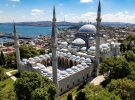
(View of the Gazi Husrev Beg Mosque in Sarajevo.- CC BY-SA 4.0)
[1] Metin Sozen, The Evolution of Turkish Art and Architecture, (Istanbul: Haset Kitabevi, 1987), p. 107. Godfrey Goodwin, A History of Ottoman Architecture, pp. 92-196.
[2] Vedad Biščević, Bosanski Namjesnici Osmanskog Doba, 1463-1878 (Bosnian Governors of the Ottoman Era, 1463-1878), p. 87.
[3] Behija Zlatar, Gazi Husrev-Beg, (Sarajevo: Bemust, 2010), p. 163.
[4] Safvet-beg Bašagić, Gazi Husrev Beg, (Sarajevo: Islamska Dionička Štamparija, 1907), pp. 94-103. Ahmed Mehmedović, Gazi Husrev-beg i Njegove Zadužbine (Gazi Husrev-beg and His Endowments), p. 38. Salih Sidki Muvekkit-Hadžihuseinović, Povijest Bosne (History of Bosnia), translation into Bosnian by a group of translators, (Sarajevo: El-Kalem, 1998), p. 127.
Some endowment buildings were established and built personally by Gazi Husrev-beg and some shortly after his death by the overseers (mutawallis) of his endowments.
[5] Ahmed Mehmedović, Gazi Husrev-beg i Njegove Zadužbine (Gazi Husrev-beg and His Endowments), p. 41. Behija Zlatar, Gazi Husrev-Beg, (Sarajevo: Bemust, 2010), p. 164.
[6] Amir Pašić, Islamic Architecture in Bosnia and Hercegovina, translated into English by Midhat Ridjanović, (Istanbul: Research Centre for Islamic History, Art and Culture, 1994), p. 153.
[7] Husref Redžić, Studije o Islamskoj Arhitektonskoj Baštini (Studies on Islamic Architectural Heritage), (Sarajevo: Veselin Masleša, 1983), pp. 169-200.
[8] Ahmed Mehmedović, Gazi Husrev-beg i Njegove Zadužbine (Gazi Husrev-beg and His Endowments), p. 41.
[9] Behija Zlatar, Gazi Husrev-Beg, p. 121.
[10] Salih Sidki Muvekkit-Hadžihuseinović, Povijest Bosne (History of Bosnia), p. 130.
[11] Nihad Čengić, Begova Džamija Kao Djelo Umjetnosti (Gazi Husrev-beg’s Mosque as an Opus of Art), (Sarajevo: Sarajevo Publishing, 2008), p. 22. Ćiro Truhelka, Gazi Husrefbeg, Njegov Život i Njegovo Doba (Gazi Husrev-beg, His Life and His Epoch), (Sarajevo: Zemaljska Štamparija, 1912), pp. 64-71.
[12] Nihad Čengić, Begova Džamija Kao Djelo Umjetnosti (Gazi Husrev-beg’s Mosque as an Opus of Art), p. 79.
[13] Ibid., p. 79.
[14] Ćiro Truhelka, Gazi Husrefbeg, Njegov Život i Njegovo Doba (Gazi Husrev-beg, His Life and His Epoch), p. 70.
[15] Ahmed Mehmedović, Gazi Husrev-beg i Njegove Zadužbine (Gazi Husrev-beg and His Endowments), p. 43.
[16] Nihad Čengić, Begova Džamija Kao Djelo Umjetnosti (Gazi Husrev-beg’s Mosque as an Opus of Art), p. 74.
[17] Hamdija Kreševljaković, Gazi Husrev-Beg, Sarajevo: Kalendar “Napredak”, No. XX/1931, pp. 101-113. https://www.scribd.com/document/28973534/Gazi-Husrev-beg-Hamdija-Kre%C5%A1evljakovi%C4%87, accessed on July 16, 2024.
[18] Mimar Sinan, Sinan’s Autobiographies – Five Sixteenth-Century Texts, translated and edited by Howard Crane and Esra Akin, (Leiden: Brill, 2006), p. 124.
[19] Abu Darda’ reported Allah’s Messenger as saying: “’Is any one of you incapable of reciting a third of the Qur’an in a night?’ They (the Companions) asked: ‘How could one recite a third of the Qur’an (in a night)?’ Upon this he (the Prophet) said: ‘‘Say: He is Allah, (who is) One…’ (Qur’an. cxii) is equivalent to a third of the Qur’an’” (Muslim, Sahih Muslim, Book 6, Hadith No. 314).
[20] Haris Dervišević, “Kaligrafija Gazi Husrev-begove Džamije u Sarajevu (1885-2002)” (“Calligraphy of the Gazi Husrev-beg Mosque in Sarajevo (1885-2002)”), inside: Radovi Filozofskog fakulteta u Sarajevu (Historija, Historija umjetnosti, Arheologija), pp. 269-284. Mehmed Mujezinović, “Diplome Kaligrafa Islamovića u Gazi Husrev-begovoj Biblioteci u Sarajevu” (“Diplomas of Calligrapher Islamović in the Gazi Husrev-beg Library in Sarajevo”), inside: Anali Gazi Husrev-begove biblioteke, Sarajevo, pp. 91-94.
[21] Behija Zlatar, Zlatno Doba Sarajeva (The Golden Age of Sarajevo), (Sarajevo: Svjetlost, 1996), p. 34.
[22] Salih Sidki Muvekkit-Hadžihuseinović, Povijest Bosne (History of Bosnia), p. 427.
[23] Noel Malcolm, Bosnia A Short History, (New York: New York University Press, 1994), p. 84.
[24] Hamid Hadžibegić, “Stara Pravoslavna Crkva u Sarajevu po Turskim Dokumentima u Njenom Muzeju (The Old Orthodox Church in Sarajevo According to Turkish Documents in its Museum),” inside: Naše Starine, Vol. 2, Year 1954, pp. 145-150, https://fmks.gov.ba/download/zzs/1954/12-1954.pdf, accessed on July 17, 2024.
[25] Talha Ozturk, Mosque in Bosnia to Re-open 27 Years after Demolished, https://www.aa.com.tr/en/culture-and-art/mosque-in-bosnia-to-re-open-27-years-after-demolished/1387368, accessed on July 16, 2024. Helen Walasek, Bosnia and the Destruction of Cultural Heritage, (Surrey: Ashgate, 2015), pp. 23-142.

Discover the golden
age of Muslim civilisation.

© Copyright FSTC Ltd 2002-2020. All Rights Reserved.